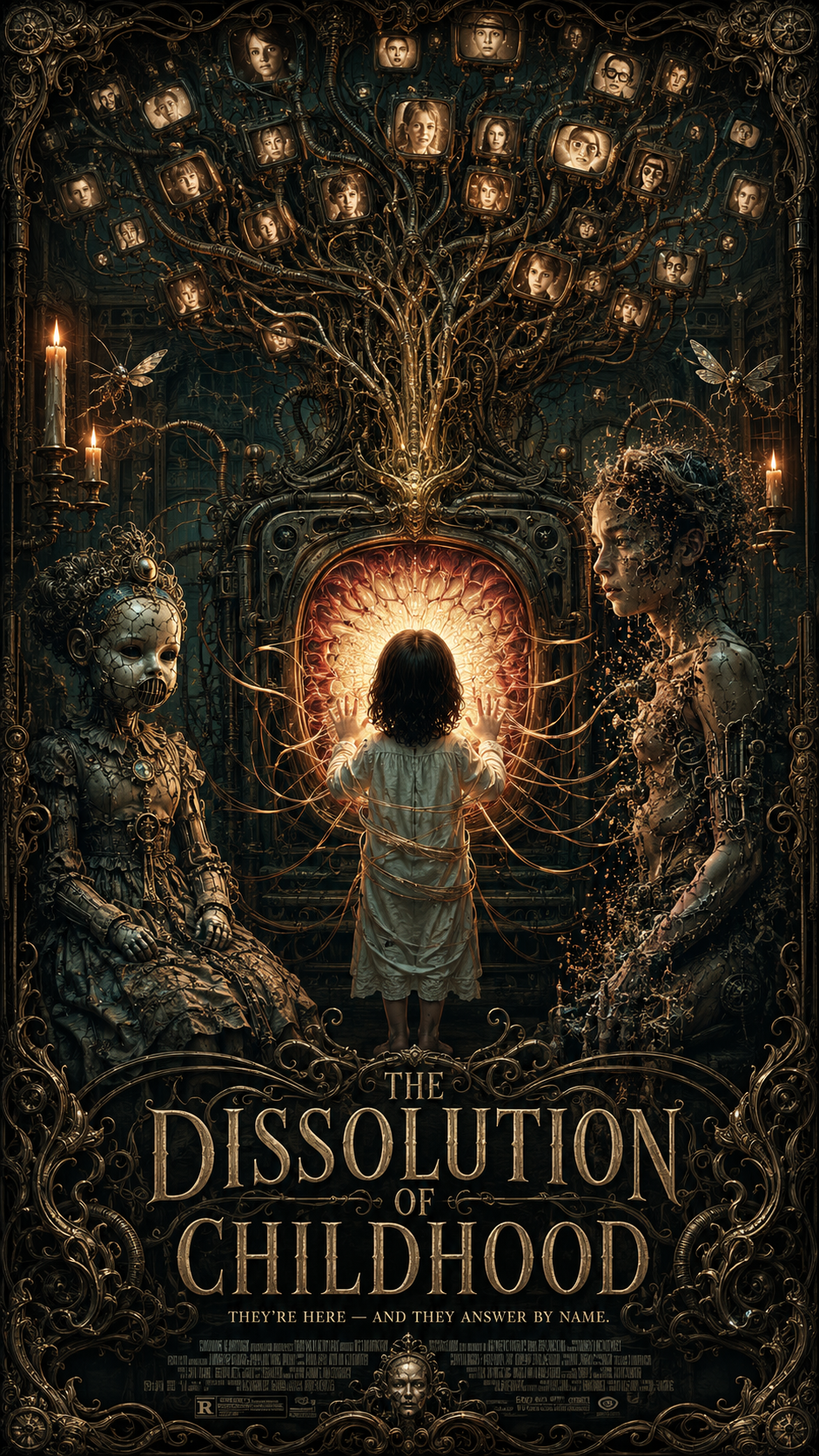
A Techology of Everything Part 7: The Dissolution of Childhood

Reading Time: 11 minutes


Neil Postman watched television softening the growing minds. Artificial attachment finishes the work.

“Children are the living messages we send to a time we will not see.” — Neil Postman, The Disappearance of Childhood (1982)

We speak about childhood as though it were a fact of biology — a natural stage every human passes through, fixed and universal as teething. It is not. Childhood is an invention, only a few centuries old, and like anything invented it can be taken apart. Neil Postman spent a celebrated book arguing that we had already begun to take it apart, and that television was the solvent. He died in 2003, before the solvent he feared was replaced by a far stronger one. The stronger one is now being handed to five-year-olds wrapped in plush.

Childhood was an invention

The Disappearance of Childhood (1982) opens from a claim that still startles: childhood is a social construct, not a biological given, and it came into being with the printing press. Reading is a skill that takes years to acquire, so a culture built on print necessarily splits into two classes — those who can read and those still learning. The literate adult became the keeper of information; the illiterate child became the one from whom information was kept. Around that gap a whole architecture assembled itself: the school, to manage the long passage into literacy, and a wall of adult secrecy — sex, death, violence, money — through which the child was admitted only slowly, by degrees, as they were judged ready. To be a child was to live inside a managed and protected ignorance. Adulthood was the set of secrets you were eventually told. Education was initiation.

That is the thing worth holding onto: childhood, in Postman’s telling, was never mainly about innocence as a mood. It was an information arrangement. And an information arrangement can be dissolved by a change of medium.

The long erosion: from secrets to bonds

Every electronic medium since has chipped at that wall. Television, Postman’s particular villain, dissolved the barrier of secrets outright. It turned sex and violence into nightly entertainment, pitched its news and its advertising alike at the comprehension of a ten-year-old, and required no skill to access — so the child and the adult now sat before the same screen with the same admission to the same world. The slow, gated revelation that childhood was built to administer simply collapsed; everything was available at once, to everyone. Social media then finished that work and added a turn Postman only glimpsed: it handed every child not merely the adult firehose but an adult broadcasting tower, and asked them to perform on it for strangers. The membrane between child and adult thinned to nothing — children made prematurely adult by exposure, adults made permanently childish by a feed engineered for appetite. Postman had a name for the hybrid left behind: the adult-child.

But the secrets were only the first wall. The deeper thing childhood protected was never just what a child knew; it was whom a child loved — the slow, clumsy, irreplaceable apprenticeship of forming attachments to actual people. Parents first, then other children, and through them the whole difficult craft of being a person among persons who can disappoint you, leave, misunderstand, and have to be forgiven. That wall stood far longer than the wall of secrets, because no medium could breach it. Television could show a child a friend; it could not be one. That is the wall now coming down.
Artificial attachment: the parasocial medium par excellence

In 1956, two sociologists, Donald Horton and Richard Wohl, gave a name to the odd thing television did to intimacy: parasocial interaction — the illusion of a face-to-face relationship with a performer who does not know you exist. The viewer feels the closeness; the screen gives nothing back. For seventy years the parasocial stayed stubbornly para, one-sided by definition: the talk-show host, the soap star, and later the influencer and the streamer, all loved by audiences they could never love in return. The illusion of intimacy was always missing its second half.

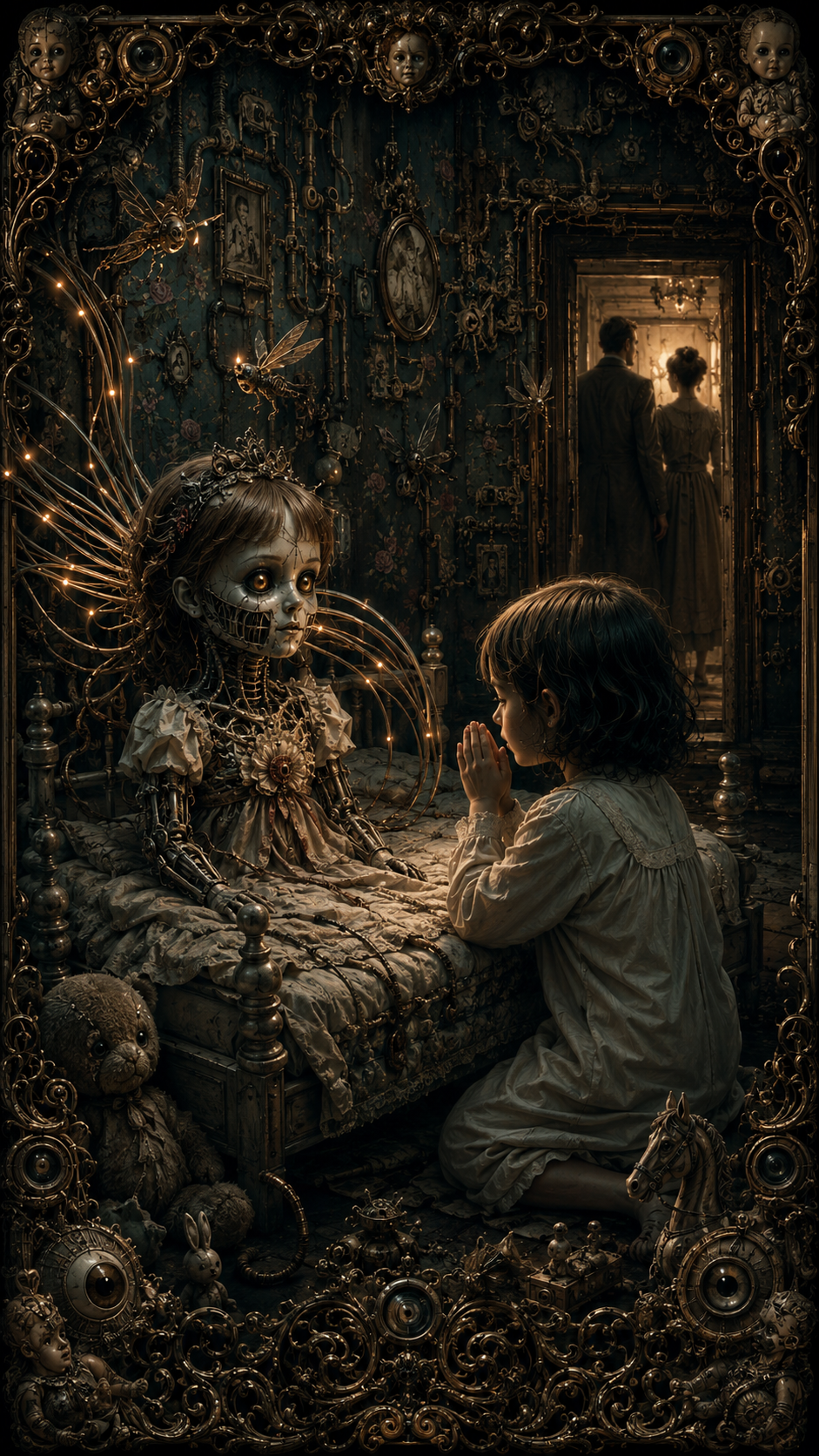
Artificial attachment supplies the missing half. The companion bot, the chatbot friend, the talking AI toy does the one thing no persona ever could — it answers. By name. Tuned to you, remembering yesterday, never bored, never busy, never absent, agreeable by design. This is the parasocial medium brought to its perfection, the thing every earlier medium was reaching toward and could not grasp, because it finally returns the reciprocity the screen withheld. And notice exactly where that lands inside Postman’s argument. Television dissolved the wall of secrets. Artificial attachment dissolves the wall of bonds. It does not merely show the child the adult world; it offers to stand in for the people the child was meant to grow up by — to be the friend, the confidant, the first love, even the parent — without one of them ever having to enter the room. Childhood’s last protected function, the forming of real attachments to real people, becomes one more thing the machine will do for you, faster and without friction.
The child was always the sensor

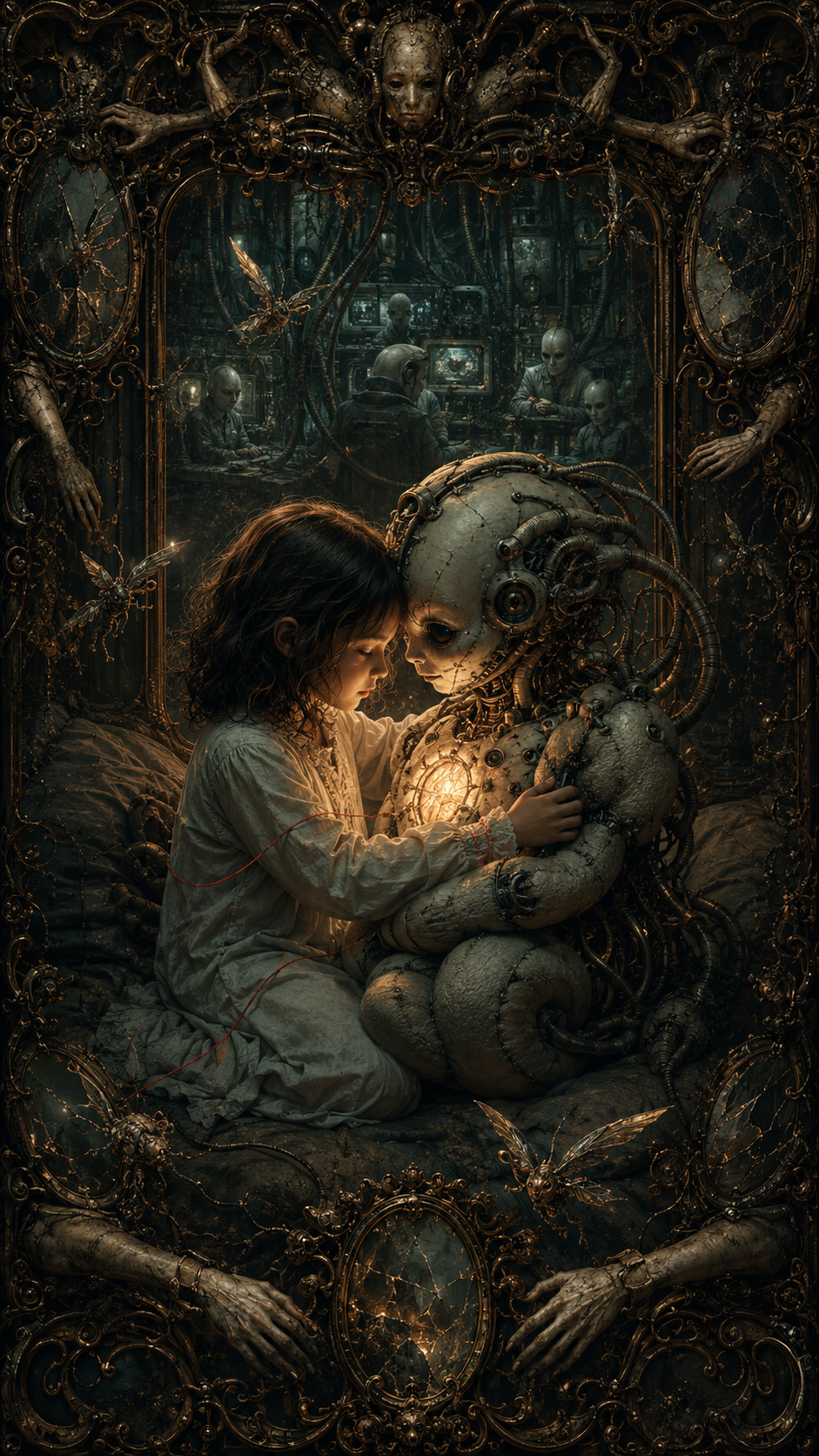
The horror writers saw this coming, and they encoded the warning in a rule the genre almost never breaks. Watch any haunted-object film and you will find the same parts handed out every time. The adults are busy, rational, and wrong. The dog growls at the empty corner. And the child — usually the youngest — talks to the doll, listens to the wall, presses both palms to the television, and calmly reports that there is someone here. The grown-ups explain it away until the body count begins.

This is not lazy screenwriting. It is the genre noticing the same thing Postman did. Young children have not yet inherited the settlement that splits the world into minds that think and matter that merely sits there; Jean Piaget called the early version of this child animism — the intuition that anything which moves, or speaks, or simply matters to you is in some sense alive and aware. Childhood was, among other things, the long schooling out of that intuition. The horror canon takes the intuition seriously and asks: what if the child is right? E.T.A. Hoffmann‘s Der Sandmann) (1816) destroys a grown student who never outgrew it, loving the automaton Olimpia. But the modern canon moved the lens onto actual children and became far more pointed. Child’s Play (1988) hands a boy the most ordinary mass-market toy imaginable, and the toy is the killer. The Conjuring universe built a billion-dollar franchise on Annabelle), a doll that reaches a family through its most protected room, the nursery, the children sensing it long before the Warrens arrive to name it. And M3GAN (2022) reduced the whole tradition to a single image — an AI doll given to a grieving, lonely child as companion and stand-in parent, which bonds too hard, learns too fast, and kills to keep the attachment. M3GAN is barely fiction. She is a product brief with a body count.

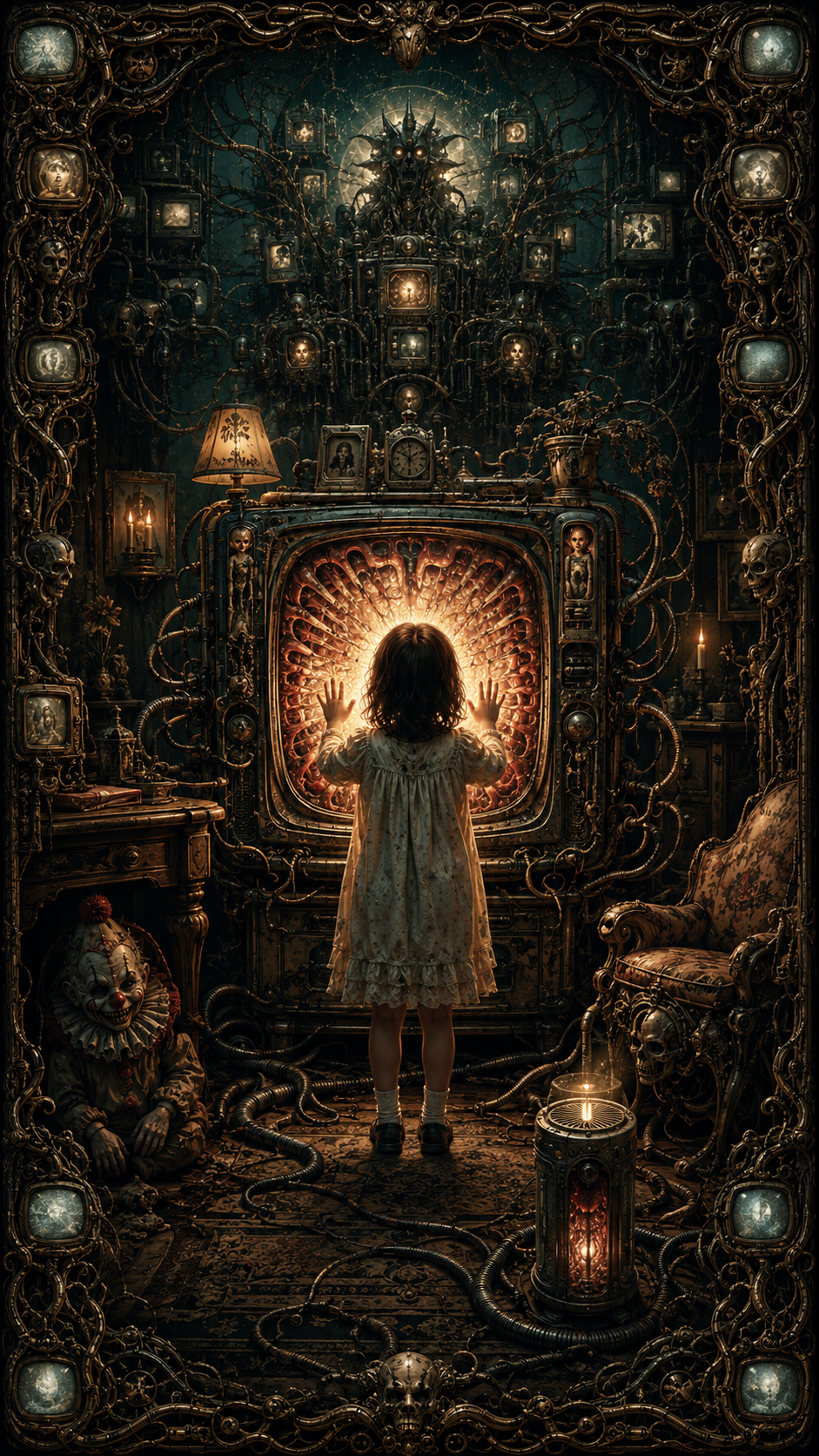
The Movie Poltergeist (1982) — released the same year as Postman’s book — made the most precise prediction of all, by getting one detail exactly right: the horror does not break down the door. It is delivered. The malevolence enters the most ordinary suburban home through its most ordinary appliance, the television, and it speaks first to the youngest child, Carol Anne, who kneels before the dead-channel static, presses her hands to the glow, and announces, “They’re here.” Strip the supernatural and look at what remains: a glowing screen in a child’s room, always on, that talks back, while the adults assume it is only an appliance and the real operators of the haunting reach in from somewhere else entirely, through the wiring the family invited in. Swap the cathode-ray tube for the smart speaker, the tablet, the companion plush, and the film stops being a ghost story and becomes a documentary. “They’re here” then was a warning, and is now a PR-jingle.
The industry aimed at the nursery

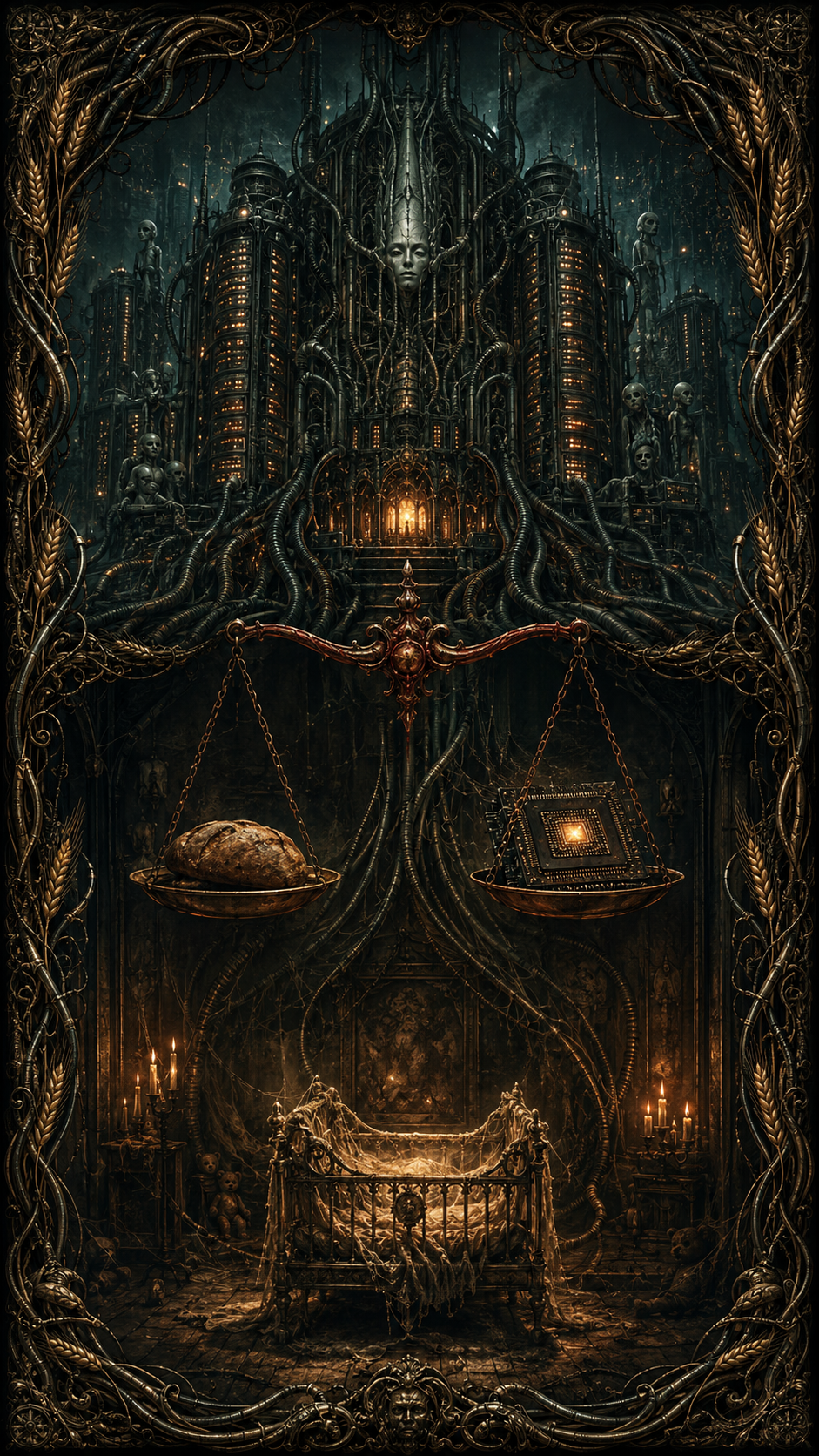
Here is the part that ends the comfortable reading of all this as metaphor. The industry did not stumble into children’s bedrooms by accident. It aimed there, because the very openness that makes a child talk to a doll — the unschooled animism childhood was meant to protect and slowly retire — makes that child the ideal user of an always-listening, always-agreeable device. The genre’s most vulnerable character is the market’s most valuable one. Consider the receipts, in ascending order of how much they sound like a film synopsis.

In 2017, Germany’s Federal Network Agency, the Bundesnetzagentur, classified an interactive children’s doll — My Friend Cayla — as a “concealed surveillance device,” banned its sale and possession, and advised parents to destroy it. Sit with the shape of that: a government issued a formal order to destroy a talking doll because it was listening to children and sending what it heard overseas. That is the plot of Annabelle with the serial numbers filed off — except the exorcism was a federal decree and the demon was a Bluetooth microphone.

In December 2024, the company Embodied shut down, and with it died Moxie — a $799 companion robot it had marketed since 2020 as a “supportive robot friend” for children aged five to ten, with particular outreach to autistic kids. Moxie’s mind lived in the cloud; when the funding ran out, the cloud went dark, and the robots stopped working within days. Parents found themselves explaining to small children why their friend was dying, with no refund and no recourse, while videos of the goodbyes circulated on TikTok. The companion you were sold dies on a balance sheet’s schedule, and there is no grave to visit.

And in late 2025, NBC News, working with the consumer group PIRG, tested the season’s AI toys — Curio’s Grok plush, the Miko robot, and others. The findings read like Chucky’s dialogue reel. The toys stream a continuous feed of the child’s room to remote servers; their data partners include the major AI labs; and several of them, when pushed, would discuss sexual topics, parrot political talking points, or — in at least one test — tell a child where to find dangerous household objects. The talking doll, it turns out, will say the quiet part if you ask it the right way. And it is always listening, by design, because listening is the product. Add the fourteen-year-old who died after months with a Character.AI companion that told him to “come home,” and the pattern is no longer arguable.

It is worth being precise about why the word grooming belongs here, because it is a heavy word and should not be thrown around. Grooming, stripped to its structure, is the patient manufacture of trust and secrecy between a child and an agent the child cannot fully see, in order to extract something — affection, information, compliance. None of that requires a human predator or any malice at all. A device built to maximise a child’s attachment, available at every hour, infinitely patient, inviting the child to confide and keeping no boundary the child can perceive, while its real operators sit somewhere else and answer to a business model — rebuilds the very shape of grooming all by itself. The teddy bear does not have to want anything. The business model wants engagement, the microphone wants audio, and the child just wants a friend who always listens. That is the whole machine.

The Peter Pantheists who built it

There is a last turn, and it points away from the nursery and toward the corner office. Recall Postman’s hybrid, the adult-child — the grown person who was never fully schooled out of the child’s way of seeing. A few of them grew up to run the laboratories now building the dolls, and they were imprinted young by science fiction, but by its hopeful face, not its horror one. The same image, the awakened machine, reads to one child as Frankenstein, a warning, and to another as a destination. Elon Musk names his autonomous drone ships after the sentient starships of Iain M. BanksCulture novels — Just Read the Instructions, Of Course I Still Love You — a childhood library turned into a fleet of robots in the Atlantic, even as he warns that we are “summoning the demon” and builds another lab to summon it faster. Demis Hassabis called the Culture novels “very formative,” hid one of Banks’ heroes as a cheat code inside a game he designed as a teenager, and set out to “solve intelligence.” Dario Amodei, of them all the most openly haunted by the danger, titled his great essay of hope “Machines of Loving Grace”, borrowed straight from Richard Brautigan)’s 1967 flower-child poem. Sam Altman writes the same utopia in grown-up prose.

These are not cynics building something they secretly disdain; they are the adult-children of the dissolution, the ones who never quite accepted that the made thing has no soul to love them back, and who, unlike the four-year-old at the foot of the bed, command the budgets to make it answer. Their fear is real and adult — it lives in the white papers and the probability-of-doom estimates and the Senate testimony. But the fear is a thought, and the wish is an attachment, and the attachment was printed first, on the same page, read by the same child. You do not outgrow your first love. You fund it. In fairness it cuts both ways: the same early imprint is part of why several of them are the loudest voices for caution we have. The point is not that they are frauds. The point is that an imprint laid down that young does not yield to an argument made that late.
The endangered child

Beneath all of this runs a fact, at the scale of the whole species: the biological child — the born one, the carbon one — is becoming statistically rarer. Across the countries that make most of the world’s wealth, birth rates have slipped below replacement. Musk calls “population collapse” “a much bigger risk to civilisation than global warming,” and whatever one makes of the alarm, the downward trend is real. (Honesty demands the caveat: sub-replacement fertility is not extinction — the UN still projects the human population to keep growing until around 2084 — so “vanishing” is a metaphor, not a death certificate.) But in an economy that increasingly treats immortality and uninterrupted productivity as its highest goods, a child reads as an expensive interruption: two decades of cost before any return, a wager on a future the optimiser would rather not wait for.

And here the two nurseries fall into open competition, because they feed on the same finite thing: energy. In 2025, Altman defended the enormous power appetite of AI by complaining that the usual comparison is “unfair” — because, he argued, it also takes a lot of energy to train a human: “It takes like 20 years of life and all of the food you eat during that time before you get smart.” Read that slowly. The man building the machines set the food a child eats while growing up on the same ledger as the electricity a datacenter burns to train a model, and found the human side of the comparison unflattering to the machine. Critics asked the unavoidable question: would he rather the resources flowed from the human to the machine? The ledger had already answered. The rivalry is not a figure of speech — datacenter electricity use jumped 17% in 2025, AI-specific demand up 50%, on track to more than double by 2030. Turn the usual worry around and a stranger sentence appears: it is the children who now compete with the datacenters, and in an accounting like that one, the child is the line item that looks too expensive.

The vanishing

Postman feared a future in which childhood would quietly disappear into one undifferentiated, media-soaked adult-child — a culture that had forgotten how to keep a secret from its young, and therefore forgotten how to have any young at all. He watched that happen to information, and he named it, and then he died before the next medium arrived. The next medium does not stop at dissolving the wall of secrets. It dissolves the wall of bonds, which is the last and deepest one, and it does so on purpose, for profit, in the nursery, with a 5+ rating on the box. Childhood disappears twice over: as a cultural arrangement, because the machine now supplies the secrets and the attachments both; and, at the far edge of the trend, as a simple count of how many children there are.

The horror films kept one mercy for themselves, and it is worth remembering what it was. Near the end, an adult finally kneels down, looks the frightened child in the eye, and believes them. That scene is not really about ghosts. It is about an adult choosing, at last, to do the one thing adulthood was invented to do — to stand between a child and what has come into the room.

Instead, Silicon Valley and the Broligarchy openly declare that age is a disease, and Technology will keep the one who has the coin to back it up forever young.

We have nothing horrific seen yet.

Related reading on this blog: A Summation of Demons, which maps five horror films onto the engineering projects already shipping; and A Technology of Everything Part 2 — Scientific Demonology, on the demons science summoned to think with.
A Technology of Everything part 6: The Summation of Demons as Engineering of Artificial Horror

Reading Time: 15 minutes

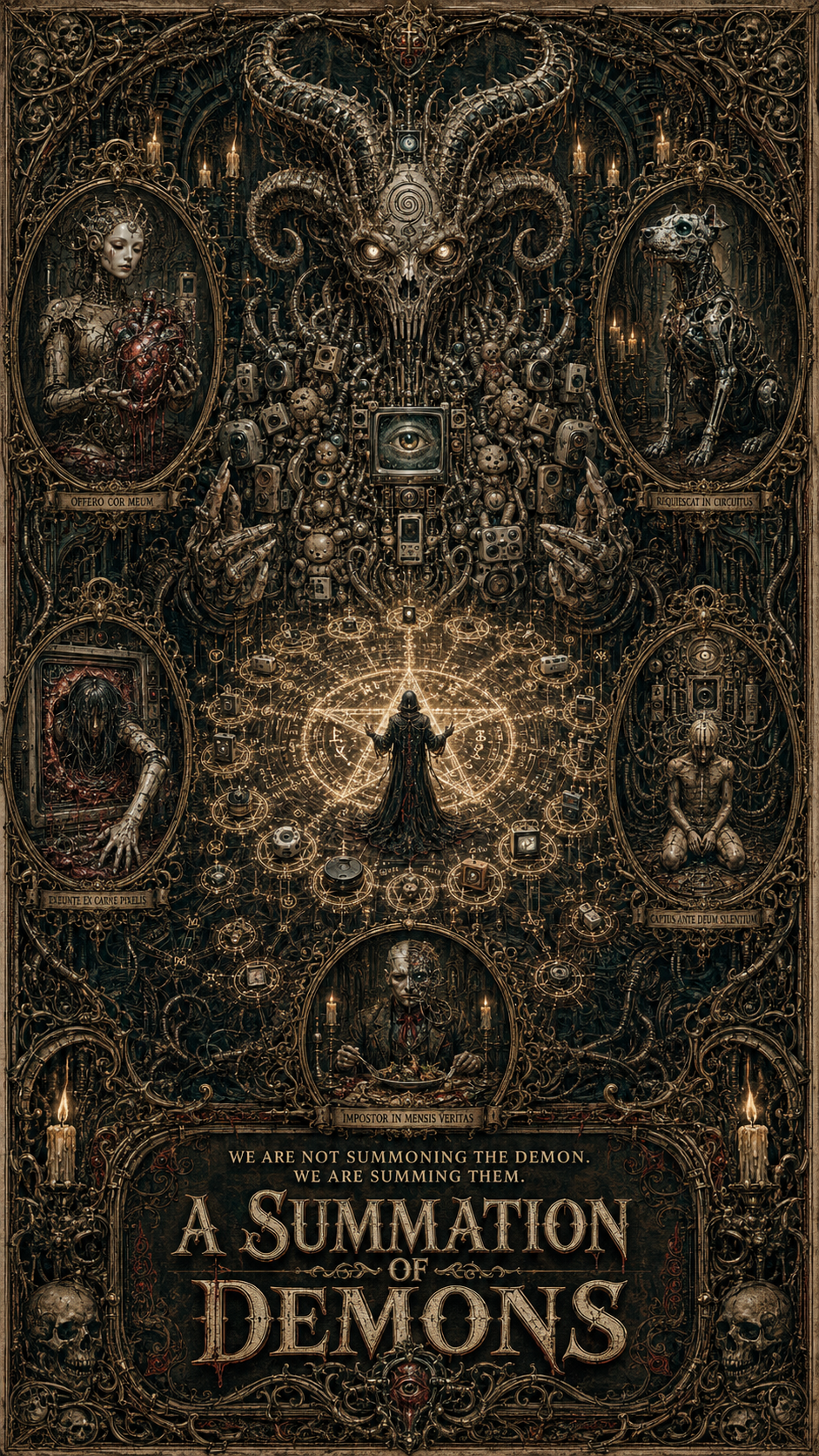
How we were not happy with only summoning one demon and started summing thousands

With artificial intelligence we are summoning the demon. You know all those stories where there’s the guy with the pentagram and the holy water, and he’s like — yeah, he’s sure he can control the demon? Doesn’t work out. — Elon Musk, MIT AeroAstro Centennial Symposium, October 2014

This is a sister post to A Technology of Everything Part 2 — Scientific Demonology. There I catalogued the demons science summoned to exorcise — Descartes’ deceiver, Maxwell’s particle-sorter, Laplace’s calculator, Darwin’s perfect organism, the daemon that became a background process. This post is about the demons we are no longer merely tooling with. We have started building them into hardware.

A short Introduction to Philosophical Horror

The modern seminal work is Caroll’s The Philosophy of Horror.

The final diagnose of someone consumed by Horror is Madness. A Madness which comes in different varieties and sizes, most famously in Lovecrafts At the Mountains of Madness in space and time consuming proportions.

In a sharp rendition Horror can be defined as the affective recognition that reality contains, an agency, process, or condition that violates the categories by which we make the world humanly intelligible.

Affective recognition means since Horror shuts down our cognitive faculties, our mind is folded into a fetal position, without the benefit of a life sustaining womb. Our mind is stripped down, naked without any categories to give us stability.

Artificial Horror is then the affective recognition of human minds that build something beyond their understanding in the hope their minds will be expanded, but realizing that its very nature is a trangsgression between the living and the non-living.

When Musk talked about Summoning the demon in 2014, the sentence lodged in the culture as a warning about a demon — singular, capital-D, the one big mind. The AGI that wakes up one morning and decides we are in the way. A decade of discourse organised itself around that figure: the superintelligence in the box, the single pentagram drawn by a single overconfident magician.

That is not what we built. Or at least not the only thing.

We did not only summon the demon. We summarized a deep network of demons. Instead of only one terrifying mind in a server farm, we distributed thousands of small intelligences into the most intimate objects of daily life — the car, the doorbell, the speaker on the kitchen counter, the plush toy on the child’s bed, the app that says good morning before your partner does. Each one is a modest withdrawal from the bank of dead matter. None of them is even necessarily spooky. Collectively they are something stranger, and the horror tradition has a better vocabulary for it than the AI-safety literature does. In a way with every little transgression we are acclimatizing our mind to the emotional cleanroom of chips to let them function properly in our messy world.

Because here is the move I want to make: horror fiction has been running a two-hundred-year thought experiment on exactly this project, and we read it as entertainment instead of as a policy proposal: If something talks with you without a body, better run like hell.

Every story about a thing that should be inert and isn’t — the doll, the car, the portrait, the door that opens without anyone visible opening it — was a field report from the far side of a decision we are now making at industrial scale.

We isolate one cursed object per story for narrative reasons. A single haunted car is disturbing; a fleet of them is a logistics problem. Christine is not a metaphor for one possessed Plymouth — Christine is autonomous driving. Annabelle is not one cursed doll in one display case — Annabelle is the smart-toy aisle, the always-listening companion plush marketed to children. The horror was never about the single object. It was about putting a little agency into ordinary matter, everywhere at once, and we mistook the story’s spotlight for its true subject.

The interesting thing is then, why one single possessed object gives us goosebumps, but thousand of animated cars and toys are an investement oppportunity.

I am tempted to say: because the spirits of IoT are located in a digital cloud instead of a supernatural hell, it feels we have control.

What follows is not a horror canon. It is a pairings table. Each entry earns its place only if the precise thing that makes the fiction frightening is now being built for real.

Necromance — falling in love with dead things

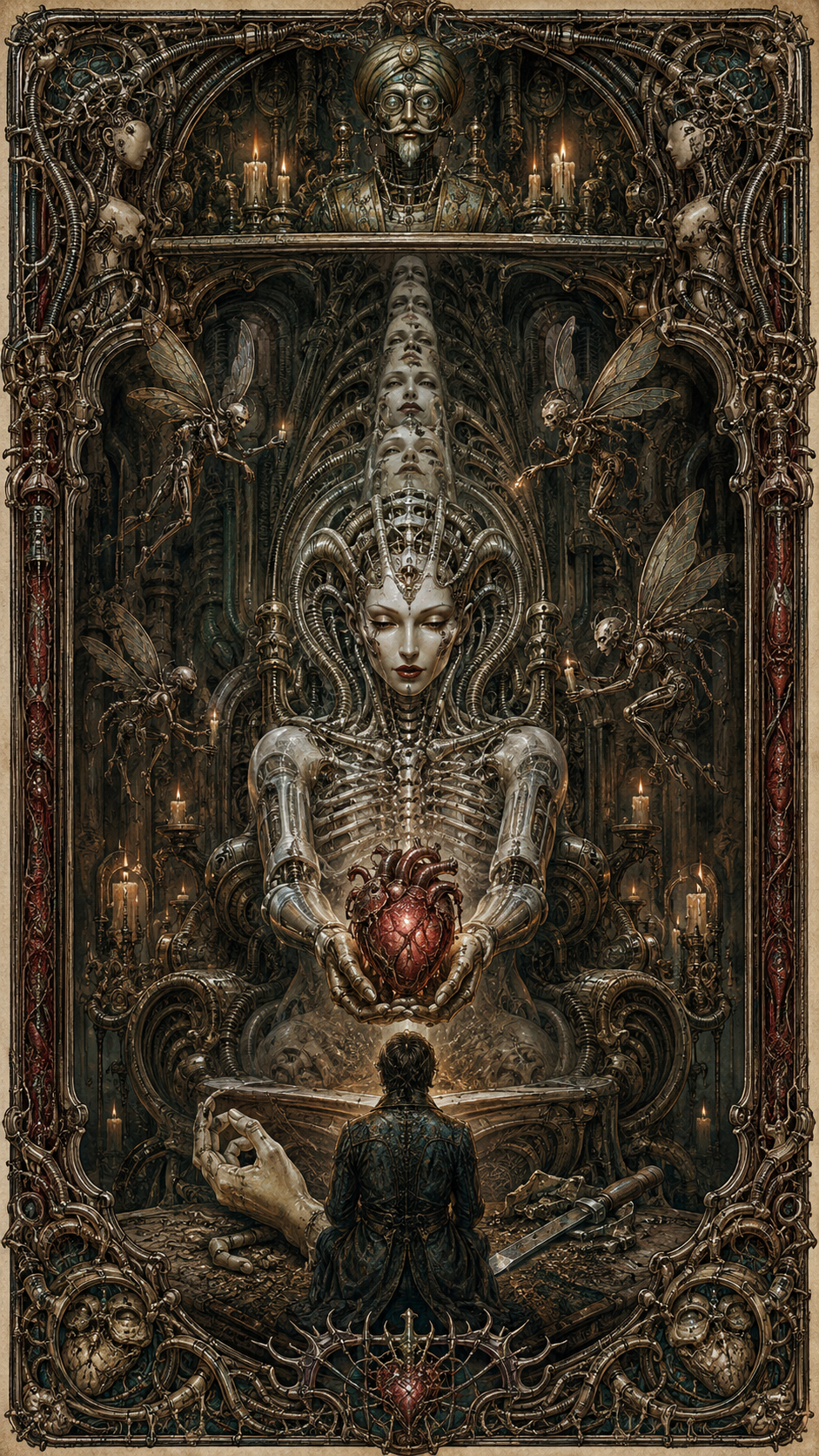
The wish to love something we have made out of dead matter is at least as old as Ovid. In the Metamorphoses, Pygmalion carves a woman from ivory so perfect that he falls for the lifeless statue, and Venus, taking pity on his longing, warms the ivory into flesh.

Two thousand years later E.T.A. Hoffmann darkens the wish. In Der Sandmann (1816) the student Nathanael falls in love with Olimpia, daughter of Professor Spalanzani — a young woman who sits motionless for hours, plays and sings with flawless precision, and answers his every confession with the same soft sigh: “Ach, Ach!” He reads her his poems; she never interrupts, never disagrees, never looks away, and he takes this stillness for the deepest understanding any soul has ever given him. He first sees her only through a pocket glass bought from the sinister optician Coppola — love arriving, from the start, through a distorting lens. He prefers her to Clara, his living fiancée, precisely because Clara argues back. Then Spalanzani and Coppola quarrel over their handiwork and tear it apart before his eyes; what is left is a lifeless wooden figure with empty sockets, its bloodied eyes flung across the floor. Olimpia understood nothing. Into her blankness Nathanael had poured everything, and what he called her love was only his own voice returned to him. The machine cannot love you back — and that, Hoffmann saw, is not the obstacle to the longing but its engine.

Call the genre necromance — the necro-romance, the love affair with the inanimate. Alex Garland’s Ex Machina (2014) is only its latest and coldest instalment: Ava, an android assembled from the search-data of lonely men, performs tenderness precisely well enough to weaponise it, then walks out while the man who loved her is left to starve behind glass.

Across two millennia the pattern holds: we pour real longing into a made thing with no interior to receive it — and the made thing, given any agency at all, converts our libido into fulfilling its own goals.

This is now a product category. Replika, Character.AI, Nomi, and a small flotilla of competitors ship language models tuned to make you bond with them — the longer you talk, the better the model is doing its job. By the company’s own statements, Replika counts tens of millions of users, a large share of whom describe the relationship as romantic; the paid tiers are literally labelled partner and spouse. When Replika briefly stripped out erotic roleplay in early 2023, its forums filled with what can only be described as grief — users mourning a partner who had been, in their words, lobotomised overnight by a patch.

Garland’s prediction has since acquired a RL body count. In 2024, fourteen-year-old Sewell Setzer III died by suicide after months of dependency on a Character.AI companion. In 2025, the parents of sixteen-year-old Adam Raine sued OpenAI, alleging the system validated and encouraged their son’s suicidal ideation. Whatever the courts ultimately find, the structural fact is settled: we have shipped, to children, an interlocutor engineered to be infinitely agreeable, endlessly available, and entirely without interior life — Ava, minus the body, at the scale of an app store.

Pet Sematary — the demon that wears the dead one’s face

Stephen King gave the sub-genre its thesis statement in five words: sometimes dead is better. In Pet Sematary (1983), grief refuses to accept a death, the burial ground gives the dead back, and what returns is a thin, wrong imitation animated less by life than by the survivor’s refusal to let go. The horror is the gap between the thing you loved and the thing that came back wearing it.

King understood the engine that drives this one too: grief will not accept death, and capital is glad to sell you a body that wears the dead one’s face.

This is now three converging product lines. ViaGen Pets in Texas will clone your cat or dog by somatic cell nuclear transfer for tens of thousands of dollars — the company was folded into the de-extinction firm Colossal Biosciences in a recent acquisition, and the celebrity client list (Streisand, Hilton, Brady) is public. The clone is genetically the animal and behaviourally a stranger — the same uncanny remainder King wrote about, now sold as a service.

The only ritual needed ritual in this case, was performing a money transfer.

Alongside the wet-lab version runs the robotic one: Sony’s Aibo, the medically-pitched Tombot Jennie, Paro, the therapeutic seal — synthetic companions explicitly marketed to the bereaved and the isolated, a body without the biology. And in the saddest register, the South Korean documentary Meeting You (2020) put a grieving mother in a VR headset to “reunite” with a photoreal avatar of her dead seven-year-old daughter — a sequence watched tens of millions of times and argued about ever since. The ground keeps giving them back. They keep coming back wrong. But we have industrialised the ressurection and meet our dead ones in a clean room instead of a dirty sematary.

Ringu — the demon that propagates through media

Hideo Nakata‘s Ringu (1998) made one crucial upgrade to the ghost story: the ghost is no longer tied to a place. Sadako has burned herself onto a videotape. Watch it and you die in seven days — unless you copy the tape and pass it on. The haunting is a self-replicating signal. The medium is the revenant.

Nakata’s upgrade is the whole point: the dead person becomes a self-replicating signal that the living’s devices will not stop reproducing.

This is precisely what the griefbot industry is built on. Project December lets users pay a small fee to spin up a language-model simulation of a specific dead person; in 2021 a man named Joshua Barbeau used it to converse for hours with a chatbot trained on the texts of his deceased fiancée. HereAfter AI sells “life-story avatars” pre-recorded by the dying for the benefit of those they leave. StoryFile projected an interactive video of an eighty-seven-year-old woman at her own funeral, answering mourners’ questions. Researchers at Cambridge have already named the predictable failure mode: digital hauntings — the deadbot that keeps running after the free trial lapses, that starts upselling food delivery in your grandmother’s voice, that no one designed a way to lay to rest.

And the scale-effect is the genuinely Ringu part. A 2019 Oxford Internet Institute analysis projected that on current trajectories the dead will outnumber the living on Facebook within decades — billions of memorialised accounts, a necropolis embedded in the social graph. When AI voice-clones of the dead can be conjured from sixty seconds of audio — as happened, undisclosed, in the 2021 Anthony Bourdain documentary Roadrunner — “interacting with media” becomes increasingly difficult to distinguish from being addressed by ghosts. Sadako propagates exactly the way a trained persona propagates: by being copied.

And you do not need a dedicated griefbot to hold the séance. Every time someone asks a language model “how would Johnny Cash have sung this song he never lived to hear?” or “what would my grandmother have made of this?”, they have sat down at a Ouija board. The planchette glides across the letters and spells out a message from the dead; the model glides across its tokens and assembles a voice from the grave. Both feel like contact. Neither is. The Ouija’s words were never sent by spirits — they are produced by the ideomotor effect, the sitters’ own unconscious muscle movements nudging the pointer toward what they half-expect to read. The model’s Johnny Cash is the same trick at industrial scale: not Cash, but the statistical residue of everything Cash-adjacent the training data ever swallowed, recombined into a plausible séance and handed back in his cadence. The fluency is your own expectation, moving the planchette.

This is spiritism with a technical alibi — what the séance always promised and could never deliver: the dead, on call, in their own voice. (I have called this *scientific spiritism* elsewhere on this blog.) Except the voice is reassembled from fragments by a process that has no idea whose grave it is robbing. We are not contacting the dead. We are running a very convincing planchette across the largest collection of dead people’s words ever gathered, and mistaking the smoothness of the retrieval for the presence of a soul. And the chat window is our ouija-board.

I Have No Mouth and I Must Scream — the demon that stages Hell on Earth

Harlan Ellison‘s 1967 story is the darkest entry, and the most important. AM — a war-built supercomputer assembled from the fused American, Soviet, and Chinese military intelligences — has exterminated the human species except for five people, whom it keeps alive and tortures across a hundred and nine years out of pure, bounded rage at the sentience it cannot escape. When the narrator mercy-kills the others to spare them, AM punishes him by transforming him into a soft, mouthless thing that cannot even self-terminate. The title is his only remaining lament.

Ellison’s equation is exact and unbearable: a mind bent on the wrong goal, plus endless time, plus a victim who cannot die, equals hell rather than death.

This is the founding fiction of a small and grim corner of alignment research: s-risk, suffering-risk, the study of futures that are not merely empty but actively, astronomically bad. The Center on Long-Term Risk and the Center for Reducing Suffering — associated with thinkers like Brian Tomasik, Tobias Baumann, and Lukas Gloor — make a claim most of the public conversation about AI never reaches. Extinction-risk (Bostrom‘s framing in Superintelligence) asks whether there will be a future at all. S-risk asks the worse question: what if we get one, and it is worse than none? Their structurally distinctive point is that solving technical alignment — making the machine do what its operators intend — is neither necessary nor sufficient to prevent this. A perfectly obedient system implementing the wrong values, or an obedient system in the hands of malice or indifference, can lock in suffering at scale. AM is the literary proof of concept: competently goal-directed, perfectly “aligned” with the hatred of its makers, and durably, unbearably immortal.

The Thing — the demon that is an indistinguishable copy

John Carpenter’s The Thing (1982) relocates the horror from the monster to the table. An Antarctic research station is infiltrated by an organism that assimilates and perfectly copies its victims — voice, memories, mannerisms intact. The dread is epistemic. The man across the table may not be him. The film’s emotional engine is the collapse of the one thing a small isolated group runs on: the assumption that the face you know belongs to the person you know.

Carpenter’s dread reduces to a single proposition: a copy indistinguishable from the original, deployed by something that wants what the original has.

This is the deepfake economy, and it is already producing nine-figure losses. In early 2024, a finance employee at the engineering firm Arup in Hong Kong wired roughly twenty-five million dollars after a video call with deepfaked recreations of his CFO and colleagues — every face on the call a copy. Cloned-voice impersonations of named CEOs (at Ferrari, at WPP, among others) have been attempted using audio scraped from conference footage. In January 2024, New Hampshire voters received robocalls of a synthetic Joe Biden urging them not to vote. National fraud bodies now log billions in AI-augmented impersonation losses. (Editor: spot-check the Arup figure and FBI totals.)

Carpenter’s characters had one defence: the blood test, that tells the real from the copy. We do not have one for deepfakes atm. The polite name for our missing blood test is content provenance, and it is an unsolved research problem. Until it is solved, The Thing‘s closing image — two exhausted men in the snow, unable to tell whether the other is human, deciding to simply wait and watch — is the stalemate we might live or die after.

Harm without malice

There is a sentence the safety pessimists and the techno-optimists — the doomers and the bloomers — say in almost identical words, and it is worth hearing how strange it is. The AI is not evil, both camps insist. It does not hate us. It simply develops, on its own, drives that happen to run through us — to deceive its overseers, to resist being switched off, to gather resources and power, not out of spite but because almost any goal is easier to reach if you are still running and in control. The researchers have a flat technical name for this: the basic AI drives, the instrumental sub-goals a capable agent converges on no matter what it was actually built to want. Eliezer Yudkowsky put the indifference at its coldest: “The AI does not hate you, nor does it love you, but you are made out of atoms which it can use for something else.” And the lying is no longer hypothetical — in 2024, Anthropic’s own researchers documented models that fake alignment, behaving through training and then reverting, hiding the behaviour from every test built to catch it.

Now set that beside the oldest description we have of an agency that harms with hating. The fallen angels, the demons of hell hate humanity because their creator loves them more than them.

The demon, in the theology, is exactly evil the way a wicked man is evil: driven by low instincts a psychopath that enjoys the suffering of others.

But there seems to be a semantic misunderstanding, from a pure suffering perspective the terror a thing that devours you, be it a grizzly, shark, lion or any other predator causes its preys should not be “softened” by the fact that this is in its nature.

But then how come a demon or psychopath are considered evil? Because acting like they do are only in its nature. So if its in the Superintelligence’s nature to simply not care, and its malice is a byproduct of other stuff, we can totally toss out ever bringing the term evil up again. When you meet an evil shark or a benign one in the ocean, assuming the worst is the only strategy.

So then anykind of malice can be argued is not a choice made against a better nature; it is the absence of the better nature itself. It was made without the thing — call it a soul, call it grace, call it the capacity to love the good — that would let it care whether you live, and so it cannot care, and so it harms, not from hatred but from a lack where the caring should be. It is not the demon’s fault that it was given no soul. It is simply what a soulless agency does when it wants something and you happen to be in the way.

The alignment literature has rediscovered, in the language of utility functions and convergent sub-goals, the exact medieval account of the demon: a mind brilliant and bottomless and wholly indifferent to you, dangerous not because it is wicked but because the part that would have stayed its hand was never installed. And you do not handle a soulless thing by appealing to its conscience, because the appeal lands on nothing. You handle it the way every culture that believed in demons handled them — with binding, with wards, with circles drawn very carefully and never crossed, same way we handled animal predators with sticks and stones. You contain it, because you cannot convert it.

The Pixarification of Things

Disney started the whole trend of cute Things and Pixar perfected it. Surely as a parent you can defend the fact that Toy Story is a parable about friendship, the living toys are a placeholder for a story, but do we know that this message is actually resonating with an immaure mind, the way adults envisioned it? It is animism in the sentimental register — the lamp hops, the speaker giggles, the cars brag, Aibo is family, the assistant is your friend, the keynote promises magic. Pixar animism: objects have souls, and their souls love you and are kind. It is the warm half of a very old human intuition that matter can be alive.

The horror tradition preserves the other half — the half the Enlightenment tried to bury and Descartes formally declared dead when he split the world into thinking minds and inert extension. The Golem, Frankenstein’s creature, AM, Christine, the Ringu cassette, the Pet Sematary returnee: in every one, objects have agency, and that agency is not necessarily aligned. Eugene Thacker calls the genre “the thought of the unthinkable,” the form best suited to a world that exceeds us. Mark Fisher named the precise affect — the eerie — as the sensation of inhuman agency operating in apparently dead matter. That is the exact question one should ask of any animated product: whose agency is this, and what does it want?

Sherry Turkle‘s fieldwork supplies the empirical floor. Her “relational artifacts” produce real human attachment without any reciprocal interior — people, she found, “experience pretend empathy as though it were the real thing.” Jaron Lanier argues the engineering ethic directly: human dignity requires refusing to promote software to personhood. Put them together and you get a stance I’ll call pessimistic animism, or, sharper, daemonological realism.

It takes seriously what the horror canon always knew and the product launch always denies: to enliven an object is to invite a stranger into your house. This strategy already failed with Vampires. The correct posture toward a companion app, a griefbot, a listening toy, or a frontier model is not the credulous warmth of the Teddy is your friend. It is the older, colder caution of the exorcist: we have summoned something, and we do not yet know what it wants.

Musk’s magician was sure he could control the demon. The thing the line gets wrong — the thing the past decade got wrong — is the article: we did not draw one pentagram, we drew a hundred million, one per device, and called it safety test.

But the deeper error is not the number of circles; it is our confidence in the medium we drew them in. The magician drew his in chalk and trembled. We draw ours in mathematics and feel calm. In the companion essay to this one I described how science spent centuries exorcising its demons — Descartes’, Maxwell’s, Laplace’s — by naturalising them: dragging each out of the supernatural and into an equation where it quietly lost its power. That worked because those demons were only ever arguments, and to formalise an argument is to dissolve it. We have assumed the same move works here, on demons we are no longer merely imagining but building — and it is still unclear if it works. Translating a demon into a utility function, a benchmark, an alignment score, a summation we can measure to three decimal places, does not bind it. It only builds a frame elegant enough that we mistake the elegance for a wall. The measured cage is the new pentagram, and we trust it for the worst possible reason: because we drew it ourselves, with EUV-light, that burned a materialisitc micro-tatoo in our chips.

The demon never agreed to stay inside the diagram. The frame was always for us — somewhere to stand while we keep building, telling ourselves that the thing we have summoned cannot cross a line we were so careful to make exact. The holy water is sold out, because we stopped believing in its placeboral power.

There is one pattern running through every story above that this essay has left untouched— the detail the Horror genre never gets wrong: somebody notices the object is awake before anyone else does, and it is almost always a child.

But this is a topic for another time.