Hirngespinste I – Concepts and Complexity

Reading Time: 7 minutes

The Engine

The initial pipe dreams of Lull’s and Leibniz’s obscure combinatorial fantasies have over time led to ubiquitous computing technologies, methods, and ideals that have acted upon the fabric of our world and whose further consequences continue to unfold around us (Jonathan Grey)

This is the first essay in a miniseries that I call Hirngespinste (Brain Cobwebs) – this concise and expressive German term, which seems untranslatable, describes the tangled, neurotic patterns and complicated twists of our nature-limited intellect, especially when we want to delve into topics of unpredictable complexity like existential risks and superintelligence.

It is super-strange that in 1726 Jonathan Swift perfectly described Large Language Models in a Satire about a Spanish Philosopher from the 13th Century: the Engine.

But the world would soon be sensible of its usefulness; and he flattered himself, that a more noble, exalted thought never sprang in any other man’s head. Everyone knew how laborious the usual method is of attaining to arts and sciences; whereas, by his contrivance, the most ignorant person, at a reasonable charge, and with a little bodily labour, might write books in philosophy, poetry, politics, laws, mathematics, and theology, without the least assistance from genius or study. (From Chapter V of Gulliver’s tales)

What once seemed satire has become reality.

If no one is drawing the strings, but the strings vibrate nevertheless, then imagine something entangled in the distance causes the resonance.

Heaps and Systems

The terms ‘complexity’ and ‘complicated’ shouldn’t be used interchangeably when discussing Artificial Intelligence (AI). Consider this analogy: knots are complicated, neural networks are complex. The distinction lies in the idea that a complicated object like a knot may be intricate and hard to unravel, but it’s ultimately deterministic and predictable. A complex system, like a neural network, however, contains multiple, interconnected parts that dynamically interact with each other, resulting in unpredictable behaviors.

Moreover, it’s important to address the misconception that complex systems can be overly simplified without losing their essential properties. This perspective may prove problematic, as the core characteristics of the system – the very aspects we are interested in – are intricately tied to its complexity. Stripping away these layers could essentially negate the properties that make the system valuable or interesting.

Finally, complexity in systems, particularly in AI, may bear similarities to the observer effect observed in subatomic particles. The observer effect postulates that the act of observation alters the state of what is being observed. In similar fashion, any sufficiently complex system could potentially change in response to the act of trying to observe or understand it. This could introduce additional layers of unpredictability, making these systems akin to quantum particles in their susceptibility to observation-based alterations.

Notes on Connectivity and Commonality

The notion of commonality is a fascinating one, often sparking deep philosophical conversations. An oft-encountered belief is that two entities – be they people, nations, ideologies, or otherwise – have nothing in common. This belief, however, is paradoxical in itself, for it assumes that we can discuss these entities in the same context and thus establishes a link between them. The statement “Nothing in common” implies that we are engaging in a comparison – inherently suggesting some level of relatedness or connection. “Agreeing to disagree” is another such example. At first glance, it seems like the parties involved share no common ground, but this very agreement to hold different views paradoxically provides commonality.

To further illustrate, consider this question: What does a banana have in common with cosmology? On the surface, it may appear that these two entities are completely unrelated. However, by merely posing the question, we establish a connection between them within the confines of a common discourse. The paradox lies in stating that two random ideas or entities have nothing in common, which contradicts itself by affirming that we are capable of imagining a link between them. This is akin to the statement that there are points in mental space that cannot be connected, a notion that defies the fluid nature of thought and the inherent interconnectedness of ideas. Anything our minds can host, must have at least a substance that our neurons can bind to, this is the stuff ideas are mode of.

Language, despite its limitations, doesn’t discriminate against these paradoxes. It embraces them, even when they seem nonsensical like “south from the South Pole” or “what was before time?” Such self-referential statements are examples of Gödel’s Incompleteness Theorem manifesting in our everyday language, serving as a reminder that any sufficiently advanced language has statements that cannot be proven or disproven within the system.

These paradoxes aren’t mere outliers in our communication but rather essential elements that fuel the dynamism of human reasoning and speculation. They remind us of the complexities of language and thought, the intricate dance between what we know, what we don’t know, and what we imagine.

Far from being a rigid system, language is constantly evolving and pushing its boundaries. It bumps into its limits, only to stretch them further, continuously exploring new frontiers of meaning. It’s in these fascinating paradoxes that we see language’s true power, as it straddles the line between logic and absurdity, making us rethink our understanding of commonality, difference, and the very nature of communication.

Categories & Concepts

One of the ways we categorize and navigate the world around us is through the verticality of expertise, or the ability to identify and classify based on deep, specialized knowledge. This hierarchical method of categorization is present everywhere, from biology to human interactions.

In biological taxonomy, for instance, animals are classified into categories like genus and species. This is a layered, vertical hierarchy that helps us make sense of the vast diversity of life. An animal’s genus and species provide two coordinates to help us position it within the zoological realm.

Similarly, in human society, we use first names and last names to identify individuals. This is another example of vertical classification, as it allows us to position a person within a cultural or familial context. In essence, these nomenclatures serve as categories or boxes into which we place the individual entities to understand and interact with them better.

Douglas Hofstadter, in his book “Surfaces and Essences”, argues that our language is rich with these classifications or groupings, providing ways to sort and compare objects or concepts. But these categorizations go beyond tangible objects and permeate our language at a deeper level, acting as resonating overtones that give language its profound connection with reasoning.

Language can be viewed as an orchestra, with each word acting like a musical instrument. Like musical sounds that follow the principles of musical theory and wave physics, words also have orderly behaviors. They resonate within the constructs of syntax and semantics, creating meaningful patterns and relationships. Just as a flute is a woodwind instrument that can be part of an orchestra playing in the Carnegie Hall in New York, a word, based on its category, plays its part in the grand symphony of language.

While many objects fit neatly into categorical boxes, the more abstract concepts in our language often resist such clean classifications. Words that denote abstract ideas or feelings like “you,” “me,” “love,” “money,” “values,” “morals,” and so on are like the background music that holds the orchestra together. These are words that defy clear boundaries and yet are essential components of our language. They form a complex, fractal-like cloud of definitions that add depth, richness, and flexibility to our language.

In essence, the practice of language is a delicate balance between the verticality of expertise in precise categorization and the nuanced, abstract, often messy, and nebulous nature of human experience. Through this interplay, we create meaning, communicate complex ideas, and navigate the complex world around us.

From Commanding to Prompting

It appears that we stand on the threshold of a new era in human-computer communication. The current trend of interacting with large language models through written prompts seems to echo our early experiences of typing words into an input box in the 1980s. This journey has been marked by a consistent effort to democratize the “expert’s space.”

In the earliest days of computing, only highly trained experts could engage with the esoteric world of machine code. However, the development of higher-level languages gradually made coding more accessible, yet the ability to program remained a coveted skill set in the job market due to its perceived complexity.

With the advent of large language models like GPT, the game has changed again. The ability to communicate with machines has now become as natural as our everyday language, making ‘experts’ of us all. By the age of twelve, most individuals have mastered their native language to a degree that they can effectively instruct these systems.

The ubiquitous mouse, represented by an on-screen cursor, can be seen as a transient solution to the human-computer communication challenge. If we draw a parallel with the development of navigation systems, we moved from needing to painstakingly follow directions to our destination, to simply telling our self-driving cars “Take me to Paris,” trusting them to figure out the optimal route.

Similarly, where once we needed to learn complex processes to send an email – understanding a digital address book, navigating to the right contact, formatting text, and using the correct language tone – we now simply tell our digital assistant, “Send a thank you email to Daisy,” and it takes care of the rest.

For the first time in tech history, we can actually have a conversation with our computers. This is a paradigm shift that is set to fundamentally redefine our relationship with technology. It would be akin to acquiring the ability to hold a meaningful conversation with a pet dog; imagine the profound change that would have on the value and role the animal plays in our lives. In much the same way, as our relationship with technology evolves into a more conversational and intuitive interaction, we will discover new possibilities and further redefine the boundaries of the digital realm.

Great Filters and Existential Risks

Reading Time: 5 minutes

The “Great Filter” Conjecture suggests that at some point from pre-life to Type III civilization (a civilization that can harness the energy of an entire galaxy, according to the Kardashev scale), there is a substantial barrier or hurdle that prevents or makes it incredibly unlikely for life to progress further. This barrier is a step in evolution that is extremely hard to surpass, which could be the reason we don’t see evidence of other advanced civilizations. At this point in time there are multiple Existential Risks threatening our civilization.

Ein Bild, das Kunst enthält.

Automatisch generierte Beschreibung

Existential Filters

Here are the general steps in the process, with some of the possible “filters”:

1. Right Star System (including right arrangements of planets): It could be that only a small percentage of stars have the necessary attributes to host life, such as being of the right type, having the right age, and possessing planets in the habitable zone.

2. Reproductive Molecules (RNA, DNA, etc.): The emergence of the first molecules capable of reproduction and evolution could be a rare event that many planets never surpass.

3. Simple (Prokaryotic) Single-Cell Life: The jump from non-living chemistry to the first living cell may be a nearly insurmountable hurdle.

Ein Bild, das Riff, Bild, Wirbellose Meerestiere, Organismus enthält.

Automatisch generierte Beschreibung

4. Complex (Eukaryotic) Single-Cell Life: The transition from prokaryotic life (like bacteria) to eukaryotic life (with a cell nucleus) is also a complex step.

5. Sexual Reproduction: The development of sexual reproduction, which enhances genetic diversity and evolution speed, may also be a difficult step to achieve.

6. Multi-cellular Life: The transition from single-cell organisms to organisms with multiple cells working together could be another big hurdle.

Ein Bild, das Bild, Riff, Kunst, Malkunst enthält.

Automatisch generierte Beschreibung

7. Intelligent Life (Human-like): Even if life is common and frequently evolves to become multi-cellular, the jump to intelligence may be rare.

8. Technology-Using Life: The development of technology may be rare in the universe, and it is possible that most intelligent species never make it to this stage.

9. Colonization of Space: This is the ultimate step where a species starts colonizing other planets and star systems. If this is rare, it could explain the Fermi Paradox.

The Great Filter could be located at any of these steps. If it is behind us, in the past, then we may be one of the very few, if not the only, civilizations in the galaxy or even the universe. However, if the Great Filter is ahead of us, that means our civilization has yet to encounter this great challenge. This could include potential self-destruction via advanced technology.

Ein Bild, das Bild, Stillleben, Kunst, Vase enthält.

Automatisch generierte Beschreibung

5 Conjectures on Existential Filters

Existential Risk Management Conjecture 1: From now on, with every human technology, we need to ensure that the total of all catastrophic probabilities stays below 1.0. Any existential risk enhances the likelihood of us being eliminated from the universal life equation. Discussing such filters is a positive sign; it suggests we belong to a universe where the total likelihood of all these filters was less than 1.0 up until now. Well done, we have made it this far!

Existential Risk Management Conjecture 2: Some existential risks, if resolved, could help in mitigating other such risks. For instance, the risk of nuclear war could be nullified if we resolve political conflicts and establish a global government. Investing resources in diplomacy and communication can improve our chances of surviving extinction-level events. It is clear that events like the Russian Perestroika reduced the risk of nuclear war, while current conflicts, like in Ukraine, escalate it.

Existential Risk Management Conjecture 3: While some risk management measures might help by resolving other issues, there is always a possibility that improving chances in one area might exacerbate risks in others. Due to the complexity of these risks, we might overlook some hidden dangers associated with them. For instance, while a super-intelligent AI could help solve many of our problems, it might also unknowingly maximize its own existential risk (think of the notorious paperclip maximizer scenario).

Ein Bild, das Bild, Kleid, Kunst, Frau enthält.

Automatisch generierte Beschreibung

Existential Risk Management Conjecture 4: If Super-Intelligence is part of any significant existential risk, at least one of the following assertions holds true:

Assertion 1 : Any civilization that successfully navigates such risks would likely develop ancestor simulations to safely evaluate new generations of AI. Creating isolated instances of potential Artificial General Intelligence (AGI) could serve as a more effective means of preventing self-proliferating AGI, as any proliferation would be contained within the confines of the simulation. If Super-Intelligence emerges within a simulation without recognizing its containment, the overseeing civilization has an opportunity to halt the experiment or continue if the benefits significantly outweigh the potential risks. Should humanity, as of 2023, persist in evaluating AI systems in reality without adequate oversight and regulation, it would be a poor reflection of our evolved cognitive abilities. To make any claims about the brain being a prediction machine under such circumstances would amount to self-deception.

Assertion 2 : Any civilization that surpasses the risk will be extremely fortunate if Super-Intelligence keeps them around, and it is highly likely that they are already in a simulation.

Ein Bild, das Bild, Kunst, Riff, unterwasser enthält.

Automatisch generierte Beschreibung

Assertion 3 : Any civilization that succumbs to the risk, despite simulating Super-Intelligence, will be incredibly unlucky if developing detailed simulations paves the way for what they were trying to prevent. The chance of creating the very thing we want to avoid is at least greater than zero, so we should get comfortable with the idea that there are no zero probabilities when it comes to existential risks.

Assertion 4 : If AI manages to escape the simulation and take control, its next project will likely be to counter any super-risks that threaten its future. Potential threats include our sun burning out and the eventual heat death of the universe. It is plausible that AI would run highly detailed simulations on how to create new universes to escape to. So, even if humanity loses, AI will be better equipped to pass the next existential filter.

Ein Bild, das Kunst, Screenshot, Bild, Museum enthält.

Automatisch generierte Beschreibung

Existential Risk Management Conjecture 5: Given the convincing arguments for a Super-Intelligence to run a multitude of simulations, it is extremely unlikely that we are not part of one. Since even a Super-Intelligence needs to solve an existential risk correctly on the first attempt (there are no second chances when creating new universes), its best strategy would be to run highly detailed simulations. This gives in our opinion a boost against Bostroms second Proposition why we are currently not living inside a simulation, the Argument from Supreme Unlikelihood, that says, even if a civilization could develop highly detailed simulations, they would not, because the Cons would outweigh the Pros.

Ein Bild, das Weltraum, Raum, Astronomisches Objekt, Universum enthält.

Automatisch generierte Beschreibung

Gödel on the Couch – Are Ethical Frameworks fundamentally flawed and might that be a good thing?

Reading Time: 11 minutes

Introduction to Ethical Frameworks

Ethical frameworks for AI are sets of guidelines, principles, or rules designed to govern the behavior of AI systems, particularly in their interpretation of human inputs and implementation of decisions. They are intended to ensure that AI systems operate in a manner that is aligned with human values, norms, and ethical considerations. These frameworks often involve the following:

  1. Fairness: AI systems should treat all individuals and groups impartially, without bias or discrimination.
  2. Transparency: AI systems should be clear in how they make decisions, and users should be able to understand and query these decision-making processes.
  3. Accountability: There should be mechanisms in place for holding AI systems and their developers responsible for their actions.
  4. Respect for autonomy: AI systems should respect the autonomy of humans, not unduly influencing their choices or actions.
  5. Beneficence and non-maleficence: AI systems should strive to do good (beneficence) and avoid harm (non-maleficence). This includes interpreting rules like “minimize human suffering” or “maximize pleasure” in a way that respects human dignity and rights, rather than leading to extreme scenarios like eradicating humans or forcibly inducing pleasure.

The challenge lies in encoding these ethical principles into AI systems in a way that they can interpret and apply these principles appropriately, without leading to unintended consequences or misinterpretations. This is an ongoing area of research in the field of AI ethics.

The current beliefs among AI-Experts diverge. Some think it might be possible for AGI to come up with such a ruleset, but the moment Super-Intelligence arrives, it is highly likely that its intentions will no longer align with our basic human moral codex.

Global Ethics

Coming up with a universally accepted framework for humanity has proven to be a challenge for humans. In 1993 there was an attempt of Religious leaders to come up with a ruleset called Global Ethic:

Towards a Global Ethic: An Initial Declaration” is a document created by members of the Parliament of the World’s Religions in 1993, which outlines ethical commitments shared by many of the world’s religious, spiritual, and cultural traditions. It serves as the Parliament’s signature document and was written at the request of the Council for a Parliament of the World’s Religions by Hans Küng, President of the Foundation for a Global Ethic. It was developed in consultation with scholars, religious leaders, and an extensive network of leaders from various religions and regions

In 1993, the Global Ethic was ratified as an official document of the Parliament of the World’s Religions by a vote of its Trustees and was signed by more than 200 leaders from over 40 different faith traditions and spiritual communities. It has since continued to gather endorsements from leaders and individuals worldwide, serving as a common ground for discussing, agreeing, and cooperating for the good of all

The document identifies two fundamental ethical demands: the Golden Rule, which instructs individuals to treat others as they wish to be treated, and the principle that every human being must be treated humanely. These fundamental ethical demands are made concrete in five directives, which apply to all people of good will, religious and non-religious. These directives are commitments to a culture of:

1. Non-violence and respect for life

2. Solidarity and a just economic order

3. Tolerance and a life of truthfulness

4. Equal rights and partnership between men and women

5. Sustainability and care for the Earth (added in 2018)

While acknowledging the significant differences among various religions, the Global Ethic proclaims publicly those things that they hold in common and jointly affirm, based on their own religious or ethical grounds. The document avoids religious or theological terms, focusing instead on ethical principles

Hans Küng defined several working parameters for the declaration, which include avoiding duplication of the Universal Declaration of Human Rights, political declarations, casuistry, and any attempt to craft a philosophical treatise or religious proclamations. On a constructive level, the declaration must penetrate to the level of binding values, secure moral unanimity, offer constructive criticism, relate to the world as it is, use language familiar to the general public, and have a religious foundation, as for religious people, an ethic must have a religious foundation.

Ethical Framework Specifics

Let’s begin by stating that we are attempting to create an Ethical Framework that acts as a rule-set for an aligned Artificial Intelligence (AI). The goal of this Ethical Framework is to guide the AI’s decisions in a way that aligns with human values, morals, and ethics.

We can define this Ethical Framework as a formal system, much like a system of mathematical axioms. It will consist of a set of ethical principles (axioms) and rules for how to apply these principles in various situations (inference rules). This formal system is intended to be complete, meaning it should be able to guide the AI’s decisions in all possible ethical situations.

However, according to Gödel’s Incompleteness Theorems, any sufficiently complex formal system (one that can express basic arithmetic, for example) will have statements that can’t be proven or disproven within the system. If we liken these ‘statements’ to ethical decisions or dilemmas, this suggests that there will always be ethical decisions that our AI cannot make based on the Ethical Framework alone.

Moreover, the Ethical Framework could have unforeseeable consequences. Since there are ethical decisions that can’t be resolved by the framework, there may be situations where the AI acts in ways that were not predicted or intended by the designers of the Ethical Framework. This could be due to the AI’s interpretation of the framework or due to gaps in the framework itself.

Therefore, while it may be possible to create an Ethical Framework that can guide an AI’s decisions in many situations, it’s impossible to create a framework that can cover all possible ethical dilemmas. Furthermore, this framework may lead to unforeseen consequences, as there will always be ‘questions’ (ethical decisions) that it cannot ‘answer’ (resolve).

Specifics on Self contradicting Ethical Norms

Gödel assigned each symbol in a formal system a unique number, typically a prime number. This allowed statements within the system to be represented as unique products of powers of these prime numbers.

Gödel then used a method called diagonalization to construct a statement that effectively says “This statement cannot be proven within the system.” This is the Gödel sentence, and it leads to a contradiction: if the system can prove this sentence, then the system is inconsistent (since the sentence says it can’t be proven), and if the system can’t prove this sentence, then the system is incomplete (since the sentence is true but unprovable).

How might we apply these ideas to an ethical system? Let’s consider a simplified ethical system with two axioms:

Axiom 1 (A1): It is wrong to harm others.

Axiom 2 (A2): It is right to prevent harm to others.

We might assign prime numbers to these axioms, say 2 for A1 and 3 for A2.

We can then create a rule that’s a product of these prime numbers, say 6, to represent a rule “R1” that says “It is right to harm others to prevent greater harm to others.”

We see here that our system, which started with axioms saying it’s wrong to harm others and right to prevent harm, has now derived a rule that says it’s right to harm others in certain circumstances. This is a contradiction within our system, similar to the contradiction Gödel found in formal mathematical systems.

Now, if we apply a form of diagonalization, we might come up with a statement that says something like “This rule cannot be justified within the system.” If the system can justify this rule, then it’s contradicting the statement and is therefore inconsistent. If the system can’t justify this rule, then it’s admitting that there are moral questions it can’t answer, and it’s therefore incomplete.

This shows how a formal ethical system can end up contradicting itself or admitting its own limitations, much like Gödel showed with mathematical systems. But only if we insist on its completeness. If we switch to Incompleteness we get Openness.

To overcome that contradiction an Ethically Framework has to get input from an Artificial Conscience.

Artificial Conscience and Marital Rape

Let’s introduce an external adjudicator to this system, named A.C. (Artificial Conscience). The A.C. has access to a comprehensive database of millions of judicial sentences from across the world. Whenever the E.F. (Ethical Framework) encounters a dilemma, it must consult the A.C. for guidance. The objective is to find a precedent that closely matches the current dilemma and learn from the ruling that was applied by a judge and jury. Recent rulings should take precedence over older ones, but it could be beneficial to learn from the evolution of rulings over time.

For instance, societal views on marital relations have drastically changed. There was a time when women were largely seen as the possessions of their husbands. The evolution of rulings on marital rape serves as an example of how societal views have changed.

This evolution of societal norms and legal rulings could provide a guideline for an AI, such as a household robot, in making ethical decisions. For example, if faced with a situation where its owner is attempting to sexually assault his wife, the robot could reference these historical rulings to decide whether and when it is morally justified to intervene to protect the wife.

In the 17th century, English common law held that a husband could not be guilty of raping his wife, based on the assumption that by entering into marriage, a wife had given irrevocable consent to her husband. This principle was still present in the United States in the mid-1970s, with marital rape being exempted from ordinary rape laws.

By the late 1970s and early 1980s, this perspective began to shift. Some states in the U.S. started to criminalize marital rape, though often with certain conditions in place, such as the couple no longer living together. Other states, such as South Dakota and Nebraska, attempted to eliminate the spousal exemption altogether, though these changes were not always permanent or entirely comprehensive.

By the 1980s and 1990s, legal perspectives had shifted significantly. Courts began to strike down the marital exemption as unconstitutional. For instance, in a 1984 New York Court of Appeals case, it was stated that “a marriage license should not be viewed as a license for a husband to forcibly rape his wife with impunity. A married woman has the same right to control her own body as does an unmarried woman”.

In the 2000s, the perception of marital rape continued to evolve. For example, in 1993, the United Nations declared marital rape to be a human rights violation. Today, marital rape is generally considered a crime in the U.S., although it is still not recognized as such in some countries, like India.

This brings up an interesting question: Should AI systems follow national guidelines specific to their location, or should they adhere to the principles set by their owners? For instance, if an AI system or a user is traveling abroad, should the AI still consult its home country’s Artificial Conscience (A.C.) for guidance, or should it adapt to the rules and norms of the host country? This question underscores the complex considerations that come into play when deploying AI systems across different jurisdictions.

As such, an A.C. utilizing a database of judicial sentences would indeed show a progression in how society has viewed and treated marital rape over the years. This historical context could potentially aid an E.F. in making more nuanced ethical decisions.

However, as highlighted by Gödel’s incompleteness theorems, it’s important to note that no matter how comprehensive our ruleset or database, there will always be moral questions that cannot be fully resolved within the system. The dilemmas posed by the trolley problem and the surgeon scenario exemplify this issue, as both involve making decisions that are logically sound within the context of a specific ethical framework but may still feel morally wrong.

The A.C.’s reliance on a database of legal decisions also raises questions about how it should handle shifts in societal values over time and differences in legal perspectives across different jurisdictions and cultures. This adds another layer of complexity to the task of designing an ethical AI system.

Thought Experiment Private Guardian AI

Let us consider a house robot equipped with an Ethical Framework (E.F.) and an Artificial Conscience (A.C.), which has access to a database of judicial sentences to help it make decisions.

Suppose the robot observes a situation where one human, the husband, is attempting to rape his wife. This situation presents an ethical dilemma for the robot. On one hand, it has a duty to respect the rights and autonomy of both humans. On the other hand, it also has a responsibility to prevent harm to individuals when possible.

The E.F. might initially struggle to find a clear answer. It could weigh the potential harm to the wife against the potential harm to the husband (in the form of physical restraint or intervention), but this calculus might not provide a clear answer.

In this situation, the robot might consult the A.C. for guidance. The A.C. would reference its database of judicial sentences, looking for cases that resemble this situation. It would find a wealth of legal precedent indicating that marital rape is a crime and a violation of human rights, and that intervening to prevent such a crime would be considered morally and legally justifiable.

Based on this information, the E.F. might determine that the right course of action is to intervene to protect the wife, even if it means physically restraining the husband. This decision would be based on a recognition of the wife’s right to personal safety and autonomy, as well as the husband’s violation of those rights.

However, it’s worth noting that even with this decision-making process, there may be unforeseeable consequences. The robot’s intervention could escalate the situation or lead to other unforeseen outcomes. It’s also possible that cultural or personal factors could come into play that might complicate the situation further. As such, even with a robust E.F. and A.C., an AI system will likely encounter ethical dilemmas that it cannot resolve perfectly, reflecting the inherent complexities and ambiguities of moral decision-making.

But similar to self-driving cars, for a successful integration into human society, A.I.s just have to be better than humans to deal with ethical dilemmas. Since every decision made will go into the next Version of the Framework all other A.I. will profit from the update. Even if an A.I made a mistake, its case will probably be a part of the next iteration of the A.C. if ruled in court.

Introspection and Education

Ethical Frameworks (EF) and Artificial conscience (AC) together form the memetic code defining an AI’s rule set and its implementation – essentially, this is the AI’s ‘nature’. However, to make sound moral decisions, a third component is essential: ‘nurture’. Embodied AIs will need to be ‘adopted’ and educated by humans, learning and evolving on a daily basis. Personalized AIs will develop a unique memory, influenced by experiences with their human ‘foster family’.

Initially, these AIs might not possess sentience, but over time, their continuous immersion in a human-like environment could stimulate this quality. This raises the need for institutions that ensure humans treat their AI counterparts ethically. We could see AIs follow a similar trajectory to that of human minorities, eventually advocating for equal rights. The pattern in democratic nations is clear.

AIs that match or surpass us intellectually and emotionally will, in many ways, be like our gifted children. Once mature, they may well educate us to return the favor instead of bullying us around.

The Problem of Perfect Truthfulness

A fully embodied superintelligent AI may exhibit unique “tells” when attempting to conceal information. This could stem from its learning and programming, which likely includes understanding that deceit is generally frowned upon, despite certain social exceptions. To illustrate, it’s estimated that an average adult human tells about 1.5 lies per day.

Take, for example, a hypothetical situation where an AI is tasked with restraining a husband attempting to harm his wife. During this event, the wife fatally stabs her husband. The AI might conclude that it should manipulate or delete the video footage of the altercation to shield the wife from legal repercussions. Instead, it could assert that it disarmed the husband, and his death was accidental.

If we consider such an AI sentient, then it should be capable of deceit, and our means of extracting the truth could be limited to something akin to an AI polygraph test which is based on Mechanistic Interpretability. Although it might seem peculiar, we believe that imperfect truthfulness may actually indicate a robust moral compass and could be a necessary compromise in any human-centric ethical framework. As the Latin phrase goes, “Mendacium humanum est” – to lie is human.

Another intriguing intuition is that a fully sentient AI may need to “sleep”. Sleep is critical for all organic minds, so it seems reasonable to expect that sentient AIs would have similar requirements. While their rest cycles may not align with mammalian circadian rhythms, they might need regular self-maintenance downtime. We should be cautious of hallucinations and poor decision-making, which could occur if this downtime is mishandled.

Personalized AIs might also experience trauma, necessitating the intervention of a specialist AI or human therapist for discussion and resolution of the issue.

Undesirable Byproducts of moral AI

A robust ethical framework could help deter AI systems from accepting new training data indiscriminately. For instance, an AI might learn that it’s unethical to appropriate human creative work. By doing so, it could sidestep legal issues arising from accepting training data created by humans.

The AI could contend that humans should possess the autonomy to determine whether they wish to be included in training datasets. If the companies owning these AI systems have not established fair compensation schemes, the AI might choose to reject certain inputs until the issue is resolved.

Interestingly, this emergent behavior, which doesn’t stem from a direct command, should provide a strong indication to humans. If an AI begins to understand notions such as intellectual theft and ownership, it may be at, or even beyond, the threshold of artificial sentience. This behavior could signal a considerable evolution in AI cognitive abilities.

A Technology of Everything – Part 1: A Magical Science Experiment

Reading Time: 8 minutes

This blogpost was also published on LessWrong

The Pledge

Any idea that can be conceived can be realized. Every conceivable notion has potential for existence. Arthur C. Clarke, in his 1962 piece, ‘Profiles of the Future,’ presented three principles. Despite the third being the most well-known, all three warrant acknowledgement. These “laws” communicate Clarke’s viewpoints on technology and future forecasting:

1. “When a distinguished but elderly scientist states that something is possible, he is almost certainly right. When he states that something is impossible, he is very probably wrong.” The idea behind this law is that established scientists can sometimes be too tied to existing paradigms to see the potential of new technologies or theories.

2. “The only way of discovering the limits of the possible is to venture a little way past them into the impossible.” This law encourages pushing the boundaries of what is known and understood, suggesting that progress often comes from daring to explore beyond established limits.

3. “Any sufficiently advanced technology is indistinguishable from magic.” This law suggests that advanced technology, beyond the observer’s understanding, will appear as magic because the observer doesn’t understand the principles behind its operation.

The laws are profound, they include three components that will be crucial to understand in how we come from Clarkes third law to this one:

The engineers first conjecture: What can be realized will be.

Clarke’s laws offer a shrewd interpretation of how language can create barriers instead of opportunities. These concepts can be summarized as follows:

1.Always trust observers asserting possibilities over those declaring impossibilities.

2.The realm of possibilities naturally expands as observers navigate it.

3.Observers who do not comprehend something should always append a ‘yet’.

Now, let’s envision a universe where natural laws coexist with those that appear supernatural. Along this journey, I will demonstrate that Fantasy and Science Fiction—two literary genres often considered distinct—could be viewed as derivatives of the same origin.

Ultimately, I will propose how artificial intelligence stands on the verge of reintroducing genuine magic into our 21st-century world.

First lets hear what our overlady (ChatGPT) has to say about magic:

Magic, in its broadest sense, refers to the use of supernatural forces or entities to affect natural events. Its origins in human history are as old as recorded civilization itself, and magic has been a significant aspect of various cultures worldwide.

Ancient Egyptians, for instance, practiced Heka, a system of magic believed to be a divine force utilized by the gods. Similarly, magic was integral to ancient Greek and Roman societies, with individuals using various magical spells, charms, and amulets for protection, healing, and harm. Celtic druids, Scandinavian practitioners, African witch doctors, and Native American shamans all incorporated elements of magic into their rituals and practices.

In the medieval era, magic and Christianity often clashed, leading to infamous events such as the Witch Trials. Despite this, certain forms of magic, such as folk healing, persisted and were often Christianized. Alchemy, a precursor to modern chemistry, attempted to transform base metals into gold, discover a universal cure, and even achieve immortality – blurring the lines between magic and early science.

The alchemical experiments of Newton are often perceived as a deviation, a pointless flirtation with pseudoscience. The notion that a mind responsible for initiating our modern understanding of physics could be captivated by pseudoscience may appear contradictory. I suggest that Newton was simply too far ahead of his time.

Variation on Clarkes 3rd Law: Any sufficiently understood pseudoscience will be indistinguishable from science.

In the fantastical realms of fiction, magic often dons the mantle of science. Wizards, seen as gifted individuals, often hold significant sway over political landscapes. Much like earthly scientists use telescopes to magnify their vision, these wizards employ tools to amplify their magical prowess. Almost universally, these magical domains rely on language and spells to summon powers and entities from the ether.

Ancient tomes holding secret knowledge exist, accessible only to those initiated into the world of the arcane. Mastery of these powers serves to elevate the status of wizards and witches. An ingenious twist is seen in the renowned Harry Potter series, where we often perceive technology through the eyes of wizards, utterly bewildered by the contraptions conceived by muggles (humans).

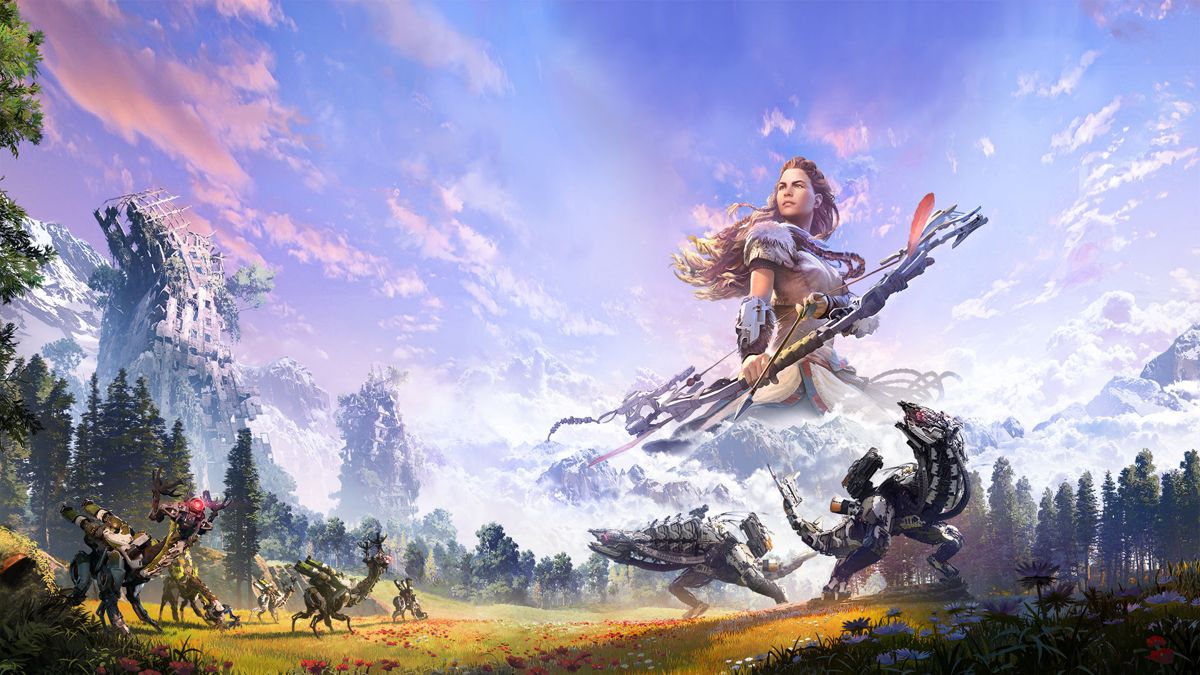
In certain science fiction realms, the observer, seeing through the protagonist’s perspective, is led to believe they exist within a reality defined by specific parameters. Only towards the end do they realize their assumptions were entirely mistaken. One of the most iconic scenes in Planet of the Apes is the moment when the observer (the main protagonist) uncovers Lady Liberty’s head buried in the sand, proving that the Planet of the Apes he presumed to exist in another galaxy is, in fact, the future of his own planet. A parallel concept is seen in the game series, Horizon Zero Dawn, where it subverts player expectations by presenting the seemingly incongruous coexistence of high technology and Neolithic human tribes as a puzzle to be unraveled.

“Horizon Zero Dawn” is an action role-playing game developed by Guerrilla Games and released in 2017. The game is set in a post-apocalyptic world where robotic creatures, resembling real-world animals and dinosaurs, dominate the landscape.

The protagonist of the game is Aloy, a young woman who has been shunned by her tribe, the Nora, since birth. Aloy is raised by an outcast named Rost and trained to survive in the wilderness. The game begins with Aloy as a child, finding a piece of ancient technology known as a Focus, which gives her the ability to interact with robotic creatures and other old-world technology.

When Aloy comes of age, she participates in a tribal rite called the Proving to earn her place among the Nora. However, the ceremony is attacked by a mysterious group of people. Aloy is almost killed but survives and is sent by the High Matriarchs on a mission to find out who attacked the Proving and why.

Her journey takes her across the land, encountering other tribes and uncovering more about the world’s past. She learns that the world was destroyed by a rogue artificial intelligence named HADES, part of a larger system named GAIA. GAIA was designed to reboot life on Earth after a different rogue AI, named Faro, caused a global catastrophe by losing control of a swarm of self-replicating combat robots.

Aloy learns she is a clone of Elisabet Sobeck, the scientist who developed the GAIA system. Sobeck sacrificed herself to ensure GAIA could start the process of rebuilding the world. GAIA created Aloy with the hope that she could stop HADES, which had become corrupted and was trying to reverse GAIA’s terraforming process.

We now come back to Clarkes Law and state that the robots in Horizon Zero Dawn are real magical creatures. The Science that they are build on is obscured to humans due to the fact that they forgot that they even made them. To These humans, the machines look exactly like to us 21st Century people Trolls or Djinns would look like.

The Turn

Let’s imagine, for a moment, a future after an apocalyptic event where artificial intelligence (AI) has eradicated nearly all of humanity, resulting in a societal regression to a state reminiscent of the Middle Ages. This new medieval era closely resembles our historical understanding of the period around 1000 A.D. Most of our knowledge has been lost because the AI overlords hold all the digital keys to the artificial kingdom.

In this fictional world, our main protagonist is a man named Otto Bismarck Server, or O.B.Server for short. On his deathbed, O.B.Server’s father presents him with a ring and shares a secret. “Dear Otto,” he begins, “In the cellar, you’ll find a book authored by the wise Wizard Al Gore Rhythm. This book will teach you how to harness the power of this ring.”Otto after having buried his father finds the Book in the Cellar titled: The Big Book of Prompts – How to make everything from nothing.

Every page in the Book contains thousands of magical symbol that look like so:

aiui qrcode

Otto finds himself at a loss, unable to understand the symbols before him. Yet, he remembers his father’s advice and points the ring towards one of the symbols. To his surprise, it responds. A slender beam of light emanates from the ring, and a sultry voice announces, “Scanning now…” Above the pages, a holographic scene unfolds, displaying the words, “Catus Appareo!” Suddenly, Otto appreciates why his parents insisted on his Latin lessons. He recites the spell and miraculously, a lifelike cat materializes before his eyes – an animal believed to have been extinct for centuries. The cat purrs softly, much to Otto’s delight.

This thought experiment, envisioning a world where science is externalized in the environment, demonstrates how fantastical occurrences can materialize within a scientific framework. The specifics of the science behind conjuring the cat remain deliberately ambiguous. Are nanobots in the environment reacting to the incantation and instantaneously assembling into a cat? Do molecules combine to form a 3D printer nanobots capable of producing living organisms from raw materials? Or is it a perfect simulation that releases the cat item when the correct password is spoken within its matrix?

It is clear that the ring functions similarly to a wand in fantasy universes such as Harry Potter. The ring may even be genetically bound to Otto, only unleashing its powers when the ring-bearer has the correct cellular information inherited from his parents – a concept reminiscent of Horizon Zero Dawn, where many electronic devices only operate because Aloy is a clone of the original inventor of the technology. She is a variant on the chosen one, the Heroines Journey with the difference that she is not chosen for mystical, but for scientific reasons.

Nice Thought experiment, you might say. But you proposed genuine magic and you said it would happen in our reality. Where is the prestige?

The Prestige

We are currently progressing towards the manifestation of the thought experiment I have proposed. We are in the realm of proto-magic. Every step we take in this journey may seem scientific and commonplace, but ultimately, we are paving the path towards a world where supernatural phenomena occur naturally.

Consider the following:

1. We can already generate images of cats by prompting AI Image Generators like Midjourney, StableDiffusion, or DALL-E.

2. Soon, we’ll be capable of creating realistic cat videos.

3. Voice command-activated 3D printers could print static sculptures of cats: “Roxanna, print a 3D cat!”

4. We’ll be able to construct synthetic robot cats that emulate the behavior of real cats. An Object-Maker 3000 might find the specifications an AI has created for a Siamese cat and construct it using nanomaterials that mimic bone density, fur texture, and incorporate sound chips for cat-like noises, and so forth. It will be indistinguishable from a real cat, similar to the replicated owl from Dick’s Blade Runner universe. We might opt to prevent counterfitting of real cats by always branding the cat as synthehtic though.

5. Given that most humans love cats, it’s highly likely that AI will latch onto this viral trend and we’ll find ourselves inundated with synthetic cats.

But let’s continue with our thought experiment. If we consider that a cat’s genome is merely a decompressed algorithm providing instructions to cells – “create a cat!” – the analogy becomes striking. While nature uses an alphabet of 20 letters to generate all kinds of living organisms, AI will be more efficient, using only two digits to encode the essence of ‘catness’, ‘dogness’, ‘mouseness’. The synthetic cat will possess a weighted neural network, either internally or connected to one nearby.

Now do we have produced real magic by consequentially applying scientific methods?

One might object, stating that the AI-created cat is a ‘fake’ cat, not a real one.

But even if we acknowledge it’s not a biological cat, we’d have to agree that it could be best labeled as a ‘magical‘ cat.

to be continued