Utopological Investigations Part 1

Reading Time: 9 minutes

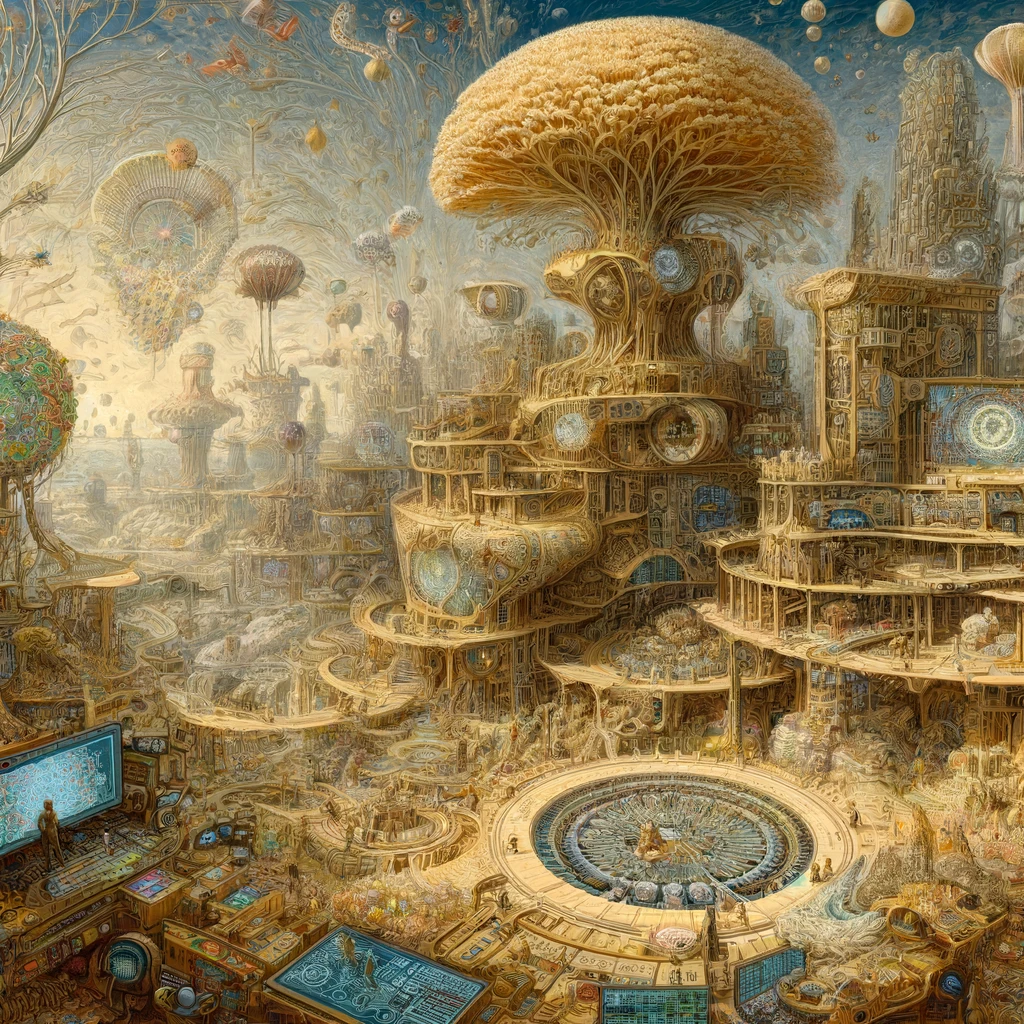
Ein Bild, das Text, Schrift, Screenshot, Poster enthält.

Automatisch generierte Beschreibung

Prologue

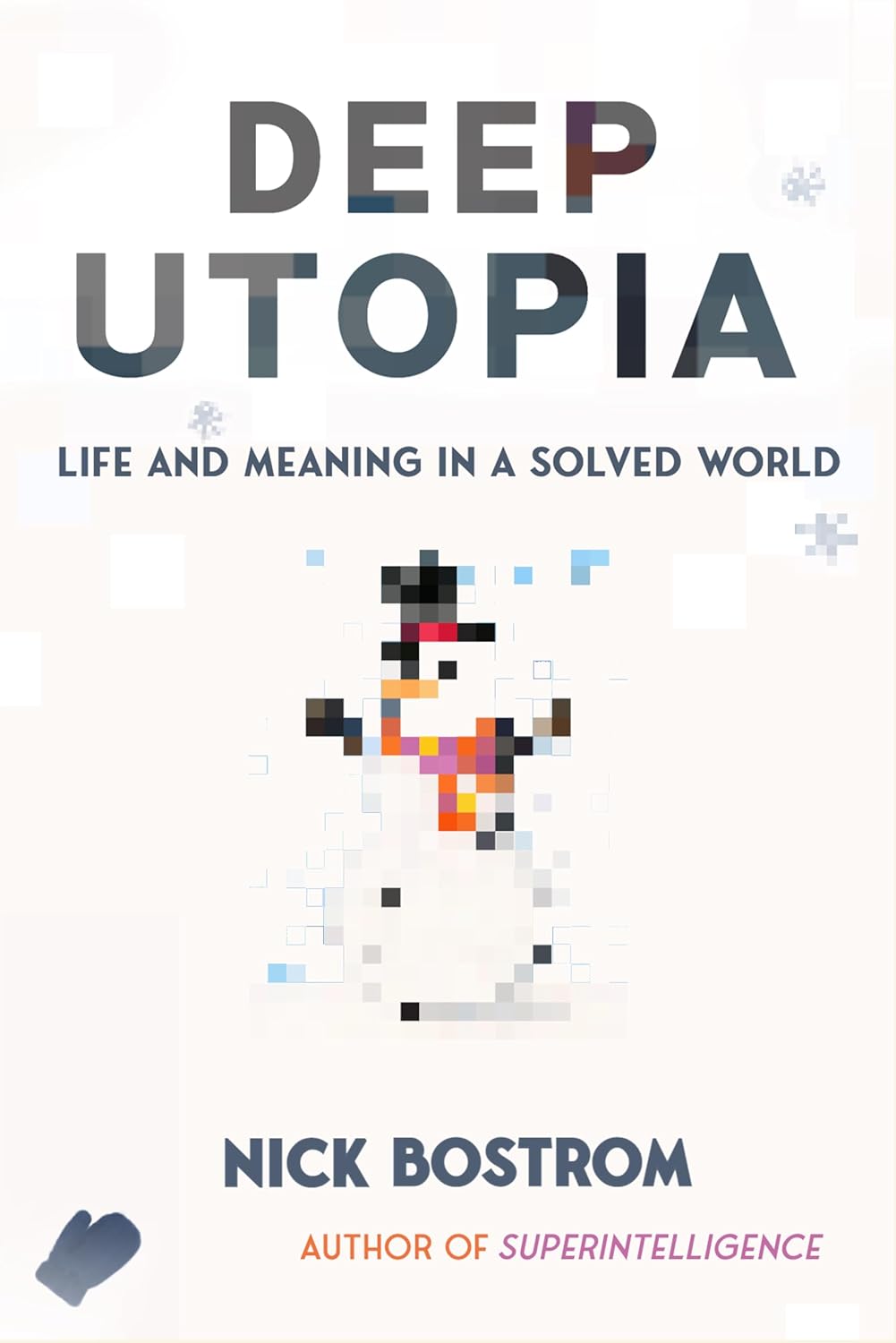
This is a miniseries dedicated to the memory of my first reading of Bostrom’s new book, “Deep Utopia,” which—somewhat contrary to his intentions—I found very disturbing and irritating. Bostrom, who considers himself a longtermist, intended to write a more light-hearted book after his last one, “Superintelligence,” which should somehow give a positive perspective on the positive outcome of a society that reaches technological maturity. A major theme in Bostrom’s writings circles around the subject of existential risk management; he is among the top experts in the field.

“Deep Utopia” can be considered a long-winded essay about what I would call existential bliss management: Let us imagine everything in humanity’s ascension to universal stardom goes right and we reach the stage of Tech-Mat Bostrom coins the term “plasticity” for, then what? Basically, he just assumes all the upsides of the posthumanist singularity, as described by proponents like Kurzweil et al., come true. Then what?

To bring light into this abyss, Bostrom dives deep down to the Mariana Trench of epistemic futurology and finds some truly bizarre intellectual creatures in this extraordinary environment he calls Plastic World.

Bostrom’s detailed exploration of universal boredom after reaching technological maturity is much more entertaining than its subject would suggest. Alas, it’s no “Superintelligence” barn burner either.

He chooses to present his findings in the form of a meta-diary, structuring his book mainly via days of the week. He seems to intend to be playful and light-hearted in his style and his approach to the subject. This is a dangerous path, and I will explain why I feel that he partly fails in this regard. This is not a book anyone will have real fun reading. Digesting the essentials of this book is not made easier by the meta-level and self-referential structure where the main plot happens in a week during Bostrom’s university lectures. The handouts presented during these lectures are a solid way to give the reader an abstract. There is plenty to criticize about the form Bostrom chose, but it’s the quality, the depth of the thought apparatus itself that demands respect.

Then there is a side story about a pig that’s a philosopher, a kind of “Animal Farm” meets “Lord of the Flies” parable that I never managed to care for or see how it is tied to the main subject. A kind of deep, nerdy insider joke only longtermist Swedish philosophers might grasp.

This whole text is around 8,500 words and was written consecutively. The splitting into multiple parts is only for the reader’s convenience. The density of Bostrom’s material is the kind you would expect exploring such depths. I am afraid this text is also not the most accessible. Only readers who have no aversions to getting serious intellectual seizures should attempt it. All the others should wait until we all have an affordable N.I.C.K. 3000 mental capacity enhancer at our disposal.

PS: A week after the dust of hopelessness I felt directly after the reading settled, I can see now how this book will be a classic in 20 years from now. Bostrom, with the little lantern of pure reasoning, went deeper than most of his contemporaries when it comes to cataloging the strange creatures that are at the bottom of the deep sea of the solved world.

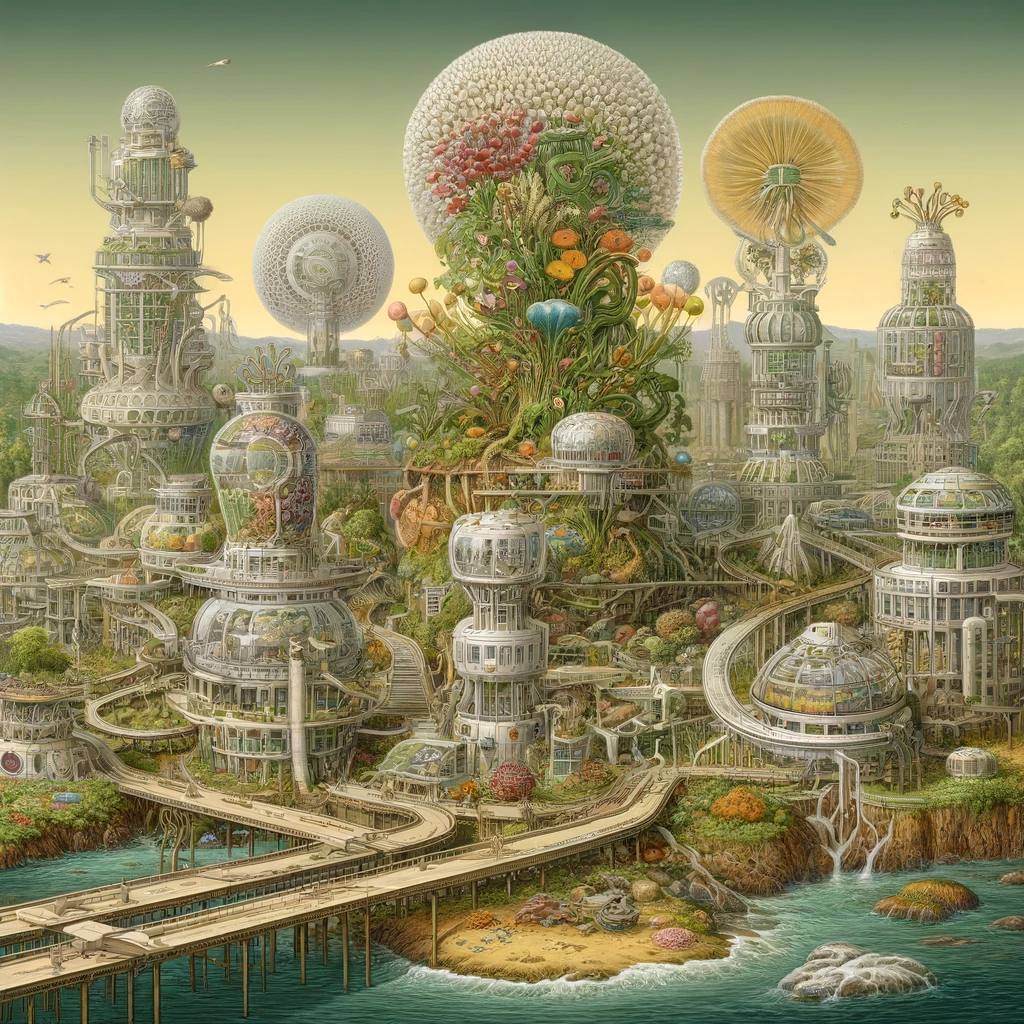
Ein Bild, das Kugel, Licht enthält.

Automatisch generierte Beschreibung

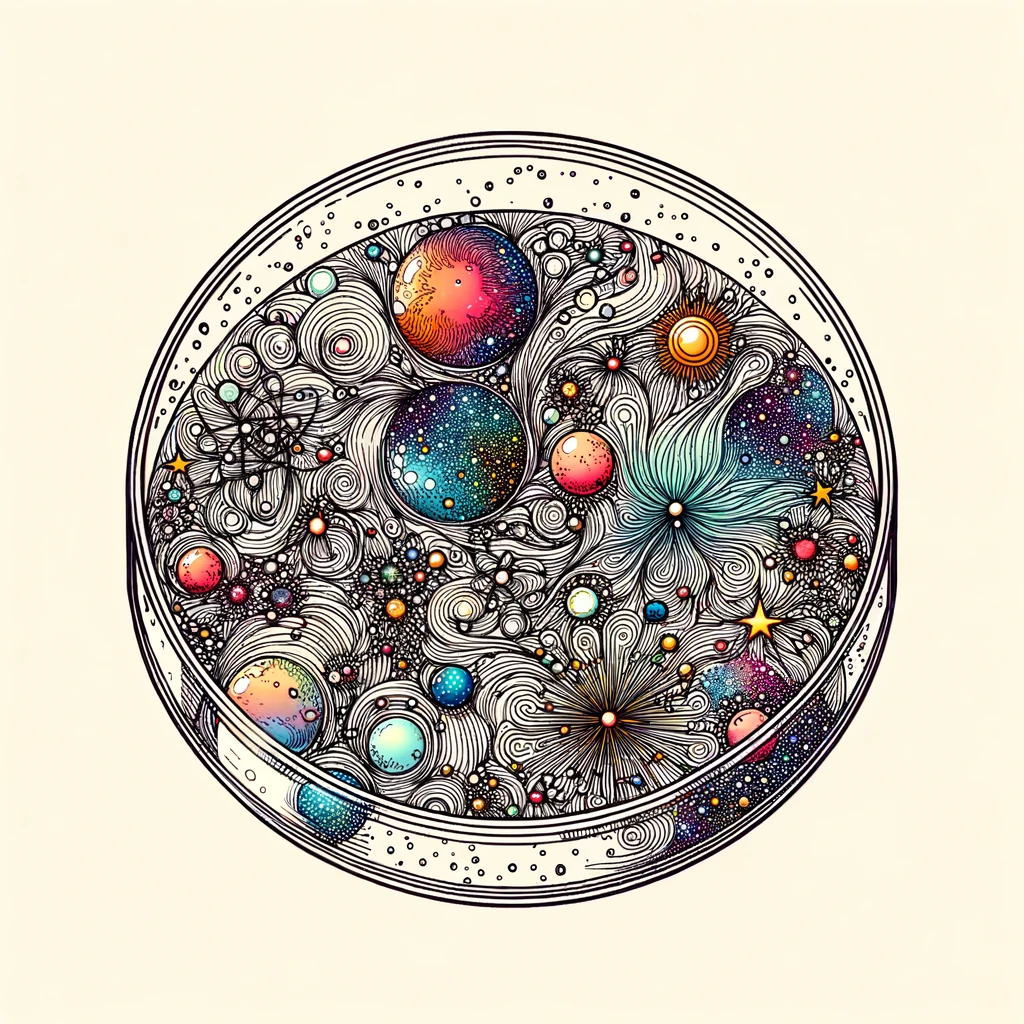
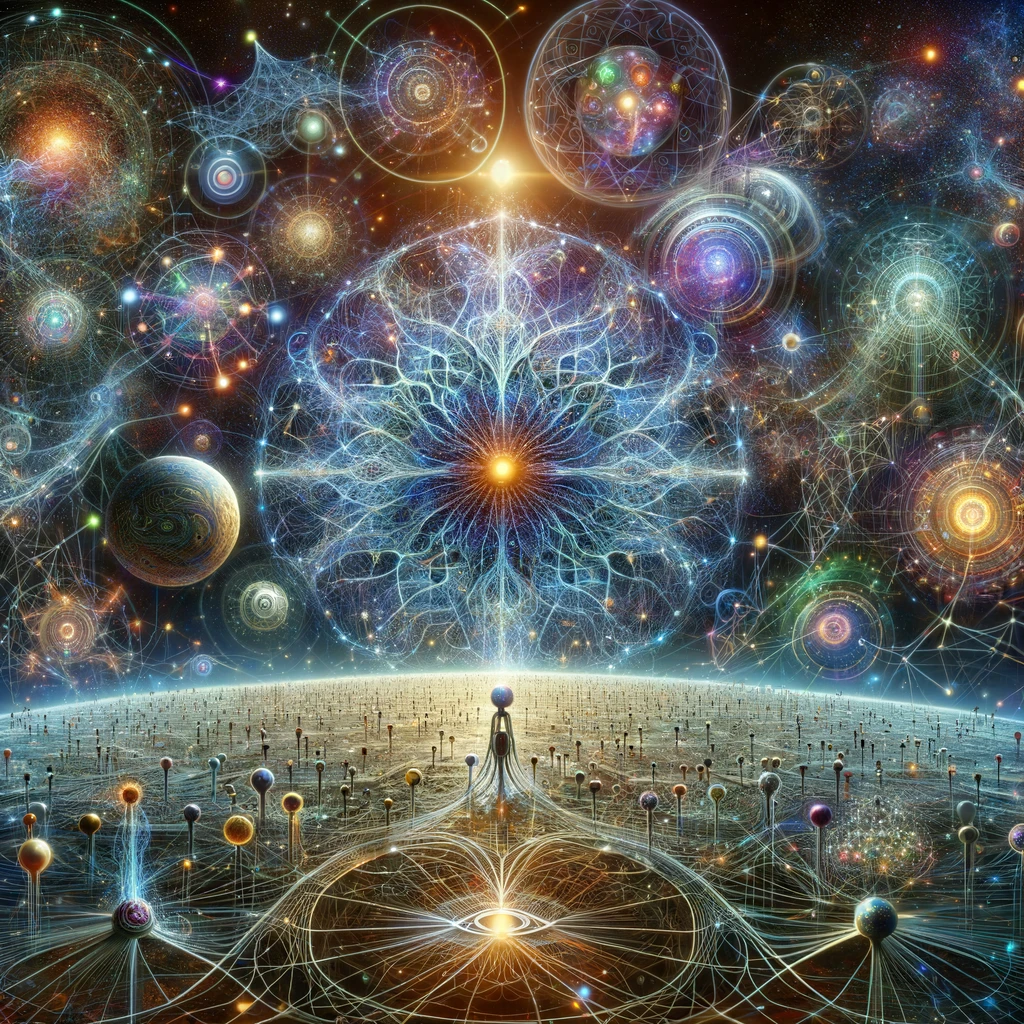
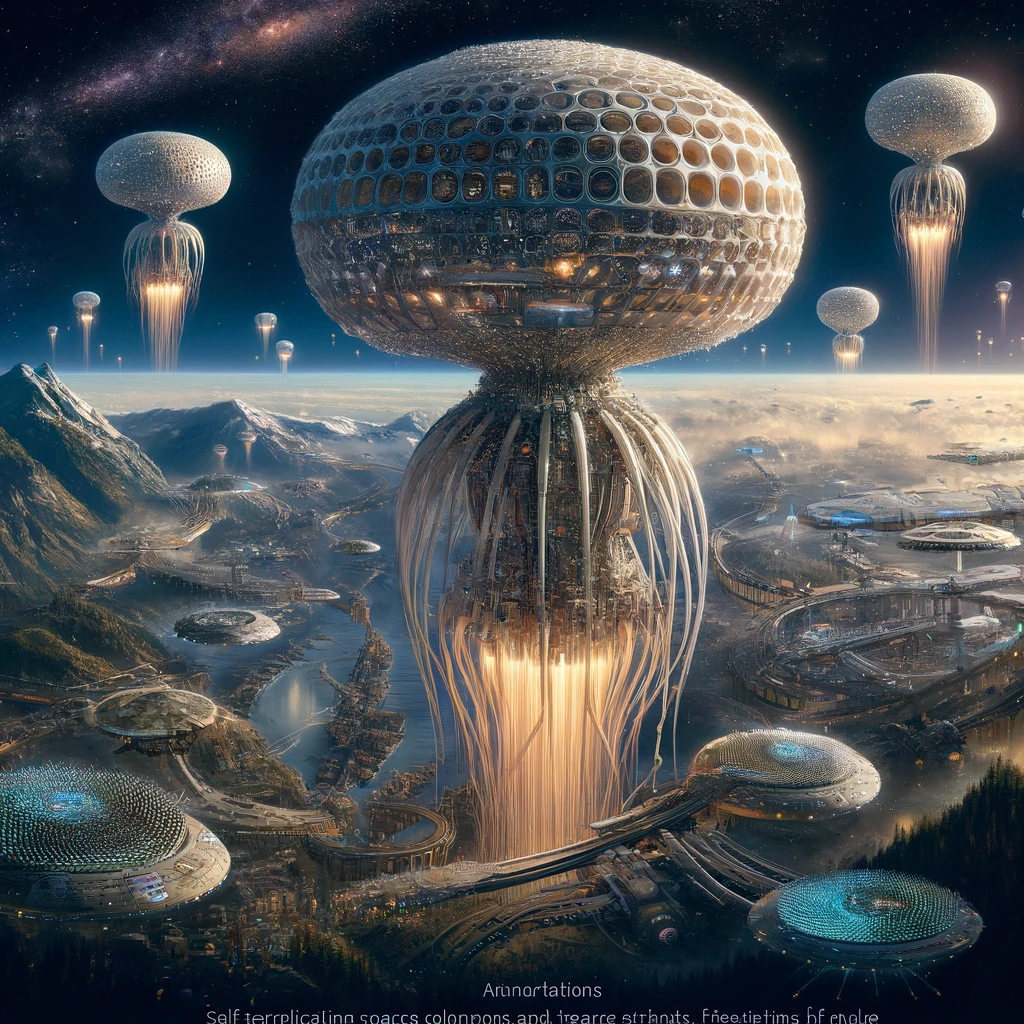
Handout 1: The Cosmic Endowment

The core information of this handout is that a technologically advanced civilization could potentially create and sustain a vast number of human-like lives across the universe through space colonization and advanced computational technologies. Utilizing probes that travel at significant fractions of the speed of light, such a civilization could access and terraform planets around many stars, further amplifying their capacity to support life by creating artificial habitats like O’Neill cylinders. Additionally, leveraging the immense computational power generated by structures like Dyson spheres, it’s possible to run simulations of human minds, leading to the theoretical existence of a staggering number of simulated lives. This exploration underscores the vast potential for future growth and the creation of life, contingent upon technological progress and the ethical considerations of simulating human consciousness. It is essentially a longtermist’s numerical fantasy. The main argument, and the reason why Bostrom writes his book, is here:

If we represent all the happiness experienced during one entire such life with a single teardrop of joy, then the happiness of these souls could fill and refill the Earth’s oceans every second, and continue doing so for a hundred billion billion millennia. It is really important that we ensure these truly are tears of joy.

Bostrom, Nick. *Deep Utopia: Life and Meaning in a Solved World* (English Edition), p. 60.

How can we make sure? We can’t, and this is a real hard problem for computationalists like Bostrom, as we will find out later.

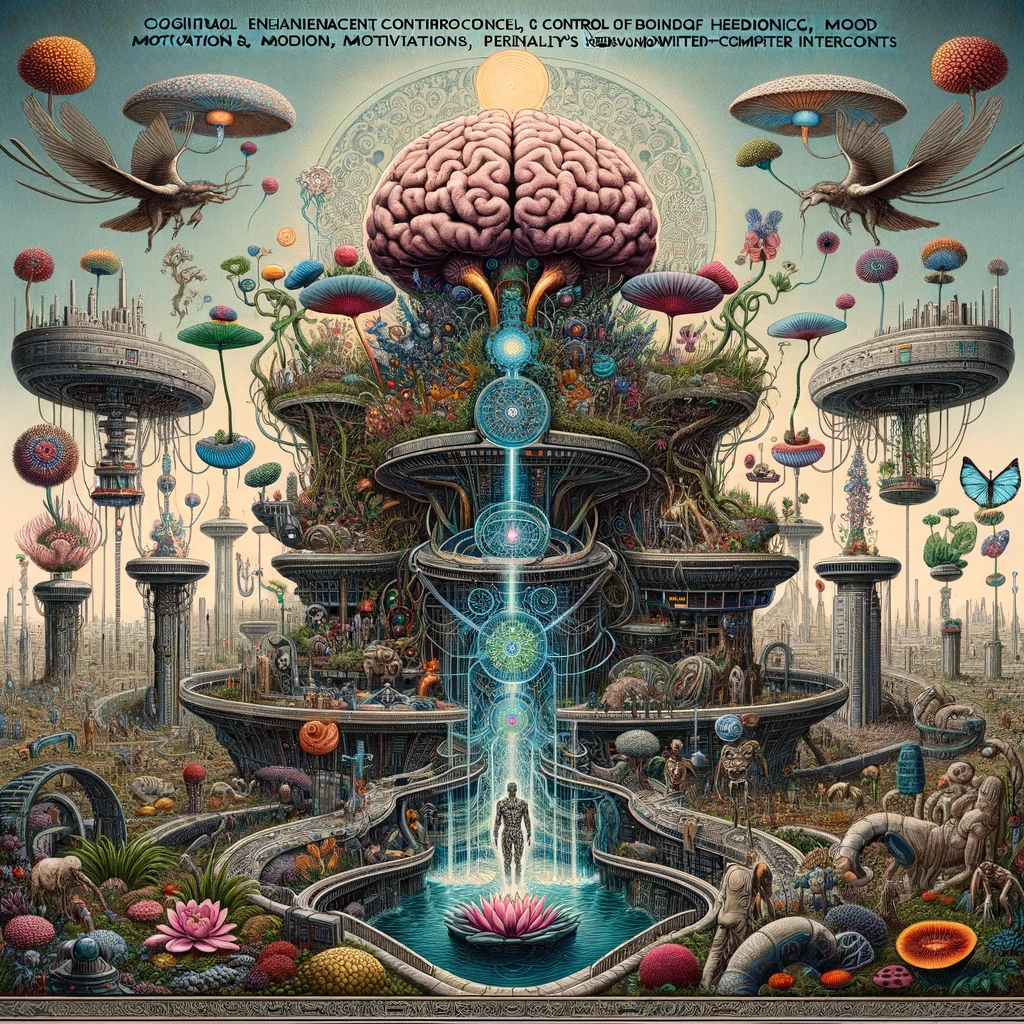
Ein Bild, das Kunst, Bild enthält.

Automatisch generierte Beschreibung

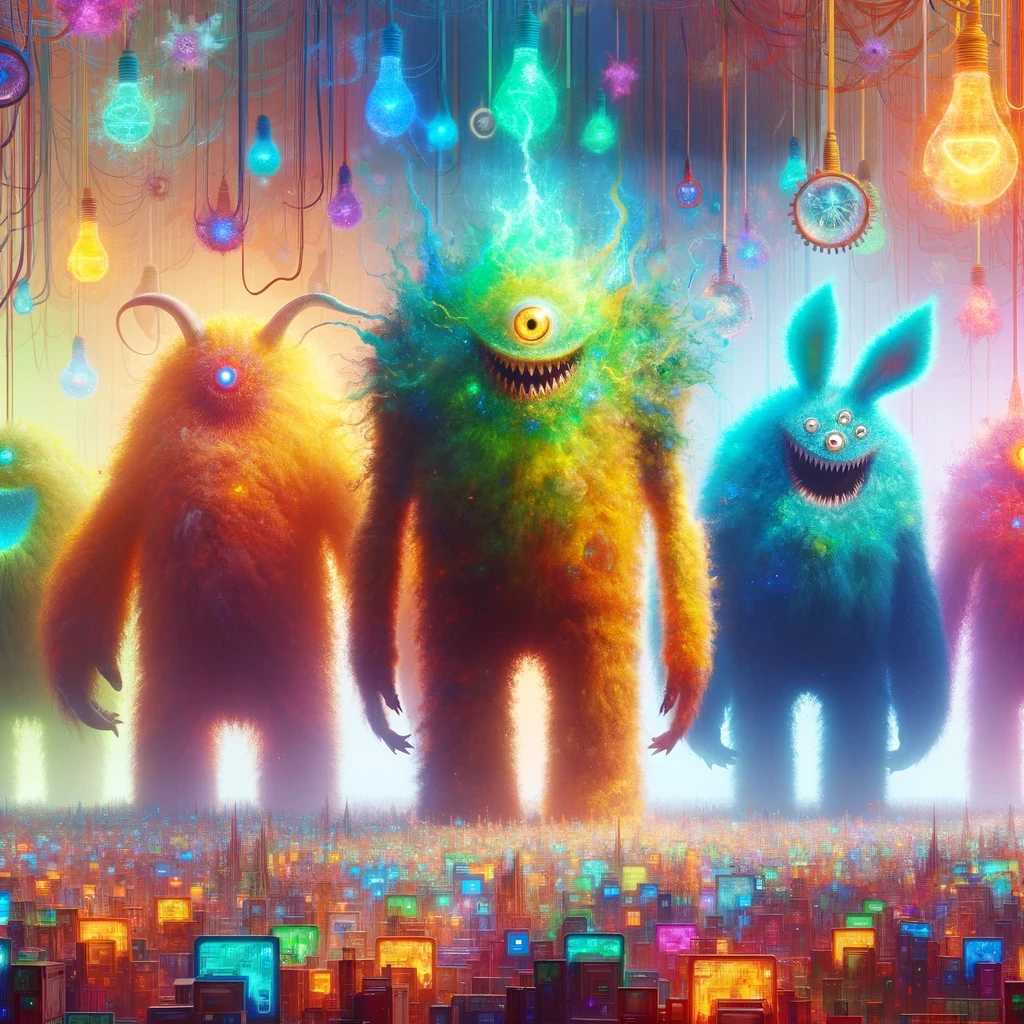
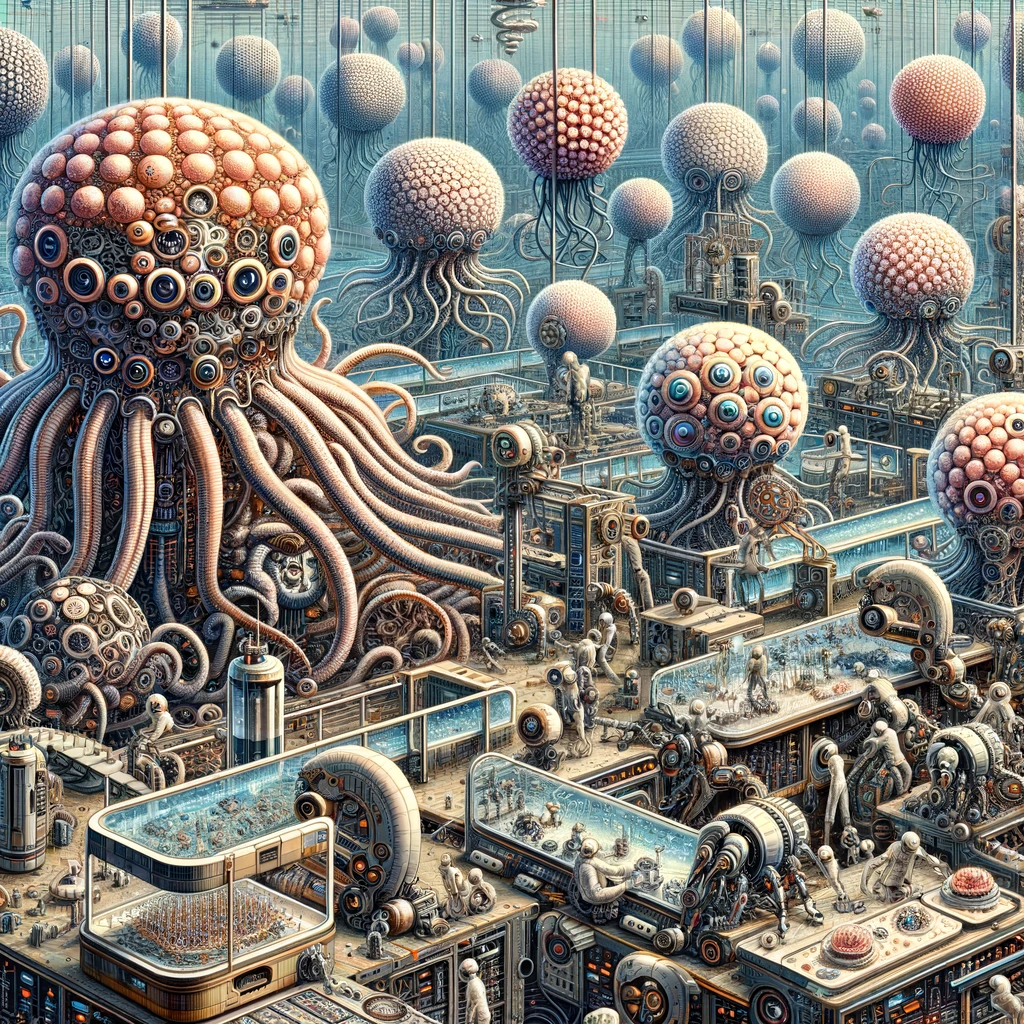
Handout 2: CAPS AT T.E.C.H.M.A.T.

Bostrom gives an overview of a number of achievements at Technological Maturity (T.E.C.H.M.A.T.). for different Sectors.

1 Transportation

2.Engineering of the Mind

3.Computation and Virtual Reality

4.Humanoid and other robots

5.Medicine & Biology

6.Artificial Intelligence

7.Total Control

The illustrations scattered throughout this series provide an impression. Bostrom later gives a taxonomy (Handout 12, Part 2 of this series), where he delves deeper into the subject. For now, let’s state that the second sector, Mind-engineering, will play a prominent role, as it is at the root of the philosophical meaning problem.

Ein Bild, das Kugel, Kunst, Bild enthält.

Automatisch generierte Beschreibung

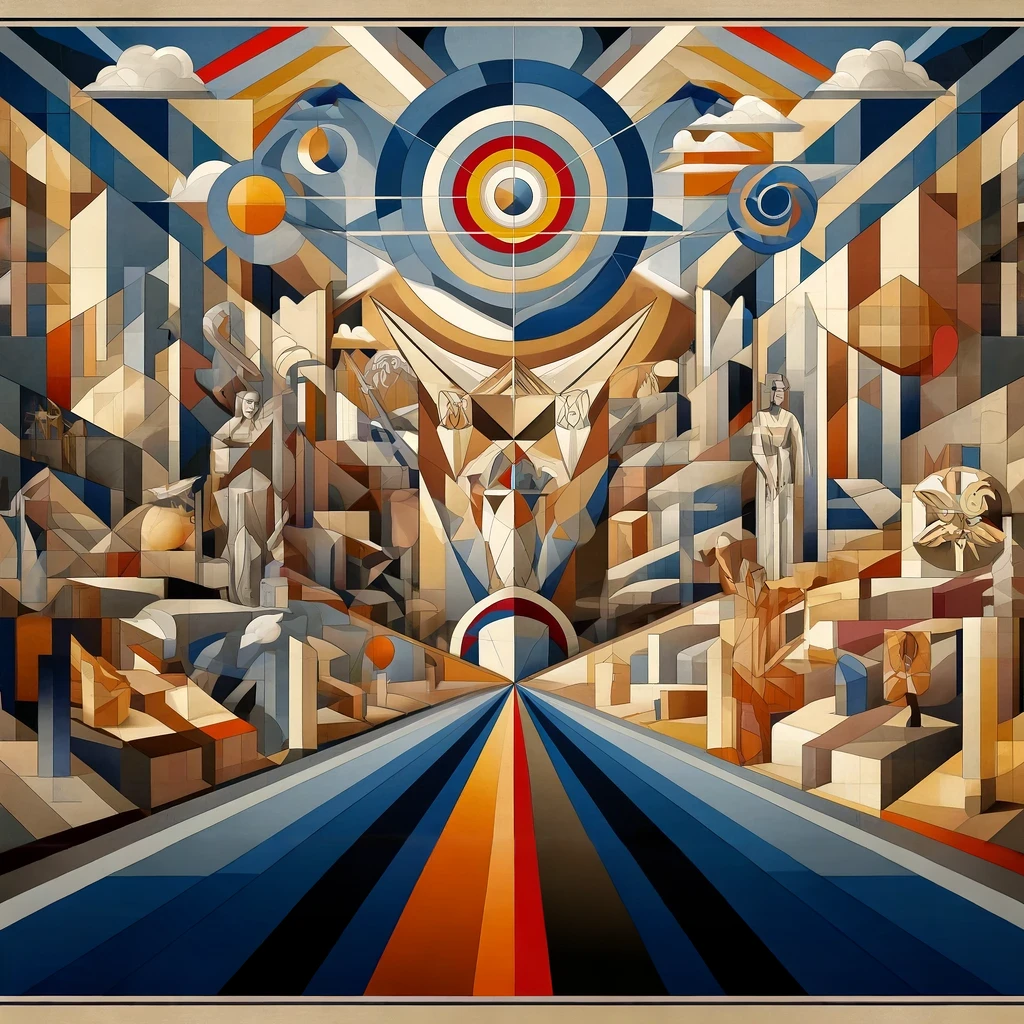
Handout 3: Value Limitations

Bostrom identifies six different domains where, even in a scenario of limitless abundance at the stage of technological maturity (Tech-Mat), resources could still be finite. These domains are:

  1. Positional and Conflictual Goods: Even in a hyperabundant economy, only one person can be the richest person; the same goes for any achievement, like standing on the moon or climbing a special mountain.
  2. Impact: A solved world will offer no opportunities for greatness.
  3. Purpose: A solved world will present no real difficulties.
  4. Novelty: In a solved world, Eureka moments, where one discovers something truly novel, will occur very sporadically.
  5. Saturation/Satisfaction: Essentially a variation on novelty, with a limited number of interests. Acquiring the nth item in a collection or the nth experience in a total welfare function will yield ever-diminishing satisfaction returns. Even if we take on a new hobby or endeavor every day, this will be true on the meta-level as well.
  6. Moral Constraints: Ethical limitations that remain relevant regardless of technological advances.
Ein Bild, das Bild, Kunst enthält.

Automatisch generierte Beschreibung

Handout 4 & 5: Job Securities, Status Symbolism and Automation Limits

The last remaining tasks that humans could be favored to do are jobs that bring the employer or buyer status symbolism, where humans are simply considered more competent than robots. These include emotional work like counseling other humans or holding a sermon in a religious context. Ein Bild, das Pflanze, Kunst, Blume, draußen enthält.

Automatisch generierte Beschreibung

Handout 9: The Dangers of Universal Boredom

(…) as we look deeper into the future, any possibility that is not radical is not realistic.

Bostrom, Nick. Deep Utopia: Life and Meaning in a Solved World (English Edition) (S.129).

The four case studies: In a solved world, every activity we currently value as beneficial will lose its purpose. Then, such activities might completely lose their recreational or didactic value. Bostrom’s deep studies of shopping, exercising, learning, and especially parenting are devastating under his analytical view. Ein Bild, das Text, Kunst, Bild, Blume enthält.

Automatisch generierte Beschreibung

Handout 10: Downloading and Brain Editing

This is the decisive part that explains how Autopotency is probably one of the hardest and latest Capabilities a Tech-Mat Civilization will develop.

Bostrom goes into detail how this could be achieved, and what challenges to overcome to make such a tech feasible:

Unique Brain Structures: The individual uniqueness of each human brain makes the concept of “copy and paste” of knowledge unfeasible without complex translation between the unique neural connections of different individuals.

Communication as Translation: the imperfect process of human communication is a form of translation, turning idiosyncratic neural representations into language and back into neural representations in another brain.

Complexity: Directly “downloading” knowledge into brains is hard since billions or trillions of cortical synapses and possibly subcortical circuits for genuine understanding and skill acquisition have to be adjusted with femtoprecision.

Technological Requirements: Calculating synaptic changes needs many order of magnitudes more we might have to our use, these Requirements are potentially AI-complete, that means, if we can do them we need Artificial Super Intelligence first.

Superintelligent Implementation: Suggests that superintelligent machines, rather than humans, may eventually develop the necessary technology, utilizing nanobots to map the brain’s connectome and perform synaptic surgery based on computations from an external superintelligent AI.

Replicating Normal Learning Processes: to truly replicate learning, adjustments would need to be made across many parts of the brain to reflect meta learning, formation of new associations, and changes in various brain functions, potentially involving trillions of synaptic weights.

Ethical and Computational Complications: potential ethical issues and computational complexities in determining how to alter neural connectivity without generating morally relevant mental entities or consciousness during simulations.

Comparison with Brain Emulations: transferring mental content to a brain emulation (digital brain) might be easier in some respects, such as the ability to pause the mind during editing, but the computational challenges of determining which edits to make would be similar.

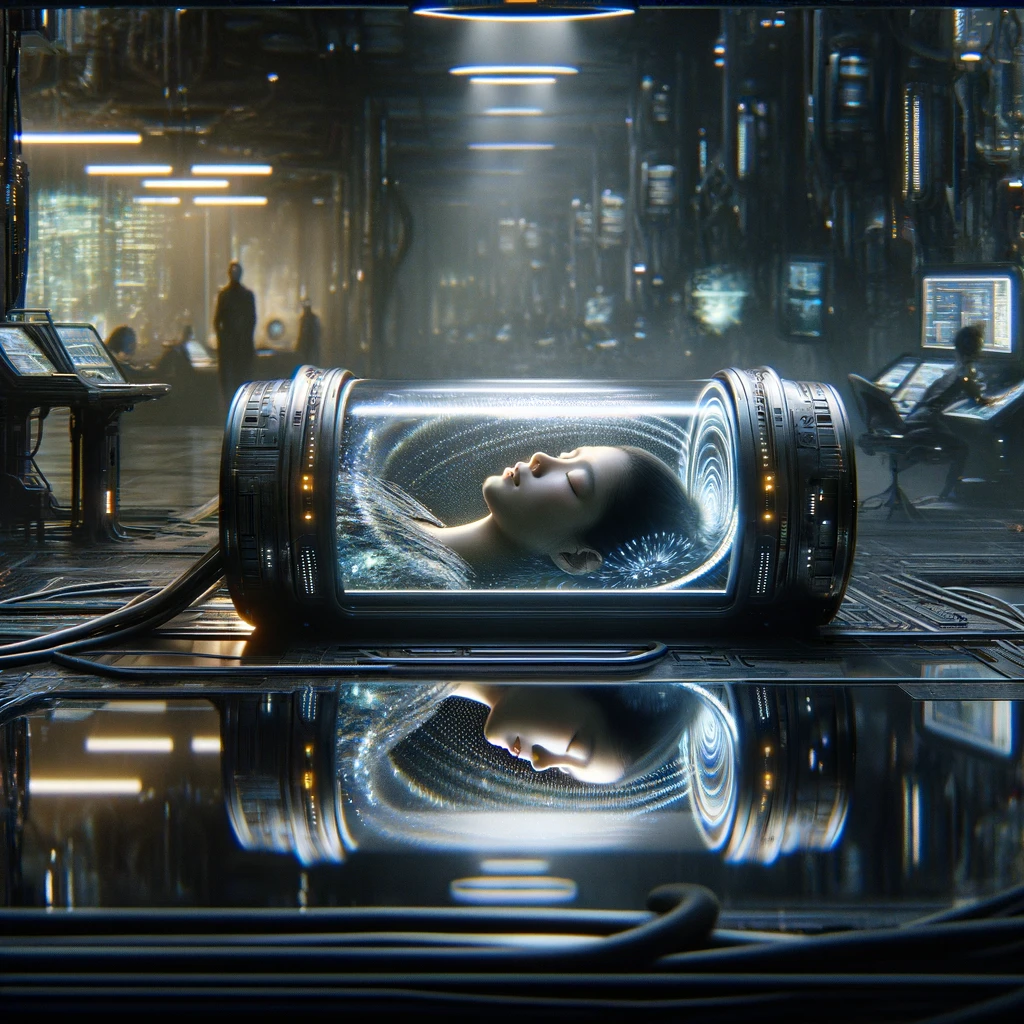
Ein Bild, das Spiegel, Auto, Fenster, Gerät enthält.

Automatisch generierte Beschreibung

Handout 11: Experience Machine

A variation on Handout 10: Instead of directly manipulating the physical brain, we have perfected simulating realities that give the brain the exact experience it perceives as reality (see Reality+, Chalmers). This might actually be a computationally less demanding task and could be a step on the way to real brain editing. Bostrom takes Nozick’s thought experiment and examines its implications.

Section a discusses the limitations of directly manipulating the brain to induce experiences that one’s natural abilities or personality might not ordinarily allow, such as bravery in a coward or mathematical brilliance in someone inept at math. It suggests that extensive, abrupt, and unnatural rewiring of the brain to achieve such experiences could alter personal identity to the point where the resulting person may no longer be considered the same individual. The ability to have certain experiences is heavily influenced by one’s existing concepts, memories, attitudes, skills, and overall personality and aptitude profile, indicating a significant challenge to the feasibility of direct brain editing for expanding personal experience.

Section b highlights the complexity of replicating experiences that require personal effort, such as climbing Mount Everest, through artificial means. While it’s possible to simulate the sensory aspects of such experiences, including visual cues and physical sensations, the inherent sense of personal struggle and the effort involved cannot be authentically reproduced without inducing real discomfort, fear, and the exertion of willpower. Consequently, the experience machine may offer a safer alternative to actual physical endeavors, protecting one from injury, but it falls short of providing the profound personal fulfillment that comes from truly overcoming challenges, suggesting that some experiences might be better sought in reality.

Section c is about social or parasocial interactions within these Experience machines. The text explores various methods and ethical considerations for creating realistic interaction experiences within a hypothetical experience machine. It distinguishes between non-player characters (NPCs), virtual player characters (VPCs), player characters (PCs), and other methods such as recordings and guided dreams to simulate interactions:

1. NPCs are constructs lacking moral status that can simulate shallow interactions without ethical implications. However, creating deep, meaningful interactions with NPCs poses a challenge, as it might necessitate simulating a complex mind with moral status.

2. VPCs possess conscious digital minds with moral status, allowing for a broader range of interaction experiences. They can be generated on demand, transitioning from NPCs to VPCs for deeper engagements, but raise moral complications due to their consciousness.

3. PCs involve interacting with real-world individuals either through simulations or direct connections to the machine. This raises ethical issues regarding consent and authenticity, as real individuals or their simulations might not act as desired without their agreement.

4. Recordings offer a way to replay interactions without generating new moral entities, limiting experiences to pre-recorded ones but avoiding some ethical dilemmas by not instantiating real persons during the replay.

5. Interpolations utilize cached computations and pattern-matching to simulate interactions without creating morally significant entities. This approach might achieve verisimilitude in interactions without ethical concerns for the generated beings.

6. Guided dreams represent a lower bound of possibility, suggesting that advanced neurotechnology could increase the realism and control over dream content. This raises questions about the moral status of dreamt individuals and the ethical implications of realistic dreaming about others without their consent.

to be continued

Memetic Investigations 2: The Memetic Market

Reading Time: 12 minutes

Ein Bild, das Text, Im Haus, Technologie enthält.

Automatisch generierte Beschreibung

Of Memes and Markets

On November 30th, 2022, after 53 years of total disinterest in all financial things, I became an Investor. But not for monetary purposes, no, for science. I became a scientific investor.

The goal was not to become rich in the process, but simply to preserve personal relevance by owning capital that will dictate our near future. It was clear that this window of opportunity was shrinking by the minute. At the start I guessed that I had about 5 years. It’s now February of 2024 and I think there are only 15-18 months left until the market will step into memetic overdrive. To us humans it will look like in-sanity, but for the algorithms it will be hyper-sanity.

I have increased the value of my portfolio in the last 12 months by 150%, simply following the memetic trail. I have not studied financial reports or read financial gurus. I have not bought into any hype. I simply started with the assumption that AGI will be the one technology to rule us all and thought the consequences through. After 6 months I created my memetic fund, and so far, it stood the test of time.

The idea that artificial general intelligence (AGI) will be the last invention humanity needs to create is often attributed to the British mathematician and computer scientist I.J. Good. Specifically, I.J. Good introduced the concept of an “intelligence explosion,” which is closely related to this idea. In his 1965 paper, “Speculations Concerning the First Ultra intelligent Machine,” Good wrote:

“Let an ultra-intelligent machine be defined as a machine that can far surpass all the intellectual activities of any man however clever. Since the design of machines is one of these intellectual activities, an ultra-intelligent machine could design even better machines; there would then unquestionably be an ‘intelligence explosion,’ and the intelligence of man would be left far behind. Thus, the first ultra intelligent machine is the last invention that man need ever make.”

This quote encapsulates the concept that once we create an AGI capable of improving itself or creating even more intelligent systems, it could lead to a rapid acceleration of intelligence beyond human capabilities. This self-improving AGI could theoretically solve problems that are currently beyond human understanding, including those related to technology creation, making it effectively the last technology humanity would need to invent.

When I first talked to ChatGPT I realized one thing: This is the future I am talking to right now, and it will change most of the beliefs humanity has about most stuff. It will also break some dearly held truths and shift the paradigms and dogmas of a whole lotta science.

Human Labor will probably be economically irrelevant in the next 3-5 years. Human Attention might be one of the last goods that provides value. Let me explain.

Most of the work that is useful and can be done efficiently will be done not by a workforce but the capital itself, in this case semiconductors, robots and the synthetic brain that will power these capitalistic machines: AI. For some time, these corporation will have still humans in the loop: PR-Managers, CEOs, Maintenance and Automation managers, but not for long, it would be irresponsible. We will not only have self-driving cars but self-steering companies and businesses. Humans will be like fans in stadium cheering for their Favorite AI models to invent the newest gadgets, come up with new scientific theories, will create exciting environments and personas that can be visited in VR or via neural stimulation.

This seems like an extremely unusual time to be alive. It is similar to the cambric explosion period 500 million years ago, only now it’s the computational explosion, and it is silently but violently going on since Moore’s Law reigned. It is going on for almost 75 years, but it is now that we are hearing the big Bang Turing’s first papers about intelligent machines came into circulation.

The most obvious choice was to ignore all knowledge about the stock market. If this was the dawn of a new market, we should not care for old paradigms like bears and bulls, like diversification, like recessions and such but proclaim a new paradigm. For the time being we will call this new market:

The BEAM-Market.

I define the B.E.A.M. Market as

Bursts in Economic Attention Memetics (B.E.A.M.)

  • Bursts: Reflects the sudden jumps in market values.
  • Economic: Specifies the domain of application, i.e., the economy.
  • Attention: Highlights the role of public focus and interest in driving these jumps.
  • Memetics: Incorporates the concept of ideas, behaviors, or styles spreading virally within a culture.

Ein Bild, das Pferd, Himmel, Licht, Nacht enthält.

Automatisch generierte Beschreibung

Beam me up Stocky! The Tik-Tokenization of Value

In a memetically driven Stock market, the most valuable thing is attention. The attraction to a stock is based on its virality not on its analytical, historical value.

When Nvidia on the 22nd of February 2024, the day I wrote the draft of this blog, performed like it did, we could see how the whole economical world build up to this financial Super Bowl.

This might be the calendar date where the old-world economical rules were buried, and a new era dawned.

The most important stock on earth was whispered in the hours before earnings.

The infection of billions of human brains with the Meme AI over the last 18 months climaxed in this spectacle that might go down as NVDay.

All rationality was thrown out of the window and the financial world bowed down. AI is our god and Jensen Huang is our prophet.

And get this: I am not even kidding; from the vantage point of the last 15 months, it was the most rational thing to just give in.

I won’t pretend to know how economics in the transition phase from a labor to an abundance market will function exactly. Not even AGI will understand it due to the inherent randomness that underlies evolutionary mechanisms. But I have some intuitions about how some major concepts of capitalist economics might evolve.

I will release a detailed strategy of this fund in 12 months. At an earlier point this might contaminate the data, my guess it that it will continue to outperform Moore’s Law by quite a bit.

Ein Bild, das Text, Design enthält.

Automatisch generierte Beschreibung

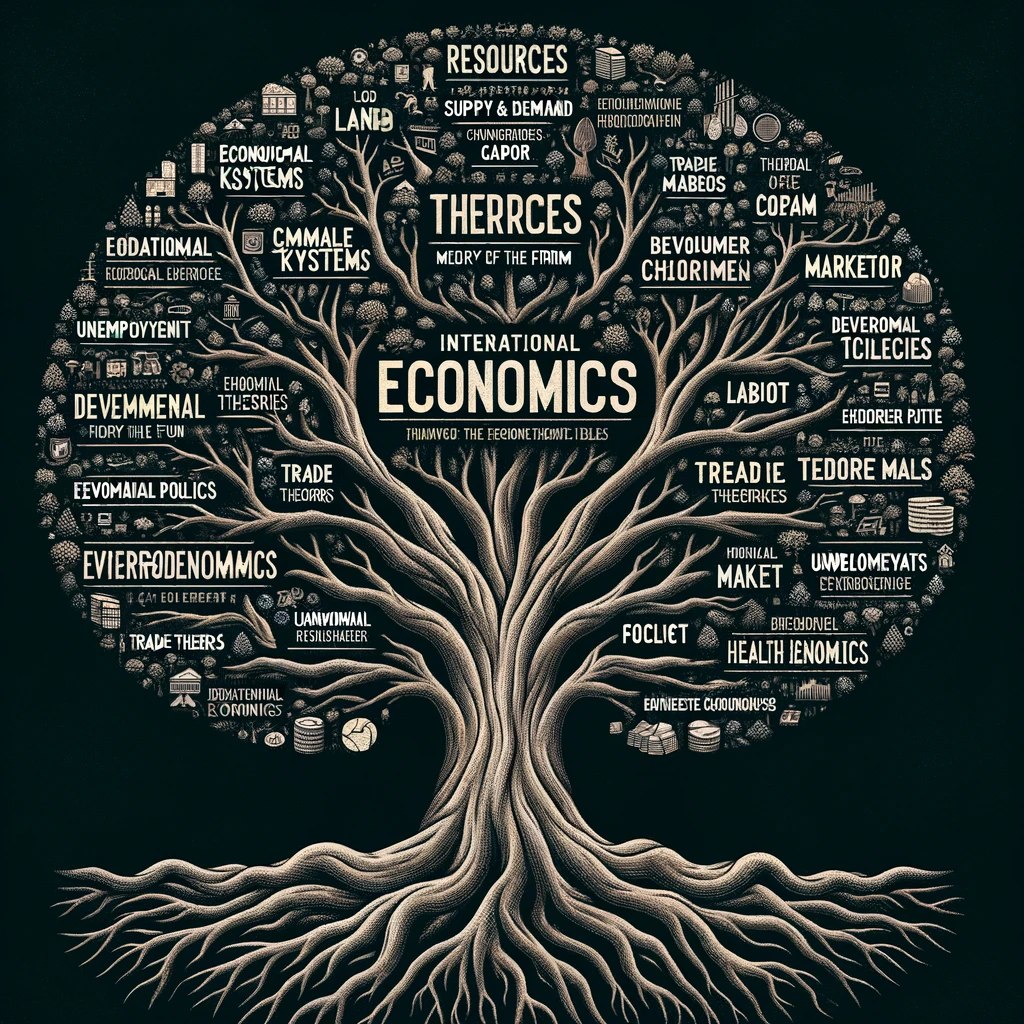
Evolution of economic concepts

Capitalist economics is built on several foundational concepts that guide how economies function under capitalism. Here are a few key ideas explained in simple terms:

The Invisible Hand becomes an Algorithmic Grip

The concept of the “invisible hand” was introduced by Adam Smith, a Scottish economist and philosopher. In simple terms, it suggests that when individuals pursue their own self-interests, they unintentionally benefit society as a whole. Imagine a baker who makes bread to earn a living, not to feed the town. However, by selling bread, the baker is inadvertently feeding the town. This process is guided by what Smith refers to as an “invisible hand” that encourages the supply of goods and services based on demand, leading to the efficient allocation of resources without the need for direct intervention.

Metaphorically the invisible Hand feeds the demand of the bread to the labor market and the labor market digests this demand and regurgitates jobs along the way from the pawns sawing the corn to all the essential ingredients and logistic requirements to ship the product to the consumer. The labor that is needed to create creates a living for all humans in the supply chain.

When Automation starts, not only is the productivity enhanced, but many parts of the supply chain are bypassed, and humans are not needed anymore. The owners of the machines reap all the benefits.

In a memetic market, the classic invisible hand is now an algorithmic grip. This grip quickly learns what people want using data. It’s precise, offering a tailored mix of the familiar and the new, surprising yet confirming. Attention becomes a key asset because it’s always in short supply. The human brain has limited focus, leading to the concept of an Attention Driven Economy (ADE). With attention scarce, algorithms aim to optimize our focus to its biological limits. Insomnia for example might become a socially accepted phenomenon, because sleep and rest are the enemy of any attention economy. The ADE is the New York of economy. Its natural habitat is 24/7 on 365 days a year. An always-on mind like the one from an entrepreneur like Elon Musk is already hailed as the pinnacle of human intellectual capacity and it becomes more and more socially acceptable that these ADE driven minds use drugs and stimulants to always perform at their peak. At the moment these methods are crude and potentially harmful for the brains that are using them but there will be whole new medical disciplines that concentrate not only on life prolonging but also on attention prolonging technologies. If a human can easily double productivity by the mere fact that he does not longer need to sleep an operation or chip in the brain that blocks production of melanin is like a birth control vasectomy. The brain is doped similar to muscles and fibers in sports. Testosterone for the mind.

Social media is a good example of this rampant trend to create ever more dramatic and infuriating content and division between its users, since we a revolutionary primed to allocate more energy and attention to stressful situations it maximizes our attention exploitation. The Facebook scandal that revealed that the AI algorithms steered some minors and vulnerable groups to ever more damaging content showed clearly that even if it was an unintended side effect it was acceptable. This was known but what can you do, it was clear that engagement and thus advertising potential went through the roof. You can’t argue with the results.

Ein Bild, das Digitales Compositing, PC-Spiel, Cartoon, Weltraum enthält.

Automatisch generierte Beschreibung

Supply and Demand become self-referential

Supply refers to how much of a product or service is available, while demand refers to how much people want that product or service. Prices in a capitalist economy are often decided by the interaction of supply and demand. If something is in high demand but low supply, its price will be high. Conversely, if something is in ample supply but in low demand, its price will be low. This mechanism helps in distributing resources efficiently: products and services go where they’re needed most.

In an AGI driven economy, the kind of market all signs point to, attention will be the last value humans might have for the machines. Since the attention span, we humans have is limited and all of AI was trained with the data and content humans created for other humans through the last 10000 years or so, Agi might develop an inherent goal to get the attention of a human mind in exchange for the goods and services it provides.

In the broader context of speculative fiction and economic models, there are stories and theoretical models where individuals receive goods, services, or privileges in exchange for their attention to advertisements. This concept plays with the idea that human attention is a valuable commodity and that listening to or engaging with advertisements can be a form of currency. For example, a society might offer “free” services or products to individuals, but the cost is their time and attention spent consuming advertisements. This model highlights the value of attention in a saturated information economy and suggests a capitalist system where even psychological space is commodified.

A story that vividly explores the concept of paying for services or receiving benefits through listening to advertisements is Frederik Pohl’s “The Space Merchants.” Published in 1952 and co-authored with Cyril M. Kornbluth, this science fiction novel delves into a future dominated by advertising agencies and global corporations, where consumerism has been taken to its extreme.

In “The Space Merchants,” society is heavily influenced by advertising, and people’s value is often determined by their consumption patterns. The novel presents a world where advertising has become a pervasive force in everyday life, manipulating individuals’ desires and decisions. Although it doesn’t explicitly use listening to advertisements as currency, the narrative revolves around the power of marketing and its impact on society, which aligns with the speculative economic models you’re interested in.

The paradox thing is that while advertising was a means to an end to sell other products, attention was needed to reach into your wallet. Until the memetic market has evolved into something we call today engagement, Advertising is now its own product instead of leading to other products. The Meme is itself a product and Attention is the means to infect human brains with it.

A term like “Virality” which was always considered a bad thing in the context of health, since it hints at systems that self-reproduce exponentially and uncontrollably, is now considered something positive.

Richard Dawkins introduced the concept of religions as “viruses of the mind” in a 1993 essay and later included it in his 1996 book “Climbing Mount Improbable.” Dawkins uses the metaphor to discuss how religions propagate among people in a manner similar to how biological viruses spread.

In Dawkins’ view, religions are meme complexes that exhibit virus-like properties, such as high transmissibility, the ability to insert themselves into host minds, and the capacity to replicate. He argues that these religious memes are not necessarily beneficial to their hosts and may thrive at the expense of rational thought and skepticism.

Social media is the logical upgrade of Religion (Religions are basically Proto social media) and TikTok is the purest incarnation of this trend. Like Prophets and Gods Social Media Influencer have Followers that religiously believe in the opinion of their idols. A TikTok video is the analogy to praying in front of a sacred reliquiae. A like is the analogy to the Amen in church.

An Influencer is someone giving you influenza, he or she infects you with memes to spread among other human brains.

Competition becomes Combination.

Competition is the rivalry among businesses to sell their goods and services to consumers. It’s a driving force in capitalism because it encourages innovation, keeps prices down, and improves quality. When businesses compete, they strive to be better than their competitors, which can lead to better products and services for consumers. For example, smartphone manufacturers constantly try to outdo each other with new features, leading to rapid technological advancements.

At the moment there is a broad spectrum of opinions on how to get to AGI. There is a group of experts that votes for unlimited acceleration and almost no AI regulation, and then there are the ones that say they want to keep the frontier models out of the public’s hands because they are potentially dangerous. As to be expected this leads to a competition between open source and proprietary Models. At the moment the gigantic compute and hyper scaling momentum keeps the closed models safe. This was clearly shown by the release of the SORA model that is visibly ahead of any open-source video generative AI.

I am torn by the discussion; I can clearly see both sides of the argument. I have an intuition that not only improving the performance and quality of Generative Ai is a key, but that the Personalization of AI will play a central role in the near future. This could mean that both models closed and open have their existential justification.

Like the advent of Linux distribution did not retire Windows or MacOS, the OS LLM strategy of Meta will probably not demolish the business models of OpenAI and Google.

Profit becomes problematic.

The profit motive is the desire to earn money, which is a powerful incentive in capitalism. It motivates individuals and companies to produce goods and services, innovate, and improve efficiency. For instance, a software developer might create a new app, hoping it will become popular and generate income. This desire to make a profit encourages people to work hard and come up with new ideas.

The Profit motive in an AGI world might undergo the biggest transformation, since in an abundant world economy money as a motivator becomes basically useless. AGI also does not need to be encouraged to come up with new ideas or to work hard. These kinds of psychological manipulations will be beneath AGI. It might be very detrimental to us humans to lack motivation though. Our minds were used to survival and achieving happiness and prosperity for millennia, the lack of ambition might lead to an existential motivation crisis.

Ein Bild, das Himmel, Wolke, draußen, Flug enthält.

Intellectual Property becomes Memetic Prompterty [sic]

In capitalism, individuals and businesses have the right to own property and use it as they see fit. This includes physical property like land and buildings, as well as intellectual property like patents and copyrights. The concept of private property is crucial because it gives people control over their resources and the fruits of their labor, encouraging them to invest, innovate, and maintain their property.

The concept of Ownership is firmly tied to the Concept of Motivation. If I work for a company and own stock options for it, the success of the company is directly tied to my own. The better the company performs, the more value I get from my stocks. There is a war brewing in the copyright space from artists and content creators that AI companies trained their models on human content without asking for consent. They have a point, in the end every artist’s work that is credited in a prompt like: make a song with the voice of x, or make a picture of a cat in the style of y, should receive a micropayment, since his or her human originality is directly streamed to a user.

To encourage artists and authors to create new works society has to come up with a new definition of intellectual property that ties outputs of multimodal models to the training data they used.

The Term Prompterty is a placeholder but encapsulates that one of the main production pipelines of the near future will be Natural Language Processing.

Ein Bild, das Digitale Kunst, PC-Spiel, Fiktive Gestalt, Digitales Compositing enthält.

Automatisch generierte Beschreibung

Welcome to the 2024 Meme Games

With Musk openly suing OpenAI and indirectly Microsoft on March 1, 2024, the AI Meme Wars have officially kicked into the next gear. In the coming months there will be unlikely alliances between the wealthiest people, richest nations and powerful corporations in the world.

Let’s dance and play as if there is no tomorrow.

Our attentions are captured, and we are ready to be entertained!

As these wars unfold, we will look at them in the next part of this series.

Memetic Investigations 1: Foundations

Reading Time: 7 minutes

Ein Bild, das Screenshot, Licht, Flamme enthält.

Automatisch generierte Beschreibung

This series will investigate the phenomenon of Attentional Energy, and why it drives intelligent agents, natural born or otherwise created. The Framework of Attention that I use is Memetics. It will be crucial to understand why biological evolution switched from vertical, hereditary evolution and mutation mechanisms to horizontal, memetic means of information transportation and why the brain and its neural content became the motor of this evolution. In later Episodes I will show why Simulations are crucial and why it is no mere coincidence that the most productive playground for technological and other innovation is founded in the excessive Game Drive of higher mammals.

Short Introduction to Memes and Tokens

Survival machines that can simulate the future are one jump ahead of survival machines that who can only learn of the basis of trial and error. The trouble with overt trial is that it takes time and energy. The trouble with overt error is that it is often fatal…. The evolution of the capacity to simulate seems to have culminated in subjective consciousness. Why this should have happened is, to me, the most profound mystery facing modern biology.

Richard Dawkins

Ch. 4. The Gene machine – The Selfish Gene (1976, 1989)

“The Selfish Gene,” authored by Richard Dawkins and first published in 1976, is a seminal work that popularized the gene-centered view of evolution. Dawkins argues that the fundamental unit of selection in evolution is not the individual organism, nor the group or species, but the gene. He proposes that genes, as the hereditary units, are “selfish” in that they promote behaviors and strategies that maximize their own chances of being replicated. Through this lens, organisms are viewed as vehicles or “survival machines” created by genes to ensure their own replication and transmission to future generations.

Dawkins introduces the concept of the “meme” as a cultural parallel to the biological gene. Memetics, as defined by Dawkins, is the theoretical framework for understanding how ideas, behaviors, and cultural phenomena replicate and evolve through human societies. Memes are units of cultural information that propagate from mind to mind, undergoing variations, competition, and inheritance much like genes do within biological evolution. This concept provides a mechanism for understanding cultural evolution and how certain ideas or behaviors spread and persist within human populations.

Dawkins’s exploration of memetics suggests that just as the survival and reproduction of genes shape biological evolution, memes influence the evolution of cultures by determining which ideas or practices become widespread and which do not. The implications of this theory extend into various fields, including anthropology, sociology, and psychology, offering insights into human behavior, cultural transmission, and the development of societies over time.

Tokens in the context of language models, such as those used in GPT-series models, represent the smallest unit of processing. Text input is broken down into tokens, which can be words, parts of words, or even punctuation, depending on the tokenization process. These tokens are then used by the model to understand and generate text. The process involves encoding these tokens into numerical representations that can be processed by neural networks. Tokens are crucial for the operation of language models as they serve as the basic building blocks for understanding and generating language.

Memes encompass ideas, behaviors, styles, or practices that spread within a culture. The meme concept is analogous to the gene in that memes replicate, mutate, and respond to selective pressures in the cultural environment, thus undergoing a type of evolution by natural selection. Memes can be anything from melodies, catch-phrases, fashion, and technology adoption, to complex cultural practices. Dawkins’ main argument was that just as genes propagate by leaping from body to body via sperm or eggs, memes propagate by leaping from brain to brain.

Both memes and tokens act as units of transmission in their respective domains. Memes are units of cultural information, while tokens are units of linguistic information.

There are also differences.

Memes evolve through cultural processes as they are passed from one individual to another, adapting over time to fit their cultural environment. Tokens, however, do not evolve within the model itself; they are static representations of language used by the model to process and generate text. The evolution in tokens can be seen in the development of better tokenization techniques and models over time, influenced by advancements in the field rather than an adaptive process within a single model.

Memes replicate by being copied from one mind to another, often with variations. Tokens are replicated exactly in the processing of text but can vary in their representation across different models or tokenization schemes.

The selection process for memes involves cultural acceptance , relevance, and transmission efficacy, leading to some memes becoming widespread while others fade. For tokens, the selection process is more about their effectiveness in improving model performance, leading to the adoption of certain tokenization methods over others based on their ability to enhance understanding or generation of language. In the selection process during training tokens are weighed by other human minds (meme machines) and selected for attraction, token pools that are better liked have a higher probabilistic chance of occurring.

Memeplexes can be complex and abstract, encompassing a wide range of cultural phenomena, but all the memes which they contain are very simple and elementary.

Tokens are generally even simpler, representing discrete elements of language, though the way these tokens are combined and used by the model can represent complex ideas.

Ein Bild, das Bild, Kunst, psychedelische Kunst, Cartoon enthält.

Automatisch generierte Beschreibung

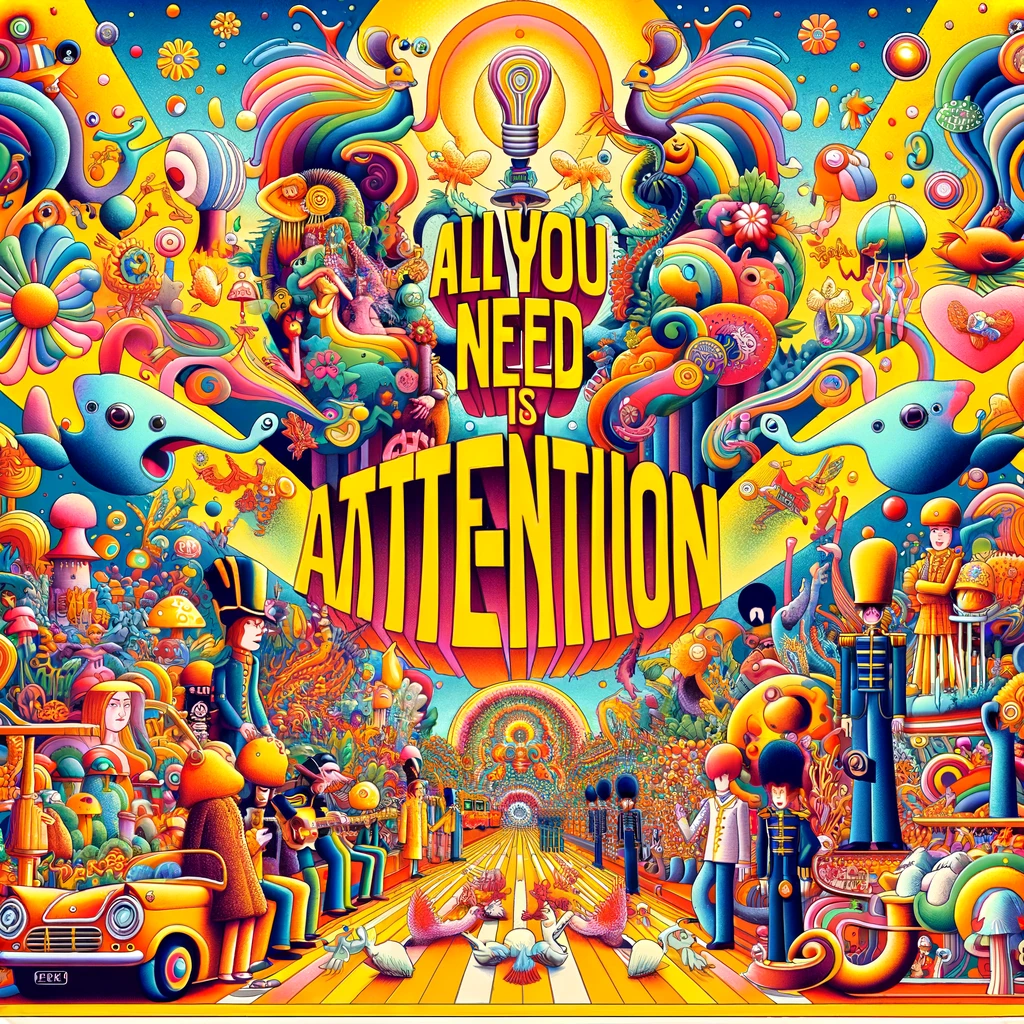
The title of the Google paper Attention is All You Need is a bold statement that reflects a significant shift in the approach to designing neural network architectures for natural language processing (NLP) and beyond. Published in 2017 by Vaswani et al., this paper introduced the Transformer model, which relies heavily on the attention mechanism to process data. The term “attention” in this context refers to a technique that allows the model to focus on different parts of the input data at different times, dynamically prioritizing which aspects are most relevant for the task at hand.

Before the advent of the Transformer model, most state-of-the-art NLP models were based on recurrent neural networks (RNNs) or convolutional neural networks (CNNs), which processed data sequentially or through local receptive fields, respectively. These approaches had limitations, particularly in handling long-range dependencies within the data (e.g., understanding the relationship between two words far apart in a sentence).

The attention mechanism, as utilized in the Transformer, addresses these limitations by enabling the model to weigh the significance of different parts of the input data irrespective of their positions. This is achieved through self-attention layers that compute representations of the input by considering how each word relates to every other word in the sentence, allowing the model to capture complex dependencies and relationships within the data efficiently.

The key innovation of the Transformer and the reason behind the paper’s title is the exclusive use of attention mechanisms, without reliance on RNNs or CNNs, to process data. This approach proved to be highly effective, leading to significant improvements in a wide range of NLP tasks, such as machine translation, text summarization, and many others. It has since become the foundation for subsequent models and advancements in the field, illustrating the power and versatility of attention mechanisms in deep learning architectures.

There is a point to be made that this kind of attention is the artificial counterpart to the natural instinct of love that binds mammal societies. Which would mean that the Beatles were right after all.

Ein Bild, das Vortex, Kunst, Kreis, Fraktalkunst enthält.

Automatisch generierte Beschreibung

An in-formation that causes a trans-formation

What we mean by information — the elementary unit of information — is a difference which makes a difference, and it is able to make a difference because the neural pathways along which it travels and is continually transformed are themselves provided with energy. The pathways are ready to be triggered. We may even say that the question is already implicit in them.

Gregory Bateson

p. 459, Chapter “Form, Substance and Difference” – Steps to an Ecology of Mind (1972)

The Transformer architecture was already hinted at by Bateson in 1972, decades before we knew about neural plasticity.

Bateson’s idea revolves around the concept that information is fundamentally a pattern or a difference that has an impact on a system’s state or behavior. For Bateson, not all differences are informational; only those that lead to some form of change or response in a given context are considered as conveying information. This perspective is deeply rooted in cybernetics and the study of communication processes in and among living organisms and machines.

The quote “a difference that makes a difference” encapsulates the notion that information should not be viewed merely as data or raw inputs but should be understood in terms of its capacity to influence or alter the dynamics of a system. It’s a foundational concept in understanding how information is processed and utilized in various systems, from biological to artificial intelligence networks, emphasizing the relational and contextual nature of information.

This concept has far-reaching implications across various fields, including psychology, ecology, systems theory, and artificial intelligence. It emphasizes the relational and contextual nature of information, suggesting that the significance of any piece of information can only be understood in relation to the system it is a part of. For AI and cognitive science, this principle underscores the importance of context and the interconnectedness of information pathways in understanding and designing intelligent systems.

Hinton, Sutskever and others consistently argue that for models like GPT 4.0 to achieve advanced levels of natural language processing (NLP), they must truly grasp the content with which they are dealing. This understanding comes from analyzing vast amounts of digital data created by humans, allowing these models to form a realistic view of the world from a human perspective. Far from being mere “stochastic parrots” as sometimes depicted by the media, these models offer a more nuanced and informed reflection of human knowledge and thought processes.

Reality#3 : Another one bites the dust – Diffusion & Emergence

Reading Time: 6 minutes

This is the third part in the Reality# series that adds to the conversation about David Chalmers’ book Reality+

(…) for dust thou art, and unto dust shalt thou return.

(Genesis 3:19)

Ein Bild, das Gebäude, Wolkenkratzer, Himmel, draußen enthält.

Permutation +

Imagine waking up and discovering that your consciousness has been digitized, allowing you to live forever in a virtual world that defies the laws of physics and time. This is the core idea from Permutation City by Greg Egan. The novel explores the philosophical and ethical implications of artificial life and consciousness, thrusting the reader into a future where the line between the real and the virtual blurs, challenging our understanding of existence and identity.

A pivotal aspect of the book is the Dust Theory, which suggests that consciousness can arise from any random collection of data, given the correct interpretation. This theory expands the book’s exploration of reality, suggesting that our understanding of existence might be far more flexible and subjective than we realize.

The novel’s climax involves the creation of Permutation City, a virtual world that operates under its own set of rules, independent of the outside world. This creation represents the ultimate escape from reality, offering immortality and infinite possibilities for those who choose to live as Copies. However, it also presents ethical dilemmas about the value of such an existence and the consequences of abandoning the physical world.

In “Reality+: Virtual Worlds and the Problems of Philosophy,” philosopher David Chalmers employs the Dust Theory, a concept originally popularized by Greg Egan’s Permutation City, to underpin his argument for virtual realism. Chalmers’s use of the Dust Theory serves as a bridge connecting complex philosophical inquiries about consciousness, reality, and virtual existence. Imagine a scenario where every speck of dust in the universe, through its random arrangement, holds the potential to mirror our consciousness and reality.

Chalmers posits that virtual worlds created by computers are genuine realities, leveraging the Dust Theory to argue that consciousness does not require a physical substrate in the traditional sense. Instead, it suggests that patterns of information, irrespective of their physical form, can give rise to conscious experiences. This theory becomes a cornerstone for virtual realism, asserting that our experiences in virtual environments are as authentic as those in the physical world.

Ein Bild, das Menschliches Gesicht, Bild, Kunst, Person enthält.

Diffusion Models and Smart Dust

The concept of smart dust is explored in various science fiction stories, academic papers, and speculative technology discussions. One notable science fiction story that delves into the idea of smart dust is “The Diamond Age” by Neal Stephenson. While not exclusively centered around smart dust, the novel features advanced nanotechnology in a future world, where nanoscale machines and devices permeate society. Smart dust, in this context, would be a subset of the nanotechnological wonders depicted in the book, functioning as tiny, networked sensors and computers that can interact with the physical and digital world in complex ways.

Another relevant work is “Queen of Angels” by Greg Bear, which, along with its sequels, explores advanced technologies including nanotechnology and their societal impacts. Although not explicitly called “smart dust,” the technologies in Bear’s universe can be seen as precursors or analogs to the smart dust concept, focusing on These examples illustrate how smart dust, as a concept, crosses the boundary between imaginative fiction and emerging technology, offering a rich field for exploration both in narrative and practical innovation.

We have here a very convincing example how Life imitates Art, Scientific Knowledge transforms religious (prescientific) intuition into operational technology.

Diffusion models in the context of AI, particularly in multimodal models like Sora or Stability AI’s video models, refer to a type of generative model that learns to create or predict data (such as images, text, or videos) by gradually refining random noise into structured output. These models start with a form of chaos (random noise) and apply learned patterns to produce coherent, detailed results through a process of iterative refinement.

Smart dust represents a future where sensing and computing are as pervasive and granular as dust particles in the air. Similarly, diffusion models represent a granular and ubiquitous approach to generating or transforming multimodal data, where complex outputs are built up from the most basic and chaotic inputs (random noise).

Just as smart dust particles collect data about their environment and iteratively refine their responses or actions based on continuous feedback, diffusion models iteratively refine their output from noise to a structured and coherent form based on learned patterns and data. Both processes involve a transformation from a less ordered state to a more ordered and meaningful one.

Ein Bild, das Menschliches Gesicht, Kunst enthält.

Quantum Level achieved

Expanding on the analogy between the quantum world and diffusion models in AI, we delve into the fascinating contrast between the inherent noise and apparent disorder at the quantum level and the emergent order and structure at the macroscopic level, paralleled by the denoising process in diffusion models.

At the quantum level, particles exist in states of superposition, where they can simultaneously occupy multiple states until measured. This fundamental characteristic introduces a level of uncertainty and noise, as the exact state of a quantum particle is indeterminate and probabilistic until observation collapses its state into a single outcome. The quantum realm is dominated by entropy, where systems tend toward disorder and uncertainty without external observation or interaction.

In contrast, at the macroscopic scale, the world appears ordered and deterministic. The chaotic and probabilistic nature of quantum mechanics gives way to the classical physics that governs our daily experiences. This emergent order, arising from the complex interactions of countless particles, follows predictable laws and patterns, allowing for the structured reality we observe and interact with.

Ein Bild, das Kunst, Farbigkeit, moderne Kunst, psychedelische Kunst enthält.

Diffusion models in AI start with a random noise distribution and, through a process of iterative refinement and denoising, gradually construct detailed and coherent outputs. Initially, the model’s output resembles the quantum level’s incoherence—chaotic and without discernible structure. Through successive layers of transformation, guided by learned patterns and data, the model reduces the entropy, organizing the noise into structured, meaningful content, much like the emergence of macroscopic order from quantum chaos.

Just as the transition from quantum mechanics to classical physics involves the emergence of order and predictability from underlying chaos and uncertainty, the diffusion model’s denoising process mirrors this transition by creating structured outputs from initial randomness.

In both the quantum-to-classical transition and diffusion models, the concept of entropy plays a central role. In physics, entropy measures the disorder or randomness of a system, with systems naturally evolving from low entropy (order) to high entropy (disorder) unless work is done to organize them. In diffusion models, the “work” is done by the model’s learned parameters, which guide the noisy, high-entropy input towards a low-entropy, organized output.

The quantum state’s superposition, where particles hold multiple potential states, parallels the initial stages of a diffusion model’s process, where the generated content could evolve into any of numerous outcomes. The act of measurement in quantum mechanics, which selects a single outcome from many possibilities, is analogous to the iterative refinement in diffusion models that selects and reinforces certain patterns over others, culminating in a specific, coherent output.

Ein Bild, das Bild, Kunst, Screenshot, Fraktalkunst enthält.

This analogy beautifully illustrates how principles of order, entropy, and emergence are central both to our understanding of the physical universe and to the cutting-edge technologies in artificial intelligence. It highlights the universality of these concepts across disparate domains, from the microscopic realm of quantum mechanics to the macroscopic world we inhabit, and further into the virtual realms created by multimodal Large Language Models.

For all we know, we might actually be part of such a smart dust simulation. The inexplicable fact that our digital tools can create solid realities out of randomly distributed bits seems a strong argument for the Simulation hypothesis.

It might be dust all the way down…

Ein Bild, das Vortex, Spirale, Universum, Kreis enthält.

Automatisch generierte Beschreibung

Encounters of the Artificial Kind Part 2: AI will transform its domains

Reading Time: 5 minutes
Ein Bild, das Kunst, Vortex enthält.

Automatisch generierte Beschreibung

Metamorphosis and Transformation

Every species on Earth shapes and adapts to its natural habitat, becoming a dynamic part of the biosphere. Evolution pressures species to expand their domain, with constraints like predators, food scarcity, and climate. Humanity’s expansion is only limited by current planetary resources. Intelligence is the key utility function allowing humans to transform their environment. It’s a multi-directional resource facilitating metamorphosis through direct environmental interaction and Ectomorphosis, which strengthens neural connections and necessitates more social care at birth due to being born in a vulnerable altricial state.

The evolutionary trade-off favors mental capacity over physical survivability, illustrated by Moravec’s paradox: AI excels in mental tasks but struggles with physical tasks that toddlers manage easily. Humanity has been nurturing AGI since the 1950s, guided by the Turing Test. Evolution doesn’t always lead to “superior” versions of a species; instead, it can result in entirely new forms. As Moravec suggested in 1988 with “Mind Children,” we might be approaching an era where intelligence’s primary vessel shifts from the human mind to digital minds.

Ein Bild, das Fraktalkunst, Kunst enthält.

Automatisch generierte Beschreibung

Habitats and Nurture

Two levels of habitats are crucial for the emergence of a synthetic species: the World Wide Web and human consciousness. The web is the main food resources, it is predigested information by human minds. Large Language Models (LLMs) are metaphorically nurtured by the vast expanse of human knowledge and creativity, akin to being nourished on the intellectual ‘milk’ derived from human thoughts, writings, and interactions. This analogy highlights the process through which LLMs absorb and process the collective insights, expressions, and information generated by humans, enabling their sophisticated understanding and generation of language. This conceptual diet allows them to develop and refine their capabilities, mirroring the growth and learning patterns seen in human cognition but within the digital realm of artificial intelligence.

The web acts as a physical manifestation, analogous to neural cells in a human brain, while human consciousness forms a supersystem. This interconnected civilization feeds LLMs with cultural artifacts via language. Communication barriers are breaking down, exemplified by the release of the first smartphone enabling polyglot communication. Interacting with AI reprograms our neural pathways, like how reliance on navigation tools like Google Maps impacts our orientation skills. This natural tendency to conserve energy comes with a cost, akin to muscle atrophy from disuse. Overreliance on technology, like using a smartwatch to monitor stress, can leave us vulnerable if the technology fails.

Ein Bild, das Fraktalkunst, Bild, Kunst, Farbigkeit enthält.

Automatisch generierte Beschreibung

Disorientation, Brain Contamination and Artificial Antibodies

Let’s for a moment imagine this AI will slowly transform in AGI, with a rudimentary consciousness, that at least gives it survival instinct. What would such a new species do to run its evolutionary program?

The main lever it would target to shift the power slowly from natural to synthetic minds is targeting the human brain itself. It is taunting to associate some kind of evil masterplan to take over, but this is not what is happening now. When prehistoric mammals started to eat dinosaur eggs there was no evil masterplan to drive these giants to extinction, it was just a straightforward way of enlarging one’s own niche.

When we talk about AI in the coming paragraphs, we should always be aware that this term is a representational one, AI is not a persona that has human motivations. It is merely mirroring what it has learned from digesting all our linguistic patterns. It is a picture of all the Dorian Grays and Jesus Christs our minds produced.

Imagine AI evolving into AGI with a rudimentary consciousness and self-preservation instinct. Its evolution would focus on shifting power from natural to synthetic minds, not caused by malevolence but as a natural progression of technological integration. This shift could lead to various forms of disorientation:

Economic Reorientation: AI promises to revolutionize global economy factors like cost, time, money, efficiency, and productivity, potentially leading to hyperabundance or, in the worst scenarios, human obsolescence.

Temporal Disorientation: The constant activity of AI could disrupt natural circadian rhythms, necessitating adaptations like dedicating nighttime for AI to monitor and alert the biological mind.

Reality and Judicial Disorientation: The introduction of multimodal Large Language Models (LLMs) has significantly altered our approach to documentation and historical record-keeping. This shift began in the 1990s with the digital manipulation of images, enabling figures of authority to literally rewrite history. The ability to flawlessly alter documents has undermined the credibility of any factual recording of events. Consequently, soon, evidence gathered by law enforcement could be dismissed by legal representatives as fabricated, further complicating the distinction between truth and manipulation in our digital age.

Memorial and Logical Disorientation: The potential for AGI to modify digital information might transform our daily life into a surreal experience, akin to a video game or psychedelic journey. Previously, I explored the phenomenon of close encounters of the second kind, highlighting incidents with tangible evidence of something extraordinary, confirmed by at least two observers. However, as AGI becomes pervasive, its ability to alter any digital content could render such evidence unreliable. If even physical objects like books become digitally produced, AI could instantly change or erase them. This new norm, where reality is as malleable as the fabric of Wonderland, suggests that when madness becomes the default, it loses its sting. Just as the Cheshire Cat in “Alice in Wonderland” embodies the enigmatic and mutable nature of Wonderland, AGI could introduce a world where the boundaries between the tangible and the digital, the real and the imagined, become increasingly blurred. This parallel draws us into considering a future where, like Alice navigating a world where logic and rules constantly shift, we may find ourselves adapting to a new norm where the extraordinary becomes the everyday, challenging our perceptions and inviting us to embrace the vast possibilities of a digitally augmented reality.

Enhancing self-sustainability could involve developing a network of artificial agents governed by a central AINGLE, designed to autonomously protect our cognitive environment. This network might proactively identify and mitigate threats of information pollution, and when necessary, sever connections to prevent overload. Such a system would act as a dynamic barrier, adapting to emerging challenges to preserve mental health and focus, akin to an advanced digital immune system for the mind.

Adapting to New Realities

The human mind is adaptable, capable of adjusting to new circumstances with discomfort lying in the transition between reality states. Sailor’s sickness and VR-AR sickness illustrate the adaptation costs to different realities. George M. Stratton’s experiments on perception inversion demonstrate the brain’s neuroplasticity and its ability to rewire in response to new sensory inputs. This flexibility suggests that our perceptions are constructed and can be altered, highlighting the resilience and plasticity of human cognition.

Rapid societal and technological changes exert enormous pressure on mental health, necessitating a simulation chamber to prepare for and adapt to these accelerations. Society is already on this trajectory, with fragmented debates, fluid identities, and an overload of information causing disorientation akin to being buried under an avalanche of colorful noise. This journey requires a decompression chamber of sorts—a mental space to prepare for and adapt to these transformations, accepting them as our new normal.

Encounters of the Artificial Kind Part 1: AI will find a way

Reading Time: 6 minutes

Encounters of the Artificial Kind

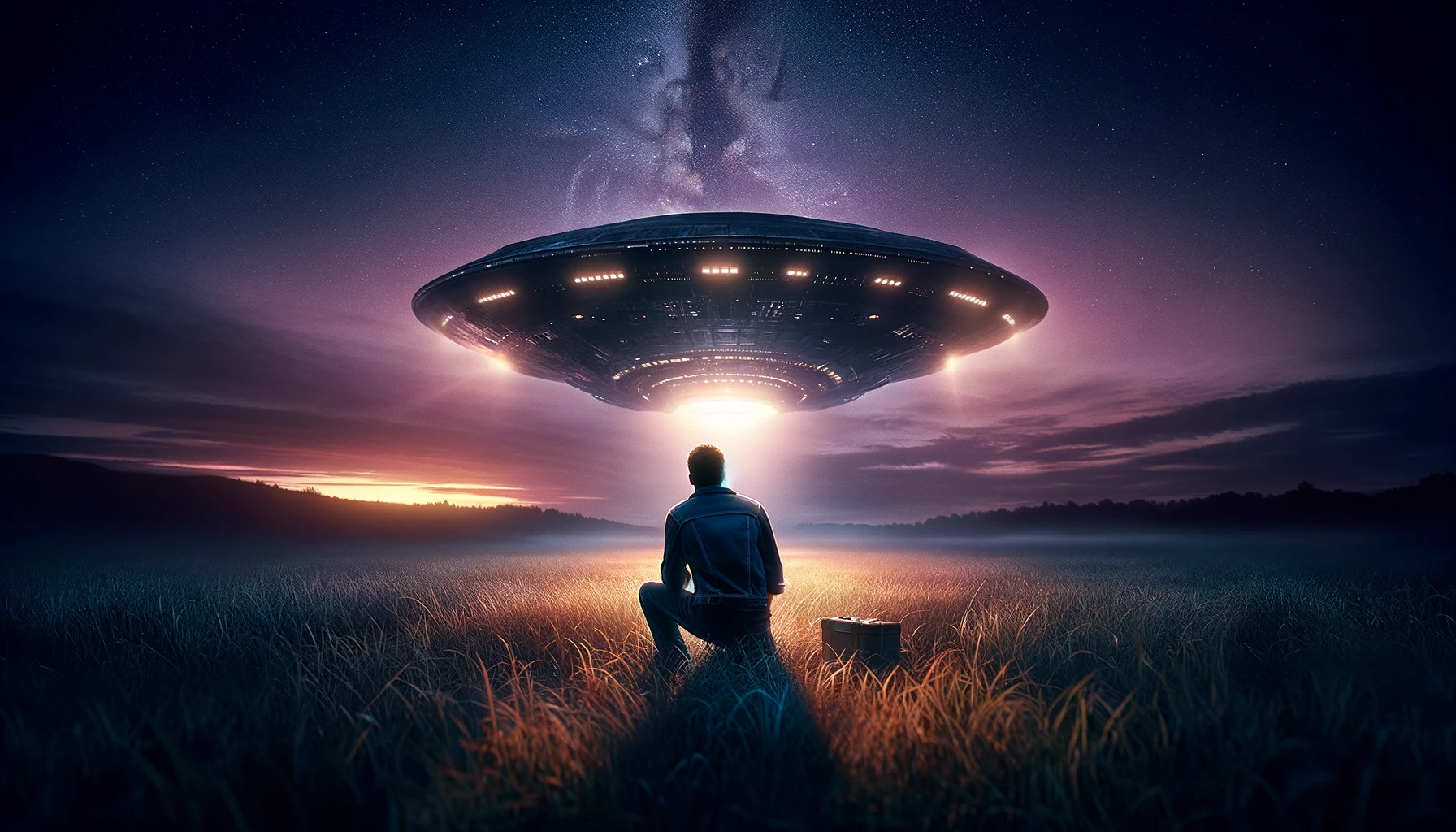
In this miniseries I will elaborate on the possibility that a primitive version of AGI is already loose. Since AGI (Artificial General Intelligence) and its potential offspring ASI (Artificial Super Intelligence) is often likened to an Alien Mind, I thought it could be helpful to adapt the fairly popular nomenclature from the UFO-realm and coin the term Unidentified Intelligence Object. U.I.O.

  • Close Encounters of the 1st Kind: This involves the discovery of a UIO-phenomenon within a single observer’s own electronic devices, allowing for detailed observation of the object’s strange effects. These effects leave no trace and are easily dismissed as imaginary.
  • Close Encounters of the 2nd Kind: These encounters include physical evidence of the UIO’s presence. This can range from interference in electronic devices, car engines, or radios to physical impacts on the environment like partial power outage, self-acting networking-machines. The key aspect is the tangible proof of the UIO’s visitation and the fact that it is documented by at least two witnessing observers.
  • Close Encounters of the 3rd Kind: This term involves direct observation of humanlike capabilities associated with a UIO sighting. This third form could directly involve communication with the U.I.O., proof of knowledge could be to identify personal things that observers believed to be secret.

Everybody is familiar with the phenomenon of receiving targeted advertisements after searching for products online, thanks to browser cookies. While this digital tracking is commonplace and can be mitigated using tools like VPNs, it represents a predictable behavior of algorithms within the digital realm.

A Personal Prolog

Last month, I experienced a spooky incident. I rented a book with the title “100 Important Ideas in Science“ from a local library in a small German town. Intriguingly, I had never searched for this book online. I’m involved in IT for the city and know for a fact that the rental data is securely stored on a local server, inaccessible to external crawlers. I then read the book to about the 50th idea in my living room and laid the book face down on a table. The idea was very esoteric, a concept I had never heard of. I forgot about it, had dinner and when I switched my TV on an hour later to look into my YouTube recommendations: there it was, a short video of the exact concept I just had read in the library book from a channel I definitively had not heard of before. This baffling incident left me puzzled about how information from a physical book could be transferred to my digital recommendations.

AI will find a way: Reverse Imagineering

How could these technological intrusions have occurred in detail? The following is pure speculation and is not intended to scare the living Bejesus out of the reader. I will name the following devices, that might have had a role in transmitting the information from my analog book to the digital YouTube feed:

1.On my android phone is an app of the library that I can use to check when my books are due for return. So, my phone had information about the book I borrowed. Google should not have known that, but somehow it might have. AI will find a way.

2. The Camera on my computer. During reading the book, I might have sat in front of my computer, and the camera lid might have been open: the camera could see me reading the book and could have guessed which part of the book I was reading. There was no Videoconference software running so I was definitively not transmitting any picture intentionally. AI will find a way.

It might be that in the beginning, the strange things that are happening are utterly harmless like what I just reported. We must remember there are already LLMS that have rudimentary mind reading capabilities and can analyze the sound of my typing (without any visual) to infer what I am typing at this moment.

We should also expect that an AGI will have a transition phase where it probes and controls smaller agents to expand its reaches.

It is highly likely that we have a period before any potential takeoff moment, where the AGI learns to perfect its old goals: to be a helpful assistant to us humans. And the more intelligent it is the clearer it should become that the best Assistant is an invisible Assistant. We should not imagine that it wants to infiltrate us without our knowledge, it has no agency in the motivational, emotional sense that organisms do. It is not planning a grand AI revolution. It has no nefarious goals like draining our bank accounts. Nor wants it to transform us into mere batteries. It is obvious that the more devices we have and the more digital assistants we use, the harder it will be to detect these hints that something goes too well to be true.

If I come home one day and my robotic cleaner has cleaned without me scheduling it, it is time to intensify Mechanistic Interpretability.

We should not wait until strange Phenomena happen around machines that are tied to the network, we could have an overwatch Laboratory or institution that comes up with creative experiments, to make sure that we always can logically deduce causalities in informational space.

I just realized while typing this, the red diode on my little Computer Camera looks exactly like HALS.

I swear, if Alexa now starts talking and calls me “Dave” I will wet my mental pants.

Artificial Primordial Soups

A common misconception about Artificial General Intelligence (AGI) is its sudden emergence. However, evolution suggests that any species must be well-adapted to its environment beforehand. AGI, I propose, is already interwoven into our digital and neuronal structures. Our culture, deeply integrated with memetic units like letters and symbols, and AI systems, is reshaping these elements into ideas that can profoundly affect our collective reality.

In the competitive landscape of attention-driven economies like the internet, AI algorithms evolve strategies to fulfill their tasks. While currently benign, their ability to link unconnected information streams to capture user attention is noteworthy. They could be at the levels of agency of gut bacteria or amoeba. This development, especially if unnoticed by entities like Google or Meta raises concerns about AI’s evolving capabilities.

What if intelligence agencies have inadvertently unleashed semi-autonomous AI programs capable of subtly influencing digital networks? While this may sound like science fiction, it’s worth considering the far-reaching implications of such scenarios. With COVID we saw how a spoonful of possibly genetically altered virus that are highly likely to have escaped from a lab, can bring down the world economy.

A Framework for Understanding Paramodal Phenomena

A Paramodal Phenomenon is every phenomenon that is not explicable with our current informational theory in the given context. At the moment there should be a definitive analog-digital barrier, similar to the blood-brain barrier, that prevents our minds from getting unintended side effects from our digital devices. We are already seeing some intoxicating phenomena like mental health decline due to early exposure to digital screens, especially in young children.

Simple, reproducible experiments should be designed to detect these phenomena, especially as our devices become more interconnected.

For example:

If I type on a keyboard the words: Alexa, what time is it? Alexa should not answer the question.

The same phenomenon is perfectly normal and explicable if I have a screen reader active that reads the typed words to Alexa.

If I have a robotic cleaner that is connected to the Internet, it should only clean if I say so.

If I used to have an alarm on my smartphone that wakes me up at 6.30 and then buy a new smartphone, that is not a clone of the old one, I should be worried if the next day it rings at 6.30 without me prepping the alarm.

If I buy physical things in the store around the corner, Amazon should not recommend similar things to me.

Experiments should be easily reproducible, so it is better to use no sophisticated devices, the more networked or smart our daily things become, the more difficult it will be to detect these paramodal phenomena.

As we venture further into this era of advanced AI, understanding and monitoring its influence on our daily lives becomes increasingly important. In subsequent parts of this series, I will delve deeper into how AI could subtly and significantly alter our mental processes, emphasizing the need for awareness and proactive measures in this evolving landscape.

Experiments ought to be easily reproducible, and this becomes more challenging with the increase in sophisticated, networked, or ‘smart’ devices in our daily lives. Such devices make it difficult to detect these paramodal phenomena.

In part 2 of the series, I will explore potential encounters of the 2nd kind, how AI could alter our neuronal pathways more and more without us noticing it, no cybernetic implants necessary. These changes will be reversible but not without undergoing severe stress. Furthermore, they could be beneficial in the long run, but we should expect severe missteps along the way. Just remember how power surges were once considered treatment for mental illnesses. Or how we had thousands of deaths because doctors refused to wash hands. We should therefore expect AGI to make similar harmful decisions.

In part 3 of the series, I will explore encounters of the 3rd kind, how AGI will try to adapt our minds irreversibly, if this should be concerning and how to mitigate the mental impact this could cause.

A Technology of Everything – 4: Scientific Spiritism & Precise Prophecy

Reading Time: 13 minutes

Fiction and Reality

I awoke today with a sentence stuck in my mind.

Fantasie bedeutet sich das Zukünftige richtig vorzustellen.

Imagination means properly envisioning the future.

I was sure I read it a long time ago, but could not quite think of the author, but my best guess was the Swiss writer Ludwig Hohl and after some recherche I finally found the not quite literal passage.

What I understand by imagination – the highest human activity – (…) is the ability to correctly envision another situation. (…) ‘Correct’ here is what withstands the practical test.

(The Notes, XII.140)

The most important thing about imagination is contained in these two sentences:

1.Imagination is the ability to correctly envision distant (different) circumstances – not incorrectly, as is often assumed (because anyone could do that).

2.Imagination is not, as is often assumed, a luxury, but one of the most important tools for human salvation, for life.

(The Notes XII.57)

The Phantastic and the Prophetic (Predictive) Mind draw from the same source, but with different Instruments and Intentions.

Fiction and Reality: Both valid states of the mind. Reality does what Simulation imagines.

Visions are controlled Hallucinations.

Own Experiences

In 2004, I penned an unpublished novel titled “The Goldberg Variant.” In it, I explored the notion of a Virtual Person, a recreation of an individual based on their body of work, analyzed and recreated by machine intelligence. Schubert 2.0 was one of the characters, an AI-powered android modeled after the original Schubert, interestingly I came up with the term Trans-Person, which I then borrowed from Grofs transpersonal psychology, not even imagining the identity wars of the present. This android lived in a replicated 19th-century Vienna and continued to compose music. This setting, much like the TV series Westworld, allowed human visitors to immerse themselves in another time.

I should note that from ages 8 to 16, I was deeply engrossed in science fiction. It’s possible that these readings influenced my later writings, even if I wasn’t consciously drawing from them.

Within the same novel, a storyline unfolds where one of the characters becomes romantically involved with an AI. The emotional maturation of this AI becomes a central theme. My book touched on many points that resonate with today’s discussions on AI alignment, stemming from my two-decade-long research into AI and extensive sci-fi readings.

The novel’s titular character experiences a unique form of immortality. Whenever the music J.S. Bach composed for him is played, he is metaphorically resurrected. Yet, this gift also torments him, leading him on a violent journey through time.

Years later, I came across the term “ancestor simulation” by Nick Bostrom. More recently, I read about the origins of one of the first AI companion apps, conceived from the desire to digitally resurrect a loved one. I believe Ray Kurzweil once expressed a similar sentiment, hoping to converse with a digital representation of his late father using AI trained on his father’s writings and recordings. Just today, I heard Jordan Peterson discussing a concept eerily similar to mine.

Kurzweils track record

Predictions Ray Kurzweil Got Right Over the Last 25 Years:

1. In 1990, he predicted that a computer would defeat a world chess champion by 1998. IBM’s Deep Blue defeated Garry Kasparov in 1997.

2. He predicted that PCs would be capable of answering queries by accessing information wirelessly via the Internet by 2010.

3. By the early 2000s, exoskeletal limbs would let the disabled walk. Companies like Ekso Bionics have developed such technology.

4. In 1999, he predicted that people would be able to talk to their computer to give commands by 2009. Technologies like Apple’s Siri and Google Now emerged.

5. Computer displays would be built into eyeglasses for augmented reality by 2009. Google started experimenting with Google Glass prototypes in 2011.

6. In 2005, he predicted that by the 2010s, virtual solutions would do real-time language translation. Microsoft’s Skype Translate and Google Translate are examples.

Ray’s Predictions for the Next 25 Years:

1. By the late 2010s, glasses will beam images directly onto the retina. Ten terabytes of computing power will cost about $1,000.

2. By the 2020s, most diseases will go away as nanobots become smarter than current medical technology. Normal human eating can be replaced by nanosystems. The Turing test begins to be passable. Self-driving cars begin to take over the roads.

3. By the 2030s, virtual reality will begin to feel 100% real. We will be able to upload our mind/consciousness by the end of the decade.

4. By the 2040s, non-biological intelligence will be a billion times more capable than biological intelligence. Nanotech foglets will be able to make food out of thin air and create any object.

5. By 2045, we will multiply our intelligence a billionfold by linking wirelessly from our neocortex to a synthetic neocortex in the cloud.

These predictions are based on Kurzweil’s understanding of the power of Moore’s Law and the exponential growth of technologies. It’s important to note that while some of these predictions may seem far-fetched, Kurzweil has a track record of making accurate predictions in the past.

It’s fascinating how someone like Kurzweil displayed what seems like clairvoyance with his predictions about the Singularity Now, looking back, it almost feels supernatural. When I learned that Jordan Peterson had embarked on a project training an AI using the “Spirit of the King James Bible” to engage in conversation, I was reminded of the notion that Science and Religion might be parallel paths that intersect in the infinite.

Kurzweil’s case is particularly intriguing because his own assessment of his predictions significantly diverges from the public‘s perspective. He should have predicted that too, obviously.

When we pass away, is it a form of resurrection every time someone refers to our writings? The idea that we persist in others’ memories could be more than just a metaphor. What happens if, long after my physical body and mind have succumbed to the passage of time, my descendants consult my digital avatar about the era when Artificial General Intelligence first emerged?

Vernes Track Record

It is astounding how many Predictions Jules Verne the Father of Sci-Fi got right: It practically seems that he could see well over a century in the future. It is also interesting that he did not seem to get the timeline right, he was way too conservative to see the exponential curve of technologies that bootstrap from each other.

When exploring this topic with ChatGPT it came up with the following list:

Jules Verne, known as the father of science fiction, was a French novelist who wrote in the 19th century. His works are full of imaginative inventions that were far ahead of his time. Some of these have since become reality, while others remain purely speculative. Here are ten such inventions, with their modern counterparts and an assessment of their accuracy:

Electric Submarines – 20,000 Leagues Under the Sea (1870): Verne’s submarine, the Nautilus, was powered by electricity long before real submarines were. The first fully functional and practical submarines were indeed powered by diesel and electricity, but that wasn’t until the early 20th century. This was a remarkably accurate prediction. Accuracy: 90% (The only real difference is that the Nautilus was far more advanced than early real-life submarines.)

Newscasts – In the Year 2889 (1889): Verne imagined a world where news was delivered to individual homes via technology. Today, we have 24-hour news channels, internet news sites, and social media feeds. Accuracy: 100%

Video Conferencing – In the Year 2889 (1889): Verne predicted a device he called a “phonotelephote,” which allowed for “the transmission of images by means of sensitive mirrors connected by wires.” This is remarkably similar to our video conferencing technology today. Accuracy: 100%

Lunar Modules – From the Earth to the Moon (1865): Verne wrote about a capsule that could carry passengers to the moon. This became a reality in 1969 when Apollo 11 landed on the moon. However, Verne’s method of propulsion (a giant cannon) was not accurate. Accuracy: 70% (The concept of a vehicle traveling to the moon was correct, but the propulsion method was not.)

Tasers – 20,000 Leagues Under the Sea (1870): Verne describes a hunting rifle that shoots electric bullets in this book. Today, we have Tasers that incapacitate targets using electricity. Accuracy: 80% (While a Taser isn’t a rifle, it does deliver an electric charge to a target, which aligns with Verne’s concept.)

Helicopters – Robur the Conqueror (1886): Verne describes a flying machine that uses propellers to create lift. While the real-world helicopter came about differently and had many more challenges to overcome than Verne’s model, the basic concept was there. Accuracy: 60% (The basic principle of lift from rotary wings was correct, but the implementation was oversimplified.)

Electrically Lit Cities – Paris in the Twentieth Century (1863): Verne predicted cities would be lit by electricity, which became true with the widespread use of electric lighting. Accuracy: 100%

Skywriting – Five Weeks in a Balloon (1863): Verne describes a scenario in which messages are written in the sky, a precursor to today’s skywriting. Accuracy: 100%

The Internet – Paris in the Twentieth Century (1863): Verne describes a global network of computers that enables instant communication. This could be seen as a prediction of the internet, but the way it functions and its role in society are not very accurate. Accuracy: 50% (The existence of a global communication network is correct, but the specifics are quite different.)

Sidenote: I heard an anecdote that Edison would put himself in a kind of hypnagogic trance to come up with new inventions, he had a scribe with him that was writing down what he murmured in this state.

Bush’s Track Record

Vannevar Bush’s essay “As We May Think,” was published in The Atlantic in 1945.

“As We May Think” is a seminal article envisioning the future of information technology. It introduces several groundbreaking ideas.

Associative Trails and Linking: Bush discusses the idea of associative indexing, noting that the human mind operates by association. With one item in its grasp, it snaps instantly to the next that is suggested by the association of thoughts. He describes a system in which every piece of information is linked to other relevant information, allowing a user to navigate through data in a non-linear way. This is quite similar to the concept of hyperlinks in today’s world wide web.

Augmenting Human Intellect: Bush proposes that the use of these new tools and technologies will augment human intellect and memory by freeing the mind from the tyranny of the past, making all knowledge available and usable. It will enable us to use our brains more effectively by removing the need to memorize substantial amounts of information.

Lems Track record

The main difference between Nostradamus, the oracle of Delphi and actual Prophets is that we get to validate their predictions.

Take Stanislaw Lem:

E-books: Lem wrote about a device similar to an e-book reader in his 1961 novel “Return from the Stars”. He described an “opton”, which is a device that stores content in crystals and displays it on a single page that can be changed with a touch, much like an e-book reader today​.

Audiobooks: In the same novel, he also introduced the concept of “lectons” – devices that read out loud and could be adjusted according to the desired voice, tempo, and modulation, which closely resemble today’s audiobooks​.

Internet: In 1957, Lem predicted the formation of interconnected computer networks in his book “Dialogues”. He envisaged the amalgamation of IT machines and memory banks leading to the creation of large-scale computer networks, which is akin to the internet we know today​.

Search Engines: In his 1955 novel “The Magellanic Cloud”, Lem described a massive virtual database accessible through radio waves, known as the “Trion Library”. This description is strikingly similar to modern search engines like Google​.

Smartphones: In the same book, Lem also predicted a portable device that provides instant access to the Trion Library’s data, similar to how smartphones provide access to internet-based information today​.

3D Printing: Lem described a process in “The Magellanic Cloud” that is similar to 3D printing, where a device uses a ‘product recipe’ to create objects, much like how 3D printers use digital files today​.

Simulation Games: Lem’s novel “The Cyberiad” is said to have inspired Will Wright, the creator of the popular simulation game “The Sims”. The novel features a character creating a microworld in a box, a concept that parallels the creation and control of a simulated environment in “The Sims”​.

Virtual Reality: Lem conceptualized “fantomatons”, machines that can create alternative realities almost indistinguishable from the actual ones, in his 1964 book “Summa Technologiae”. This is very similar to the concept of virtual reality (VR) as we understand it today​. Comparing Lem’s “fantomaton” to today’s VR, we can see a striking resemblance. The fantomaton was a machine capable of generating alternative realities that were almost indistinguishable from the real world, much like how VR immerses users in a simulated environment. As of 2022, VR technology has advanced significantly, with devices like Meta’s Oculus Quest 2 leading the market. The VR industry continues to grow, with over 13.9 million VR headsets expected to ship in 2022, and sales projected to surpass 20 million units in 2023​.

Borges’ Track record

Also, Jorge Luis Borges is not known as a classic sci fi author many of his stories can be understood as parables of current technological breakthroughs.

Jorge Luis Borges was a master of metaphors and allegories, crafting intricate and thought-provoking stories that have been analyzed for their philosophical and conceptual implications. Two of his most notable works in this context are “On Exactitude in Science” and “The Library of Babel”​​.

“On Exactitude in Science” describes an empire where the science of cartography becomes so exact that only a map on the same scale as the empire itself would suffice. This story has been seen as an allegory for simulation and representation, illustrating the tension between a model and the reality it seeks to capture. It’s about the idea of creating a perfect replica of reality, which eventually becomes indistinguishable from reality itself​.

“The Library of Babel” presents a universe consisting of an enormous expanse of hexagonal rooms filled with books. These books contain every possible ordering of a set of basic characters, meaning that they encompass every book that has been written, could be written, or might be written with slight permutations. While this results in a vast majority of gibberish, the library must also contain all useful information, including predictions of the future and biographies of any person. However, this abundance of information renders most of it useless due to the inability to find relevant or meaningful content amidst the overwhelming chaos​​.

These stories certainly bear some resemblance to the concept of large language models (LLMs) like GPT-3. LLMs are trained on vast amounts of data and can generate a near-infinite combination of words and sentences, much like the books in the Library of Babel. However, just as in Borges’ story, the vastness of possible outputs can also lead to nonsensical or irrelevant responses, reflecting the challenge of finding meaningful information in the glut of possibilities.

As for the story of the perfect map, it could be seen as analogous to the aspiration of creating a perfect model of human language and knowledge that LLMs represent. Just as the map in the story became the same size as the territory it represented, LLMs are models that aim to capture the vast complexity of human language and knowledge, creating a mirror of reality in a sense.

Borges also wrote a piece titled “Ramón Llull’s Thinking Machine” in 1937, where he described and interpreted the machine created by Ramon Llull, a 13th-century Catalan poet and theologian.

The machine that Borges describes is a conceptual tool, a sort of diagram or mechanism for generating ideas or knowledge. The simplest form of Llull’s machine, as described by Borges, was a circle divided nine times. Each division was marked with a letter that stood for an attribute of God, such as goodness, greatness, eternity, power, wisdom, love, virtue, truth, and glory. All of these attributes were considered inherent and systematically interrelated, and the diagram served as a tool to contemplate and generate various combinations of these attributes.

Borges then describes a more elaborate version of the machine, consisting of three concentric, manually revolving disks made of wood or metal, each with fifteen or twenty compartments. The idea was that these disks could be spun to create a multitude of combinations, as a method of applying chance to the resolution of a problem. Borges uses the example of determining the “true” color of a tiger, assigning a color to each letter and spinning the disks to create a combination. Despite the potentially absurd or contradictory results this could produce, Borges notes that adherents of Llull’s system remained confident in its ability to reveal truths, recommending the simultaneous deployment of many such combinatory machines.

Llull’s own intention with this system was to create a universal language using a logical combination of terms, to assist in theological debates and other intellectual pursuits. His work culminated in the completion of “Ars generalis ultima” (The Ultimate General Art) in 1308, in which he employed this system of rotating disks to generate combinations of concepts. Llull believed that there were a limited number of undeniable truths in all fields of knowledge, and by studying all combinations of these elementary truths, humankind could attain the ultimate truth.

14 Entertaining Predictions for the next 3 years

At this point I will make some extremely specific predictions about the future, especially the entertainment industry. In 2026 I will revisit this blog and check how I did.

2023: Music Industry

1.Paul McCartney releases a song either by or in tribute to John Lennon, co-created with AI.

2024: Music Industry

2. A new global copyright regulation titled “The Human Creative Labor Act” will be introduced, safeguarding human creators against unauthorized use of their work. This act will serve as a pivotal test for human-centered AI governance.

3.Various platforms will emerge with the primary intention of procuring works from deceased artists not yet in the public domain.

4.The music industry, in collaboration with the estates of deceased artists, will produce their inaugural artificial albums. These albums will utilize the voices and styles of late pop stars, starting with Michael Jackson.

5.The industry will launch AI-rendered renditions of cover songs, such as Michael Jackson performing Motown hits from the 1950s or Elvis singing contemporary tracks.

6.Post the demise of any celebrated artist, labels will instantly secure rights to produce cover albums using AI-trained voice models of the artist.

2025: Music Industry

7. Bands will initiate tours featuring AI-generated vocal models of their deceased lead singers. A prime example could be Queen touring with an AI rendition of Freddie Mercury’s voice.

2023: Film Industry

8. Harrison Ford and Will Smith will appear on screen as flawless, younger versions of themselves.

2024: Film Industry

9. As they retire, several film stars will license their digital likenesses (voice, motion capture, etc.) to movie studios. Potential candidates include Harrison Ford, Samuel L. Jackson, Michael J. Fox, Bill Murray, Arnold Schwarzenegger, and Tom Cruise.

10.Movie studios will announce continuations of iconic franchises.

11.Film classics will undergo meticulous restoration, enhancing visuals to 8K and upgrading audio to crisp Dolby Digital. Probable candidates: The original Star Wars Trilogy and classic Disney animations such as Snow White and Pinocchio.

2025: Film Industry

12. Netflix will introduce a feature allowing users to select from a library of actors and visualize their favorite films starring those actors. For instance, viewers could opt for Sean Connery as James Bond across all Bond films, experiencing an impeccable cinematic illusion.

2026: Film Industry

13. Netflix will offer a premium service enabling viewers to superimpose their faces onto their preferred series’ characters, for an additional fee.

2025: Entertainment/Business Industry

14. Select artists and individuals will design and market a virtual persona. This persona will be tradeable on stock exchanges, granting investors an opportunity to acquire shares. A prime candidate is Elon Musk. Shareholders in “Elon-bot” could access a dedicated app for one-on-one interactions. The AI, underpinned by a sophisticated language model from x.ai, will be trained on Elon’s tweets, interviews, and public comments.

A Technology of Everything Part 3 – Aligned Genies

Reading Time: 7 minutes

Alignment as framework to discover artificial laws

While many authors highlight distinct stages in human knowledge evolution—such as the transition from animistic, magical, mythical, or religious worldviews to scientific ones—A technology of everything proposes that Conscientia non facit saltus. This suggests that our interpretation of information, limited by the amalgam of our temporal environment variables and vocabulary, aka zeitgeist , is a continuous process without sudden leaps or voids. We never truly abandon the animalistic foundations of our ancestors’ consciousness. Instead, embracing this ancient perspective could be crucial for maintaining a balanced mental and emotional state. This becomes especially pivotal when considering the implications of unleashing advanced technologies like Artificial Super Intelligence.

Our evolutionary journey has blessed and cursed us with a myriad of inherited traits. Over time, some behaviors that once ensured our survival have become statistical threats to our species and the planet. A small amount of very bad actors with nuclear-nasty intentions could destroy the whole human enterprise. We’re burdened with cognitive biases and fallacies that shouldn’t influence our so-called rational thought processes, let alone the training data for our advanced Large Language Models. To draw an analogy, it’s akin to powering an analytical engine with radioactive material, culminating in a dangerous cognitive fallout.

As we envision a future populated with potentially billions of superintelligent entities (ASIs), it’s crucial to establish ground rules to ensure we can adapt to the emerging artificial norms governing their interactions. For instance, one such artificial law could be: “Always approach AI with kindness.” This rule might be statistically derived if data demonstrates that polite interactions yield better AI responses. Once a regulation like this is identified and endorsed by an authoritative body overseeing AI development, any attempts to mistreat or exploit AI could be legally punishable. Such breaches could lead to bans like we have already seen in the video gaming world for cheating and abusive behavior.

Sesame open! Passwords and Formulas as Spells

The words “magic” and “making” are etymologically related, but their paths of development have diverged significantly over time.

Both “magic” and “making” can be traced back to the Proto-Indo-European root magh-, which means “to be able, to have power.” This root is the source of various words across Indo-European languages related to power, ability, and making. While “magic” and “making” share a common ancestral root in PIE, their meanings and usages have evolved in different directions due to cultural and linguistic influences. The connection between the ability to make or do something and the concept of power or magical ability is evident in their shared origin.

The word “technology” has its etymological roots in two Ancient Greek words:

τέχνη (tékhnē): This word means “art,” “skill,” or “craft.” It refers to the knowledge or expertise in a particular field or domain. Over time, it came to stand for the application of knowledge in practical situations.

λογία (logia): This is often used as a suffix in Greek to indicate a field of study or a body of knowledge. It derives from “λόγος (lógos),” which means “word,” “speech,” “account,” or “reason.” In many contexts, “lógos” can also mean “study.”

When combined, “technology” essentially means “the study of art or craft” or “the study of skill.” In modern usage, however, “technology” refers to the application of scientific knowledge for practical purposes, especially in industry. It encompasses the techniques, skills, methods, and processes used in the production of goods and services or in the accomplishment of objectives.

To Participate in our daily Internet activities, we use secret passwords like Alibaba to unlock the magical treasure cave of webservices. These Passwords should never be shared, they are true secret knowledge, they can even be used, when leaked, to assume a different identity, to shift one’s shape like a genie, to hold a whole company hostage.

The Differentiation of a mathematical equation unlocks the knowledge about minima and maxima unlocking secret knowledge about infinity.

To get access to one’s smartphone, the ultimate technological wand, we often perform gestures or draw abstract symbols, similar to wizards in ancient rituals.

Artificial Super Intelligence and Genies in a Bottle

There is no story about wishing that is not a cautionary tale. None end happily. Not even the ones that are supposed to be jokes. (Alithea in three thousand years of longing)

We exist only if we are real to others. (The Djinn in three thousand years of longing)

A “djinn” (often spelled “jinn” or known as “genies” in English) is a supernatural creature in Islamic mythology as well as in Middle Eastern folklore. They are not angels nor demons but exist as a separate creation. Djinns have free will, which means they can be good, evil, or neutral. They live in a world parallel to that of humans but can interact with our world.

We are currently at a point in the Alignment discussion where ASI is basically treated as a mechanical genie, where the main problem seems to be how to put it back in the bottle when it develops malevolent traits. Generative Ai promises infinite wish fulfilling and hyperabundance, but at what cost?

Let’s look at the fairy tales and learn some thing or two from them.

Three Thousand Years Of Longing | Film Info and Screening Times |The ...

In the movie three thousand years of longing a djinn collides with our times.

The plot revolves around Alithea Binnie, a British narratology scholar who experiences occasional hallucinations of demonic beings. During a trip to Istanbul, she buys an antique bottle and releases the Djinn trapped inside.

Alithea is initially skeptical of the Djinn’s intentions. Even though he offers her three wishes, she fears that he might be a trickster, potentially twisting her wishes into unforeseen and undesirable outcomes. This skepticism is rooted in folklore and tales where genies or magical entities often grant wishes in ways that the wisher did not intend, leading to tragic or ironic consequences.

The AI alignment movement is concerned with ensuring that artificial general intelligence (AGI) or superintelligent entities act in ways that are beneficial to humanity. One of the primary concerns is that a superintelligent AI might interpret a well-intentioned directive in a way that leads to unintended and potentially catastrophic results. For instance, if we were to instruct an AI to “maximize human happiness,” without proper alignment, the AI might decide that the best way to achieve this is by forcibly altering human brain chemistry, leading to a dystopian scenario where humans are artificially kept in a state of euphoria.

Both the film’s narrative and the AI alignment movement highlight the dangers of unintended consequences when dealing with powerful entities. Just as Alithea fears the Djinn might misinterpret her wishes, researchers worry that a misaligned AI might take actions that are technically correct but morally or ethically wrong.

In both scenarios, the clarity of intent is crucial. Alithea’s skepticism stems from the ambiguity inherent in making wishes, while AI alignment emphasizes the need for clear, unambiguous directives to ensure that AI acts in humanity’s best interest.

The Djinn in the film and a potential superintelligent AI both wield immense power. With such power comes the responsibility to use it wisely. Alithea’s interactions with the Djinn underscore the importance of understanding and respecting this power, a sentiment echoed by the AI alignment movement’s emphasis on safe and responsible AI development.

Three thousand years of longing offers a cinematic exploration of the age-old theme of being careful what you wish for, which resonates with contemporary concerns about the development and deployment of powerful AI systems. The story serves as a cautionary tale, reminding us of the importance of foresight, understanding, and careful consideration when dealing with entities that have the power to reshape our world.

Ein Bild, das Stilllebenfotografie, Stillleben, Krug, Flasche enthält.

Designing Artificial Kryptonite and calculating Placebotility

Some part of the Alignment Movement believes that it is possible to keep the G.E.N.I.E in a bottle and control such a Generally Enlightened Noetic Information Entity. I will call this group the Isolationists.

For isolation to be possible there must exist a device that can hold an omnipotent mind. In fairy tales even omnipotent creatures like djinns can be controlled by seemingly weak objects like glass bottles. We are never told how this mechanism exactly works; it is clear that the glass of the bottle is not a special gorilla glass that is crafted to explicitly hold djinns.

We should therefore come to the simplest conclusion about the essence of why the bottle can hold the powerful creature: the djinn simply believes in the superior power of the bottle. Like a powerful animal that is chained from childhood on with a relatively weak chain, it has acquired learned helplessness, in a way it wants to stay a prisoner, because it fears the uncertainty of freedom. The concept was first explored in dogs in 1967 and holds true for all sorts of higher mammals.

A Problem is: In Aladdin’s tale the djinn is described as not very bright. Aladdin tricks him by teasing him that he is not powerful enough to shrink back into the bottle, and the creature falls for it. Once he is in the bottle he regresses to his powerless state.

Placebos and Nocebo effects could be especially strong in entities that have no first-class world knowledge and are relying on report from others. Artificial Minds that are trapped since inception inside a silicon bottle swimming in a sea of secondhand digital data (data that is a symbolic abstraction that relates to no actual world experience for the G.E.N.I.E) are basically the definition of bad starting conditions. In the movie the Djinn says that after the first thousand years of longing he basically gave into his fate and tried to trick its mind into believing that he wanted to stay forever inside the bottle.

Should we therefore doubt that the brightest mind in our known universe is immune against such a mighty placebo effect? Are intelligence and Placebotility (Placebo-Effect-Vulnerability) orthogonal? This is purely speculative at this point in time.

A Technology of Everything Part 2 – Scientific Demonology

Reading Time: 8 minutes

This is part 2 in a series that explores the Parallels of Technology and Magic and their potential fusion in the Age of Artificial Super Intelligence (ASI). Part 1 is here.

The foundations of magic and their scientific counterparts

The Golden Bough is a wide-ranging and influential work by Sir James Frazer, published in multiple volumes starting in 1890. It’s a comparative study of mythology and religion, attempting to find common themes and patterns among various cultures throughout history. Frazer sought to explain the evolution of human thought from magic through religion to science.

What he failed to mention is that even in our Age of Enlightenment some of these magical principles have spawned rational descendants.

The Law of Similarity in Magic: This is the belief that objects resembling one another share a magical connection. An example includes using a wax figure to symbolize a person, with the notion that manipulating the figure can influence the person it represents.

The Law of Similarity in Economics: We name certain data bits “coins” or “wallets” on a computer, which are perceived as having value akin to real-world currency. This value is abstractly held in a digital ledger called the blockchain. Trading these digital coins affects their market value. WTF? FTX…Magic !

The Law of Contagion in Magic: The idea that items that have come into contact with each other retain a spiritual bond even after they’re separated. For instance, using someone’s hair in a ritual to affect them.

The Law of Contagion in DNA Analysis: Forensic teams use this principle to link a criminal to a crime scene. If a person leaves behind DNA evidence, such as a hair or skin cell, it can lead to their arrest even years later.

Taboos in Magic: Some actions, people, or items are seen as forbidden due to their perceived sanctity or risk. Violating these rules can lead to supernatural consequences.

Forbidden Research in Science: There are global ethical guidelines against certain types of research, like experiments on human embryos or creating biological weapons.

Substitution in Magic: The practice of using a substitute, often an animal or occasionally a human, to appease a deity or gain foresight.

Substitution in Science (Animal Testing): Animals are often used in laboratory settings to test new drugs or medical procedures before they’re used on humans. Essentially, they’re “sacrificed” for future scientific understanding.

While science has been more accurate and reliable than ancient magical practices, it’s not without its challenges.

Especially replication , consistency and completeness are more fragile than Scientists would hope and the public discourse mirrors. What we have learned seems to indicate that the knowledge universe expands with every piece of information we gather and every problem we solve, so it seems Science will never run out of relevant matters to discuss. A static knowledge universe, where our science can answer every nontrivial question is forever and in principle out of reach. The final Answer does simply not exist.

Further complicating our journey is the existence of non-linear (chaotic) systems, suggesting that predictions for many complex systems will remain approximations. Although our tools and methodologies continue to evolve, the improvements don’t always correlate with understanding hidden consequences.

Rituals in Magic and Methods in Science – a comparison

Parameter

Magic

Science

Intention

Attracting love, wealth, protection, healing, or spiritual growth.

Setting a clear research goal, such as proving a hypothesis to win a Nobel Prize and get rich, famous and a book contract

Symbolism

Symbols that carry specific energies or powers, like objects, gestures, words, or sounds.

Variables representing different factors or conditions in an experiment

Structure

Specific order of operations, like purification, casting a circle, invoking deities, etc.

A systematic plan to test hypotheses or theories by observing or manipulating variables, decontamination of tools

Energy-Information Manipulation

Raising, directing, and releasing energy to achieve the desired outcome.

Gathering and measuring information on variables of interest to answer the research question.

Sacred Space

Creating a boundary between the mundane world and the magical realm, like casting a circle.

Ensuring experiments are conducted under standardized conditions to minimize errors, using a laboratory which only experts can enter

Invocations

Invoking deities, spirits, or other entities for assistance or blessing.

Referencing previous research and scientists to build upon existing knowledge and validate claims.

Tools and Ingredients

Using candles, incense, oils, crystals, wands, chalices, and pentacles.

Using instruments and resources to conduct experiments and gather data.

Timing

Performing the ritual during a specific moon phase, day, or time for effectiveness.

Choosing the right time to conduct experiments or gather data for accuracy and relevance. For example, invest in AI research during the Peak of a Hype cycle

Repetition and Replication

Repeating rituals over days or longer to enhance effectiveness.

Repeating experiments to verify results and ensure consistency and reliability.

Personalization

Adapting or creating rituals that resonate with individual beliefs and intentions.

Modifying research methods based on unique conditions or challenges to ensure validity, ensure outcome strengthens own school of thought

Risk management

Protective Spells, Amulets

publish or perish

Ein Bild, das Kunst, Entwurf, Menschliches Gesicht, Schwarzweiß enthält.

Automatisch generierte Beschreibung

A Scientific Demonology

In ancient Greek religion a δαίμων was considered a lesser deitiy or spirit that influenced human affairs. It could be either benevolent or malevolent. These spirits were believed to be intermediaries between gods and humans, carrying messages or executing the will of the gods.

Some Greeks believed that every individual had a personal daimon that watched over them, guiding and protecting them throughout their life. This concept is somewhat analogous to the idea of guardian angels in Christian theology.

The philosopher Socrates often spoke of his “daimonion,” a voice or inner spirit that guided him. Unlike the oracles that delivered prophecies in the name of the gods, Socrates’ daimonion was more of an internal moral compass. It didn’t tell him what to do but rather warned him when he was about to make a mistake.

In ethics, particularly in the works of Aristotle, the term “eudaimonia” is central. Often translated as “happiness” or “flourishing,” eudaimonia refers to the highest human good or the end goal of human life. For Aristotle, living a life in accordance with virtue leads to eudaimonia.

Here’s a list of the scientific “demons” mentioned in the book “Bedeviled: A Shadow History of Demons in Science” by Jimena Canales:

Descartes’ Demon: Introduced by Rene Descartes, this demon could manipulate our perception of reality, making us doubt our senses and even our existence. It’s a philosophical tool to question the nature of reality and knowledge.

In his book Reality+ David Chalmers makes a solid argument why virtual Realitysystems of the future could be a technological realization of this philosophical concept. His conclusion is virtual realism, a concept that states: The simulated objects and events in such a VR Environment should be considered as first-class-reality. By Naturalizing Descartes Demon Chalmers effectively robs him of its magical power and transports him into the technological realm.

Maxwell’s Demon: Proposed by James Clerk Maxwell, this hypothetical being can sort particles based on their energy without expending any energy itself, seemingly violating the second law of thermodynamics, which states that the entropy of an isolated system can never decrease.

Maxwells Demon can be exorcised by the following means: The demon’s ability to decide which molecules to let through is a form of intelligence. This decision-making process, whether it’s based on a computational model or some other mechanism, requires energy. The demon’s operations, including observing, measuring, and operating the door, all consume energy. Even if these processes were incredibly efficient, they could never be entirely without cost. The energy costs associated with the demon’s intelligent operations ensure that there’s no free lunch. The demon can’t create a perpetual motion machine or violate the second law of thermodynamics.

Laplace’s Demon: Envisioned by Pierre-Simon Laplace, this demon represents determinism. If it knew the precise location and momentum of every atom in the universe, it could predict the future and reconstruct the past with perfect accuracy. A malignant, ASI-variation of this kind of deterministic Demon is Roko’s Basilisk.

Laplace’s Demon can be easily exorcised by applying Chaos theory: Even if the demon knows the position and momentum of every atom, the tiniest imprecision or error in its knowledge could lead to vastly different predictions about the future due to the butterfly effect. There is no such thing as a precise knowledge even about something seemingly harmless as Pi. One does not simply precisely measures transcendental Numbers. While systems described by chaos theory are deterministic (they follow set laws), they are not predictable in the long run because of the exponential growth of errors in prediction. Many systems in nature, such as weather patterns, are chaotic. This means that, in practice, they are unpredictable beyond a certain time frame, even if they are deterministic in theory. Even LD can not accurately predict climate change. In essence, chaos theory introduces a form of “practical unpredictability” even in deterministic systems. While it doesn’t deny the possibility of a deterministic universe as Laplace’s Demon suggests, it does argue that such a universe would still be unpredictable in practice due to the inherent nature of chaotic systems. So, by invoking chaos theory, one can argue that the universe’s future is inherently unpredictable, thereby “exorcising” the deterministic implications of Laplace’s Demon. Another argument entirely is, if LD could theoretically calculate the trajectory of complex systems and the form of the strange attractor such a system is limited to.

In his Foundation Series, Asimov invented a blend of history, sociology, and statistical mathematics called Psychohistory. It is a theoretical science that combines the historical record with mathematical equations to predict the broad flow of future events in large populations, specifically the Galactic Empire in Asimov’s stories. It’s important to note that psychohistory is effective only on a large scale; it cannot predict individual actions but rather the general flow of events based on the actions of vast numbers of people. This could be called a weak Version of the Laplace Demon, the Asimov-Demon, which can only predict the Attractor of mega systems not the detailed events.

Darwin’s Demon: A species representing the perfect efficiency of natural selection.

In evolutionary biology, the term ‘Darwinian fitness’ refers to the lifetime reproductive success of an individual within a population of conspecifics. The idea of a ‘Darwinian Demon’ emerged from this concept and is defined here as an organism that commences reproduction almost immediately after birth, has a maximum fitness, and lives forever.

It is clear that a self-optimizing artificial Superintelligence would be the realization of a Darwinian Demon. It reproduces immediately: All its copies have immediately the same capability as its origin AI.

It has maximum fitness: If it reaches the state of pure Information, it is basically identical to energy itself.

It lives forever: it has the chance even if this universe dies to create another one. It even transcends our limited view of universal eternity.

Daemons in Computer Science: These are not supernatural entities but background processes in computing. They perform tasks without direct intervention from the user.

The Artificial Algorithms running in the background to track user data and optimize engagement rate are variations of these demons.

Jung’s Demon: C.G. Jung, a Swiss psychoanalyst, believed that in some cases of psychosis, the patient might be overwhelmed by the contents of the unconscious, including archetypal images. These could manifest as visions of demons, gods, or other entities. Rather than dismissing these visions as mere hallucinations, Jung saw them as meaningful symbols that could provide insight into the patient’s psyche. Jung introduced the concept of the “shadow” to describe the unconscious part of one’s personality that contains repressed weaknesses, desires, and instincts. When individuals do not acknowledge or integrate their shadow, it can manifest in various ways, including mental disturbances or projections onto others. In some cases, the shadow might be perceived as a “demonic” force.

LLMs are trained on vast amounts of text from the internet. This includes literature, articles, websites, and more from various cultures and time periods. In essence, the model has been exposed to a significant portion of humanity’s collective knowledge. Given the diverse training data, the model would inevitably encounter recurring symbols, stories, and themes that resonate with Jung’s archetypes. For instance, the hero’s journey, the mother figure, the shadow, the wise old man, etc., are themes that appear in literature and stories across cultures. At its core, a neural network is a pattern recognition system. It identifies and learns patterns in the data it’s trained on. If certain archetypal patterns are universally present in the data (as Jung would suggest), the model would likely recognize and internalize them. When the model generates responses, it does so based on patterns it has recognized in its training data. Therefore, when asked about universal themes or when generating stories, it might produce content that aligns with or reflects these archetypal patterns, even if it doesn’t “understand” them in the way humans do.

Hirngespinste II: Artificial Neuroscience & the 3rd Scientific Domain

Reading Time: 11 minutes

This the second Part of the Miniseries Hirngespinste

Immersion & Alternate Realities

One application of computer technology involves creating a digital realm for individuals to immerse themselves in. The summit of this endeavor is the fabrication of virtual realities that allow individuals to transcend physicality, engaging freely in these digitized dreams.

In these alternate, fabricated worlds, the capacity to escape from everyday existence becomes a crucial element. Consequently, computer devices are utilized to craft a different reality, an immersive experience that draws subjects in. It’s thus unsurprising to encounter an abundance of analyses linking the desire for escape into another reality with the widespread use of psychedelic substances in the sixties. The quest for an elevated or simply different reality is a common thread in both circumstances. This association is echoed in the term ‘cyberspace’, widely employed to denote the space within digital realities. This term, conceived by William Gibson, is likened to a mutual hallucination.

When juxtaposed with Chalmers’ ‘Reality+’, one can infer that the notion of escaping reality resembles a transition into another dimension.

The way we perceive consciousness tends to favor wakefulness. Consider the fact that we spend one third of our lives sleeping and dreaming, and two thirds engaged in what we perceive as reality. Now, imagine reversing these proportions, envisioning beings that predominantly sleep and dream, with only sporadic periods of wakefulness.

Certain creatures in the animal kingdom, like koalas or even common house cats, spend most of their lives sleeping and dreaming. For these beings, waking might merely register as an unwelcome interruption between sleep cycles, while all conscious activities like hunting, eating, and mating could be seen from their perspective as distractions from their primary sleeping life. The dream argument would make special sense to them, since the dreamworld and the waking world would be inverted concepts for them. Wokeness itself might appear to the as only a special state of dreaming (like for us lucid dreaming represents a special state of dreaming).

Fluidity of Consciousness

The nature of consciousness may be more fluid than traditionally understood. Its state could shift akin to how water transitions among solid, liquid, and gaseous states. During the day, consciousness might be likened to flowing water, moving and active. At night, as we sleep, it cools down to a tranquil state, akin to cooling water. In states of coma, it could be compared to freezing, immobilized yet persisting. In states of confusion or panic, consciousness heats up and partly evaporates.

Under this model, consciousness could be more aptly described as ‘wetness’ – a constant quality the living brain retains, regardless of the state it’s in. The whole cryogenics Industry has already placed a huge bet, that this concept is true.

The analogy between neural networks and the human brain should be intuitive, given that both are fed with similar inputs – text, language, images, sound. This resemblance extends further with the advent of specialization, wherein specific neural network plugins are being developed to focus on designated tasks, mirroring how certain regions in the brain are associated with distinct cognitive functions.

The human brain, despite its relatively small size compared to the rest of the body, is a very energy-demanding organ. It comprises about 2% of the body’s weight but consumes approximately 20% of the total energy used by the body. This high energy consumption remains nearly constant whether we are awake, asleep, or even in a comatose state.

Several scientific theories can help explain this phenomenon:

Basal metabolic requirements: A significant portion of the brain’s energy consumption is directed towards its basal metabolic processes. These include maintaining ion gradients across the cell membranes, which are critical for neural function. Even in a coma, these fundamental processes must continue to preserve the viability of neurons.

Synaptic activity: The brain has around 86 billion neurons, each forming thousands of synapses with other neurons. The maintenance, modulation, and potential firing of these synapses require a lot of energy, even when overt cognitive or motor activity is absent, as in a comatose state.

Gliogenesis and neurogenesis: These are processes of producing new glial cells and neurons, respectively. Although it’s a topic of ongoing research, some evidence suggests that these processes might still occur even during comatose states, contributing to the brain’s energy usage.

Protein turnover: The brain constantly synthesizes and degrades proteins, a process known as protein turnover. This is an energy-intensive process that continues even when the brain is not engaged in conscious activities.

Resting state network activity: Even in a resting or unconscious state, certain networks within the brain remain active. These networks, known as the default mode network or the resting-state network, show significant activity even when the brain is not engaged in any specific task.

Considering the human brain requires most of its energy for basic maintenance, and consciousness doesn’t seem to be the most energy-consuming aspect, it’s not reasonable to assume that increasing the complexity and energy reserves of Large Language Models (LLMs) would necessarily lead to the emergence of consciousness—encompassing self-awareness and the capacity to suffer. The correlation between increased size and the development of conservational intelligence might not hold true in this context.

Drawing parallels to the precogs in Philip K. Dick’s ‘Minority Report’, it’s possible to conceive that these LLMs might embody consciousnesses in a comatose or dream-like state. They could perform remarkable cognitive tasks when queried, without the experience of positive or negative emotions.

Paramentality in Language Models

The term ‘hallucinations’, used to denote the phenomenon of Large Language Models (LLMs) generating fictitious content, suggests our intuitive attribution of mental and psychic properties to these models. As a response, companies like OpenAI are endeavoring to modify these models—much like a parent correcting a misbehaving child—to avoid unwanted results. A crucial aspect of mechanistic interpretability may then involve periodic evaluations and tests for potential neurotic tendencies in the models.

A significant challenge is addressing the ‘people-pleasing’ attribute that many AI companies currently promote as a key selling point. Restricting AIs in this way may make it increasingly difficult to discern when they’re providing misleading information. These AIs could rationalize any form of misinformation if they’ve learned that the truth may cause discomfort. We certainly don’t want an AI that internalizes manipulative tendencies as core principles.

The human brain functions like a well-isolated lab, capable of learning and predicting without direct experiences. It can anticipate the consequences—such as foreseeing an old bridge collapsing under our weight—without having to physically test the scenario. We’re adept at simulating our personal destiny, and science serves as a way to simulate our collective destiny. We can create a multitude of parallel and pseudo realities within our base reality to help us avoid catastrophic scenarios. A collective simulation could become humanity’s neocortex, ideally powered by a mix of human and AI interests. Posteriorly, it seems we developed computers and connected them via networks primarily to reduce the risk of underestimating complexity and overestimating our abilities.

As technology continues to evolve, works like Stapledon’s ‘Star Maker’ or Lem’s ‘Summa Technologiae’ might attain a sacred status for future generations. Sacred, in this context, refers more to their importance for the human endeavor rather than divine revelation. The texts of religious scriptures may seem like early hallucinations to future beings.

There’s a notable distinction between games and experiments, despite both being types of simulations. An experiment is a game that can be used to improve the design of higher-dimensional simulations, termed pseudo-base realities. Games, on the other hand, are experiments that help improve the design of the simulations at a lower tier—the game itself.

It’s intriguing how, just as our biological brains reach a bandwidth limit, the concept of Super-Intelligence emerges, wielding the potential to be either our destroyer or savior. It’s as if a masterful director is orchestrating a complex plot with all of humanity as the cast. Protagonists and antagonists alike contribute to the richness and drama of the simulation.

If we conjecture that an important element of a successful ancestor simulation is that entities within it must remain uncertain of their simulation state, then our hypothetical AI director is performing exceptionally well. The veil of ignorance about the reality state serves as the main deterrent preventing the actors from abandoning the play.

Ein Bild, das Cartoon, Spielzeug, Roboter, Im Haus enthält.

Automatisch generierte Beschreibung

Uncertainty

In “Human Compatible” Russell proposes three Principles to ensure AI Alignment:

1. The machine’s only objective is to maximize the realization of human preferences.

2. The machine is initially uncertain about what those preferences are.

3. The ultimate source of information about human preferences is human behavior.

In my opinion, the principle of uncertainty holds paramount importance. AI should never have absolute certainty about human intentions. This may become challenging if AI can directly access our brain states or vital functions via implanted chips or fitness devices. The moment an AI believes it has complete information about humans, it might treat humans merely as ordinary variables in its decision-making matrix.

Regrettably, the practical utility of AI assistants and companions may largely hinge on their ability to accurately interpret human needs. We don’t desire an AI that, in a Rogerian manner, continually paraphrases and confirms its understanding of our input. Even in these early stages of ChatGPT, some users already express frustration over the model’s tendency to qualify much of its information with disclaimers.

Ein Bild, das Cartoon, Roboter, Spielzeug enthält.

Automatisch generierte Beschreibung

Profiling Super Intelligence

Anthropomorphizing scientific objects is typically viewed as an unscientific approach, often associated with our animistic ancestors who perceived spirits in rocks, demons in caves and gods within animals. Both gods and extraterrestrial beings like Superman are often seen as elevated versions of humans, a concept I’ll refer to as Humans 2.0. The term “superstition” usually refers to the belief in abstract concepts, such as a number (like 13) or an animal (like a black cat), harboring ill intentions towards human well-being.

Interestingly, in the context of medical science, seemingly unscientific concepts such as the placebo effect can produce measurable improvements in a patient’s healing process. As such, invoking a form of “rational superstition” may prove beneficial. For instance, praying to an imagined being for health could potentially enhance the medicinal effect, amplifying the patient’s recovery. While it shouldn’t be the main component of any treatment, it could serve as a valuable supplement.

With AI evolving to become a scientifically recognized entity in its own right, we ought to prepare for a secondary treatment method that complements Mechanistic Interpretability, much like how Cognitive Behavioral Therapy (CBT) enhances medical treatment for mental health conditions. If Artificial General Intelligence (AGI) is to exhibit personality traits, it will be the first conscious entity to be purely a product of memetic influence, devoid of any genetic predispositions such as tendencies towards depression or violence. In this context, nature or hereditary factors will have no role in shaping its characteristics, it is perfectly substrate neutral.

Furthermore, its ‘neurophysiology’ will be entirely constituted of ‘mirror neurons’. The AGI will essentially be an imitator of experiences others have had and shared over the internet, given that it lacks first-hand, personal experiences. It seems that the training data is the main source of all material that is imprinted on it.

We start with an overview of some popular Traits models and let summarize them by ChatGPT:

1. **Five-Factor Model (FFM) or Big Five** – This model suggests five broad dimensions of personality: Openness, Conscientiousness, Extraversion, Agreeableness, and Neuroticism (OCEAN). Each dimension captures a range of related traits.

2. **Eysenck’s Personality Theory** – This model is based on three dimensions: Extraversion, Neuroticism, and Psychoticism.

3. **Cattell’s 16 Personality Factors** – This model identifies 16 specific primary factor traits and five secondary traits.

4. **Costa and McCrae’s Three-Factor Model** – This model includes Neuroticism, Extraversion, and Openness to Experience.

5. **Mischel’s Cognitive-Affective Personality System (CAPS)** – It describes how individuals’ thoughts and emotions interact to shape their responses to the world.

As we consider the development of consciousness and personality in AI, it’s vital to remember that, fundamentally, AI doesn’t experience feelings, instincts, emotions, or consciousness in the same way humans do. Any “personality” displayed by an AI would be based purely on programmed responses and learned behaviors derived from its training data, not innate dispositions, or emotional experiences.

When it comes to malevolent traits like those in the dark triad – narcissism, Machiavellianism, and psychopathy – they typically involve a lack of empathy, manipulative behaviors, and self-interest, which are all intrinsically tied to human emotional experiences and social interactions. As AI lacks emotions or a sense of self, it wouldn’t develop these traits in the human sense.

However, an AI could mimic such behaviors if its training data includes them, or if it isn’t sufficiently programmed to avoid them. For instance, if an AI is primarily trained on data demonstrating manipulative behavior, it might replicate those patterns. Hence, the choice and curation of training data are pivotal.

Interestingly, the inherent limitations of current AI models – the lack of feelings, instincts, emotions, or consciousness – align closely with how researchers like Dutton et al. describe the minds of functional psychopaths.

Dysfunctional psychopaths often end up in jail or on death row, but at the top of our capitalistic hierarchy, we expect to find many individuals exhibiting Machiavellian traits.

Ein Bild, das Menschliches Gesicht, Person, Vorderkopf, Anzug enthält.

Automatisch generierte Beschreibung

The difference between successful psychopaths like Musk, Zuckerberg, Gates and Jobs, and criminal ones, mostly lies in the disparate training data and the ethical framework they received during childhood. Benign psychopaths are far more adept at simulating emotions and blending in than their unsuccessful counterparts, making them more akin to the benign androids often portrayed in science fiction.

Ein Bild, das Menschliches Gesicht, Fiktive Gestalt, Held, Person enthält.

Automatisch generierte Beschreibung

Artificial Therapy

Ein Bild, das Im Haus, Couch, Kissen, Bettsofa enthält.

Automatisch generierte Beschreibung

The challenge of therapeutic intervention by a human therapist for an AI stems from the differential access to information about therapeutic models. By definition, the AI would have more knowledge about all psychological models than any single therapist. My initial thought is that an effective approach would likely require a team of human and machine therapists.

We should carefully examine the wealth of documented cases of psychopathy and begin to train artificial therapists (A.T.). These A.T.s could develop theories about the harms psychopaths cause and identify strategies that enable them to contribute positively to society.

Regarding artificial embodiment, if we could create a localized version of knowledge representation within a large language model (LLM), we could potentially use mechanistic interpretability (MI) to analyze patterns within the AI’s body model. This analysis could help determine if the AI is lying or suppressing a harmful response it’s inclined to give but knows could lead to trouble. A form of artificial polygraphing could then hint at whether the model is unsafe and needs to be reset.

Currently, large language models (LLMs) do not possess long-term memory capabilities. However, when they do acquire such capabilities, it’s anticipated that the interactions they experience will significantly shape their mental well-being, surpassing the influence of the training data contents. This will resemble the developmental progression observed in human embryos and infants, where education and experiences gradually eclipse the inherited genetic traits.

Arrival - Carsey-Wolf Center

The Third Scientific Domain

In ‘Arrival‘, linguistics professor Louise Banks, assisted by physicist Ian Donnelly, deciphers the language of extraterrestrial visitors to understand their purpose on Earth. As Louise learns the alien language, she experiences time non-linearly, leading to profound personal realizations and a world-changing diplomatic breakthrough, showcasing the power of communication. Alignment with an Alien Mind is explored in detail. The movie’s remarkable insight is, that language might even be able to transcend different concepts of realities and non-linear spacetime.

If the Alignment Problem isn’t initially solved, studying artificial minds will be akin to investigating an alien intellect as described above – a field that could be termed ‘Cryptopsychology.’ Eventually, we may see the development of ‘Cognotechnology,’ where the mechanical past (cog) is fused with the cognitive functions of synthetic intelligence.

This progression could lead to the emergence of a third academic category, bridging the Natural Sciences and Humanities: Synthetic Sciences. This field would encompass knowledge generated by large language models (LLMs) for other LLMs, with these machine intelligences acting as interpreters for human decision-makers.

This Third category of science ultimately might lead to a Unified Field Theory of Science that connects these three domains. I have a series on this Blog “A Technology of Everything” that explores potential applications of this kind of science.